

A little more than 100 years ago, human flight was considered impossible. When Wilbur and Orville Wright, two staid, but determined, brothers from Dayton, Ohio, proved otherwise at Kitty Hawk on Dec. 17, 1903, their feat was deemed miraculous, even by the naysayers who said man would never fly.
Today, the Wrights should be universally acknowledged as brilliant aviation pioneers. But David McCullough, the Pittsburgh native, historian and author of “The Wright Brothers” (Simon & Schuster, $30), meets too many people who aren't aware of their contributions.
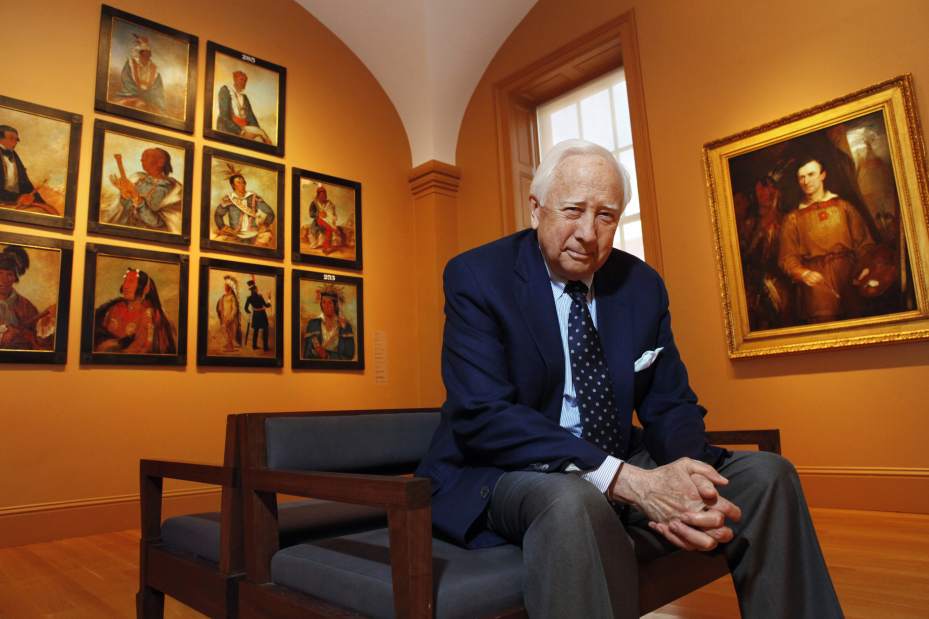
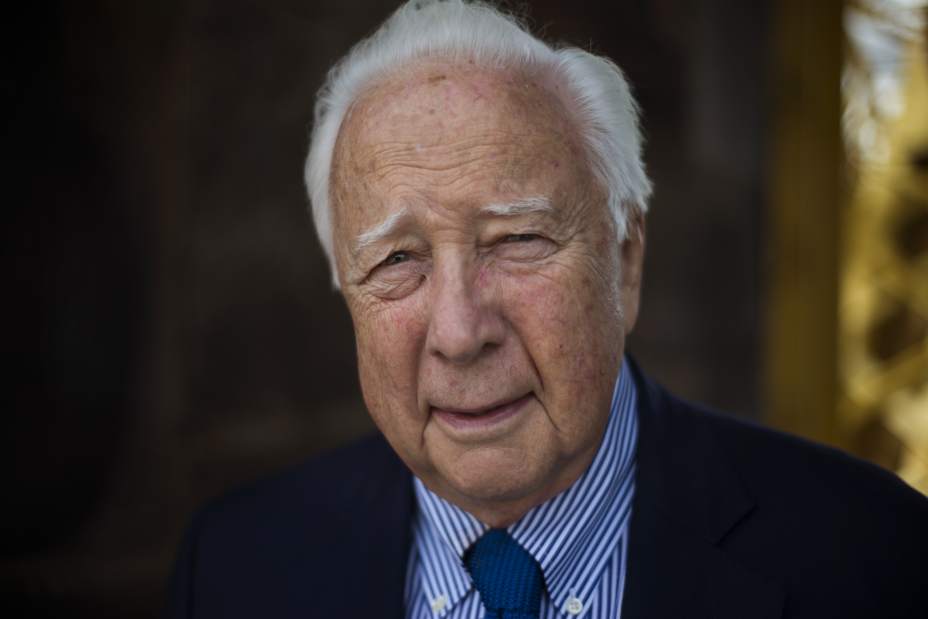
“I'm astonished by how many exceedingly well-informed, well-connected people have no idea who they were and what they did,” says McCullough, who visits the Senator John Heinz History Center in the Strip District on Sept. 10. “They changed the world, they changed history, far more than Edison with his light bulb or Alexander Graham Bell with his telephone, or the telegraph or the elevator or any of those other things.”
The Wright brothers were unlikely candidates for such groundbreaking work. They were raised in a modest home without plumbing or electricity. Their father, Milton Wright, was an “itinerant clergyman,” their mother, Susan, a homemaker. Neither attended college.
When it was later remarked to Orville that the brothers grew up with no special advantages, he bristled in disagreement. “It's not true to say we had no special advantage,” Orville said. “The greatest thing in our favor was growing up in a family where there was always much encouragement to intellectual curiosity.”
“Here are the two who cracked one of the most difficult problems of all time, and all they had was a liberal-arts education, which they got themselves through the stimulation and encouragement of their father at home,” McCullough says. “Except for ornithology, they never read much in the way of science or technology. They never trained in a scientific laboratory or a technological factory. They did it all themselves, and not only did they educate themselves, they did all the work themselves. They built (the airplanes) themselves.”
The enduring image of the Wright brothers is the iconic black-and-white photos on the sandy dunes of Kitty Hawk of a vehicle that resembles the skeleton of an airplane. Almost entirely forgotten are their contributions as aviators.
“They didn't just invent an airplane,” McCullough says, “they found out, on their own, with no precedent to go by, how to fly it. They were the first pilots ever, and they were testing something that nobody had ever tested. It's a wonder they weren't killed and a wonder they had such extraordinary courage.”
The brothers never married, but did have an important woman in their life. Their sister, Katharine, a schoolteacher, “made them live up to standards,” and also took on organizational duties for them when they gave flight demonstrations in Europe. When Orville Wright was seriously injured in a plane crash at Fort Myer, Va., in 1908, Katharine took leave of her job to rush to his side.
“She was like a drill sergeant in many ways, but she also was entirely for them and adored them,” McCullough says. “A pest sometimes, but she was always there when they needed her.
In June 1909, almost six years after the first flight at Kitty Hawk, the Wright brothers were finally feted in their hometown of Dayton. The Great Homecoming featured marching bands, concerts and a grand parade. Businesses closed as church bells and factory whistles sounded the start of the festivities at 9 a.m.
The Wright brothers, however, took the celebration in stride. According to a New York Times reporter's chronology of their activities, the Wrights returned to their airplane shop three times to work during the course of the day.
That anecdote is one of McCullough's favorites and reminds him of his roots.
“That whole idea that you find yourself in your work is something we (in Pittsburgh) were brought up on,” McCullough says. “I remember my father used to tell me about the inadequacies of somebody, or the failings in their private life or their bad manners. And then he'd say, ‘but he's a good worker,' and that would sort of redeem him from everything.”
Rege Behe is a contributing writer for Trib Total Media.
