
Atom smasher added to Carnegie Science Center miniature railroad


The trains that chug through centuries of history at the Carnegie Science Center now are rolling past the area's entry into the nuclear age.
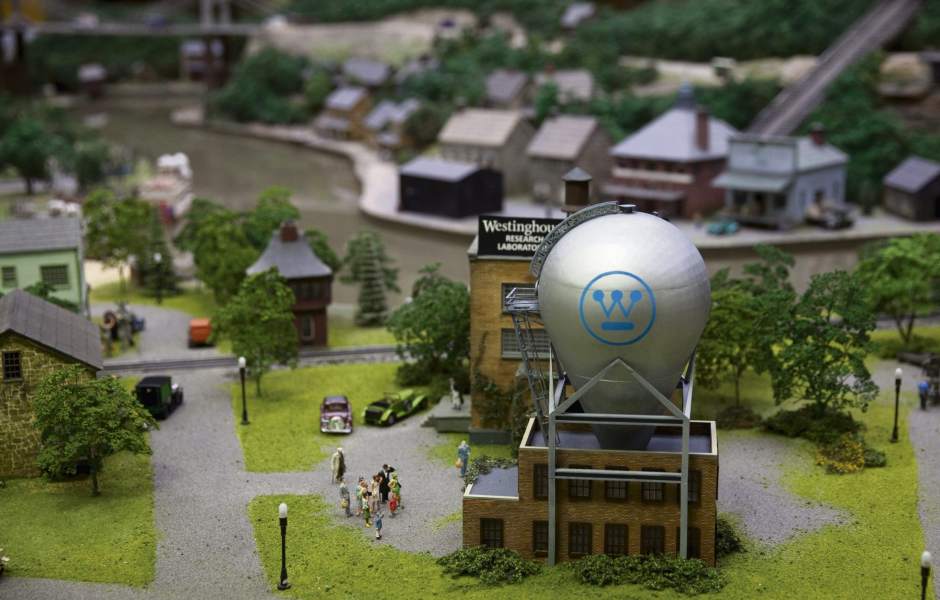
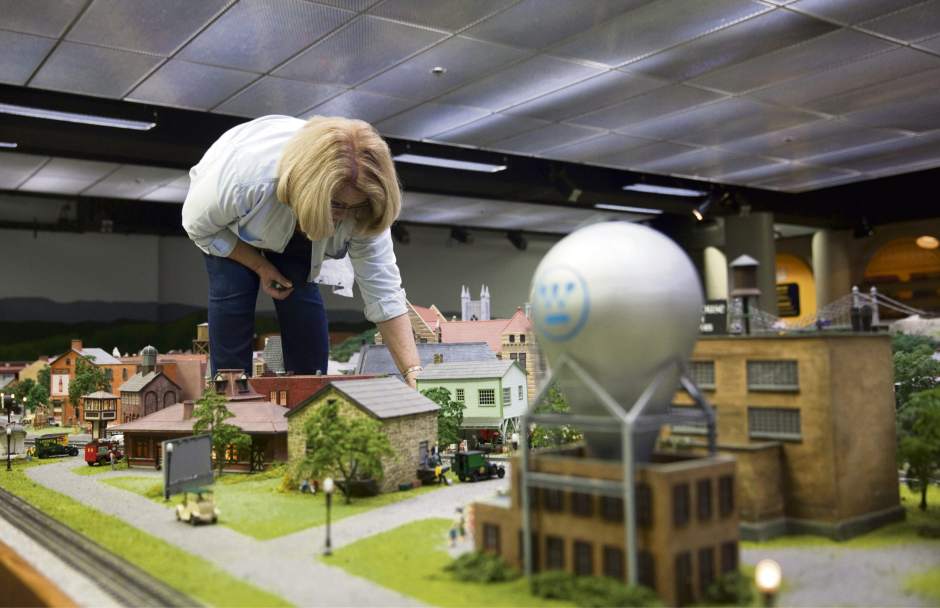
As the famous miniature railroad and village on the North Shore moves into its busy holiday season, a model of Westinghouse Electric's atom smasher has been added to the display that features sites from Forbes Field to Fallingwater.
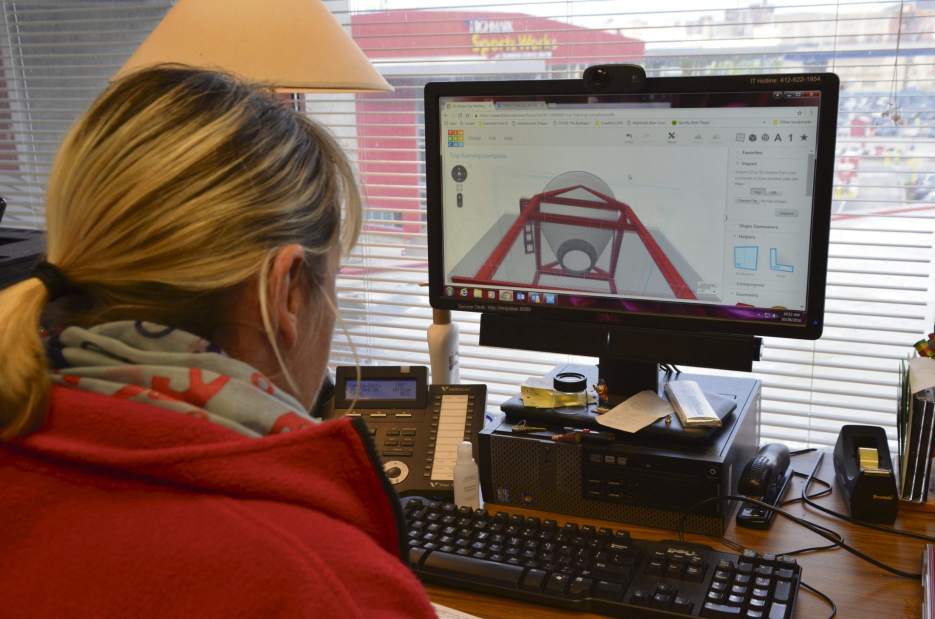
Construction of the bulb-shaped model was done with an appropriately modern technique. It is the first building at the railroad village made by 3-D printing.
“It is different, but it is just another tool like a saw or an X-Acto knife,” says Patty Everly, curator of historic exhibits, who built the smasher.
The model of the Van de Graaff accelerator, which became a distinct part of the Forest Hills skyline in 1937, was unveiled at a science center members' event Nov. 16.
It is joined by two other new showpieces.
One side is a copy of a 1938 car billboard for the American Bantam Car Co., the Butler maker of what became the Jeep.
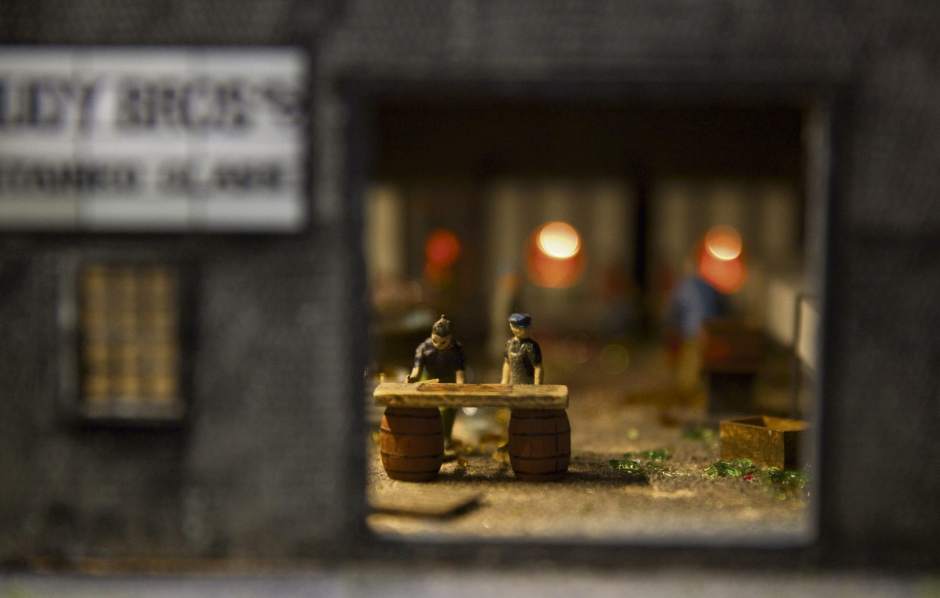
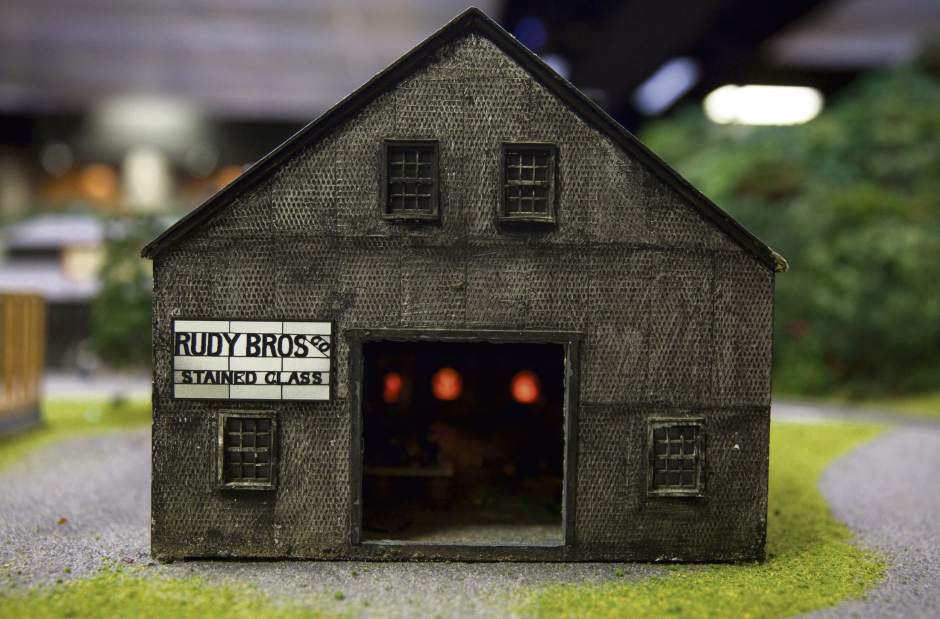
On the other side is a Pittsburgh glass works in which miniature workers are manufacturing stained glass. But the 3-D process on the atom smasher makes it the standout.
Everly says the 3-D process allows model-building that can be exact and precise because its images are created on a computer screen and then created by a resin-adding machine.
The 3-D process also is known as “additive construction” because of the way models are made by layering material together rather than chipping or cutting pieces off a block of wood or plastic.
Some of the four pieces that make up the atom smasher dome are composed of 3,000 layers or resin, Everly says.
Because 3-D construction was new to her, she had to become adept at using the program. The bulb of the atom smasher, the framework and steps surrounding it and the windows of the building below it were made in the 3-D process and took about two months to complete, she says.
Everly says the computer programs that allow that to be done can be used to make photographic-like duplicates. She adds she is excited at the prospects of making tiny people that will be better than the figures used now.
This addition claims a spot in the display that has been part of the center since 1992. It was moved there from the Buhl Planetarium on the North Side where it had been since 1954.
The display began in the home of Charles Bowdish (1896-1988) from Brookville, Jefferson County.
Bob Karlovits is a Tribune-Review contributing writer.
