
CBS' 'Code Black' inspired by Pitt medical school graduate's documentary

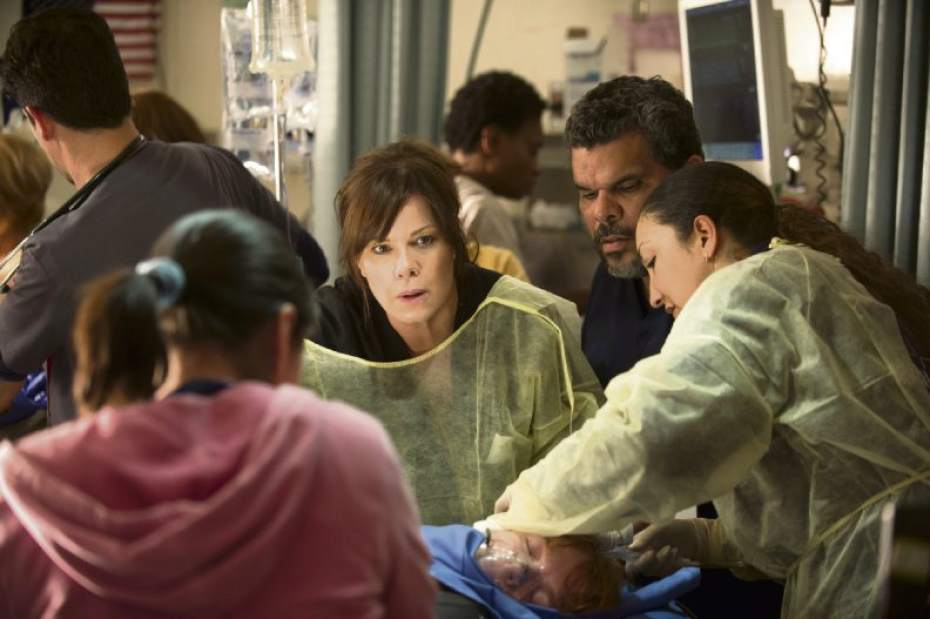



A screaming man rushes into a hospital emergency room, his shirt soaked with the blood of his son, who'd shot himself after coming out as gay. One brother dies from the other's drunken driving, and the mother faces the excruciating choice of whether she will come to her surviving son's side in the hospital or reject him.
These scenes may have been fictionalized in CBS' new medical drama “Code Black,” but they happen regularly in real life, and emergency-room physicians everywhere play dual roles as life-savers and counselors.
The show's executive producer — Dr. Ryan McGarry, who graduated in 2009 from the University of Pittsburgh School of Medicine — knows from personal experience, and divides his jam-packed time between entertainment and medicine.
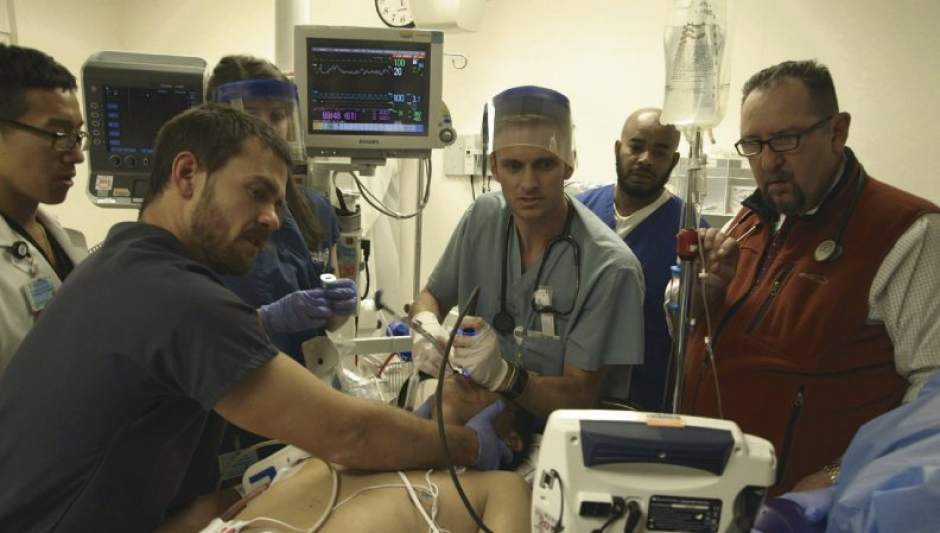
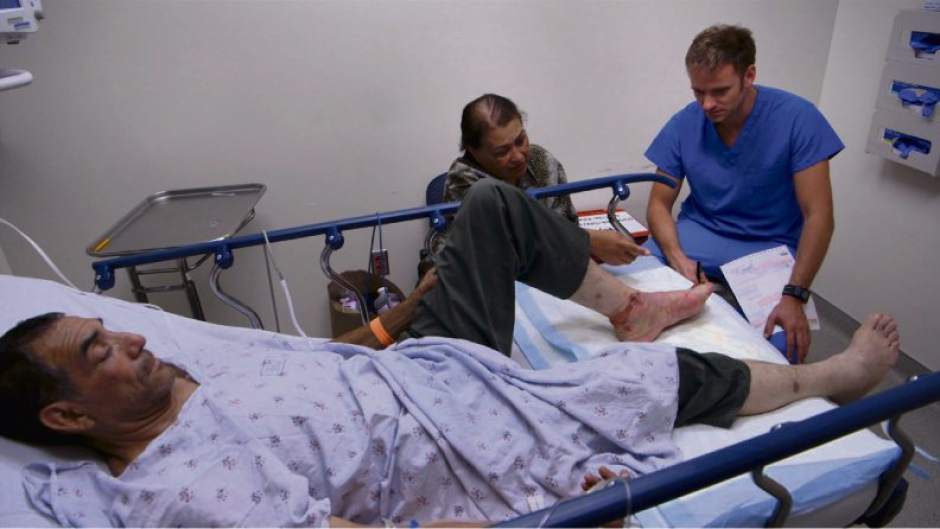
The show follows and fictionalizes the real-life, award-winning documentary by the same name that McGarry wrote and directed. The “Code Black” movie, which premiered at the 2013 Los Angeles Film Festival and was named best documentary feature, brings viewers into America's busiest ER at Los Angeles County General Hospital, where people can wait for treatment for more than 14 hours.
McGarry did his post-Pitt residency at the hospital, affiliated with the Keck School of Medicine of the University of Southern California. He managed to spend four years in production for the film while working the grueling schedule of a young ER doctor, a feat he pulled by taking fewer vacations and fewer weekends off.
“As it happens, this isn't a great way to get sleep,” McGarry jokes. “Already in residency, you've got to be giving 100 percent of yourself.”
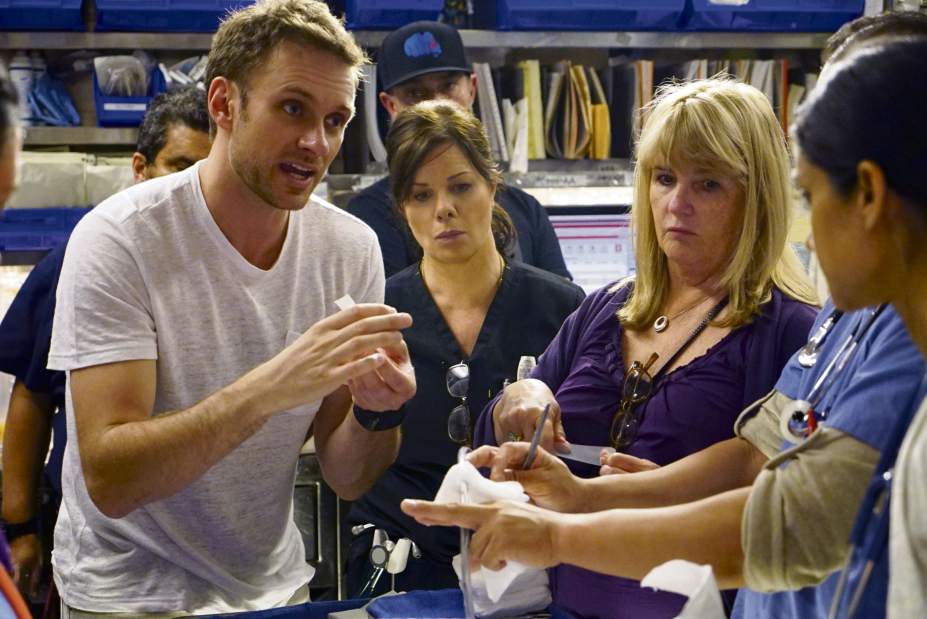
In a TV writers' room, the “Code Black” screenwriters come up with fictional versions of dramatic stories that go down all the time in emergency rooms, says McGarry, whose show is filmed on a set at the Walt Disney Studios in Burbank, Calif. In each episode, viewers feel a “surge of fear and adrenaline” and the range of human emotions, says McGarry, who was writing the series' 13th episode when he spoke.
“At the end of the day, even with all the medical reality ... what we're trying to build here is an emotional experience,” he says. “What this show does beyond anything else is, it gives you a front seat to being a physician in a situation like this.
“This is basically an updated ‘M*A*S*H,' ” McGarry says, referring to the hit 1970s TV series about a mobile Army surgical hospital during the Korean War.
“Code Black” joins a medical-drama craze on television that began in the mid-'90s with the long-running “ER,” and continues with NBC's new “Chicago Med,” which debuted Nov. 17. Some of these shows, like “ER” and “Grey's Anatomy,” run for more than 10 seasons, while others are short-lived — like the set-in-Pittsburgh “Three Rivers,” which was canceled after just eight episodes in 2009, but had a good following. TV critic Matt Roush echoes what McGarry says: Viewers respond to the emotions in the shows.
“The medical drama is a staple on TV because it's such a high-velocity setting for weekly drama, with life-and-death stakes with nearly every case — elevating the cast of characters into heroes ... with the potential for tear-jerking tragedy always looming,” says Roush, senior critic for TV Guide.
In “Code Black,” Marcia Gay Harden stars as Dr. Leanne Rorish, the residency director of the ER at the fictional Angels Memorial Hospital in Los Angeles, where she directs a group of four young resident physicians. The characters all seem so real as doctors, and the scenes, gore and all, look real, McGarry says. That's because the actors spent a lot of time shadowing physicians in emergency rooms, and the show uses real bodies rather than dummies. Prosthetics are used to simulate wounds and surgeries, so that a real person can be used without cutting into anyone's skin.
“The actors are very serious about studying the reality of the characters they portray,” McGarry says. “We don't cut many corners, procedurally, on the show.”
In his off-camera life, McGarry — a faculty member of emergency medicine at Weill Cornell Medical College of Cornell University — serves as an attending physician on the weekends at the ER of New York-Presbyterian/Weill Cornell Medical Center in New York City, with 12-hour shifts being typical. McGarry, even busier than during his residency and filmmaking years, will spend a Friday shooting a “Code Black” episode in California, take a red-eye flight back to New York, and then be the real-life version of actress Harden's character on Saturdays and Sundays. Then, on Monday, he's back in California.
Surprisingly, McGarry doesn't see himself or his New York-based, young-doc crew in the show's characters. The characters all play roles to which the real-life doctors can relate, but, with a laugh, McGarry says he is too quirky and weird to be compared much to his television counterparts.
The “Code Black” title is a real-life phrase the medical community uses to describe a situation where the influx of patients far exceeds the hospital's resources to care for them. So, doctors and nurses must scramble to do their best and often examine patients with more minor conditions in the waiting room or hallways.
After a four-year residency at the county hospital, McGarry says, “you're going to basically see a ton of stuff by volume alone.”
“‘Code Black,' in reality, not only reflects the ER's overcrowding, but the rest of the hospital's overcrowding,” McGarry says. “It's a symptom of the major problem.”
That problem, seen especially at public hospitals, is that many people must use the ER as their social safety net, because they can't afford to see a doctor, or have to wait too long to get an appointment with a primary-care physician.
McGarry studied English at Pennsylvania State University, but decided to become a doctor when he got sick with stage 4 lymphoma as a freshman in college, and healed through chemotherapy and radiation. He wanted to give back and save lives as a physician, McGarry says.
In many ways, McGarry says he owes “Code Black” — the documentary and the television show — to his med-school alma mater, Pitt.
“Some of the best years of my life were spent there,” he says.
Dr. Joan Harvey, associate dean of student affairs at Pitt's School of Medicine, says McGarry makes his alma mater proud.
“Ryan stood out from day one as a talented and creative medical student, and it was a pleasure to have him as a student and see him express his unique and individual abilities,” Harvey says. “His show gives us a unique opportunity to see medicine through his eyes.”
Kellie B. Gormly is a staff writer for Trib Total Media. She can be reached at kgormly@tribweb.com or 412-320-7824.
