
Cigar connoisseurs: Growing market caters to those with taste for the finer things



Tim Kolich opened a cigar store in McKeesport to indulge his passion for stogies and to do something fun in retirement.
In the eight years since then, he has expanded his space in McKeesport and plans to open a second and larger Dirty Dog Cigar Shoppe by fall — this one in Greensburg.
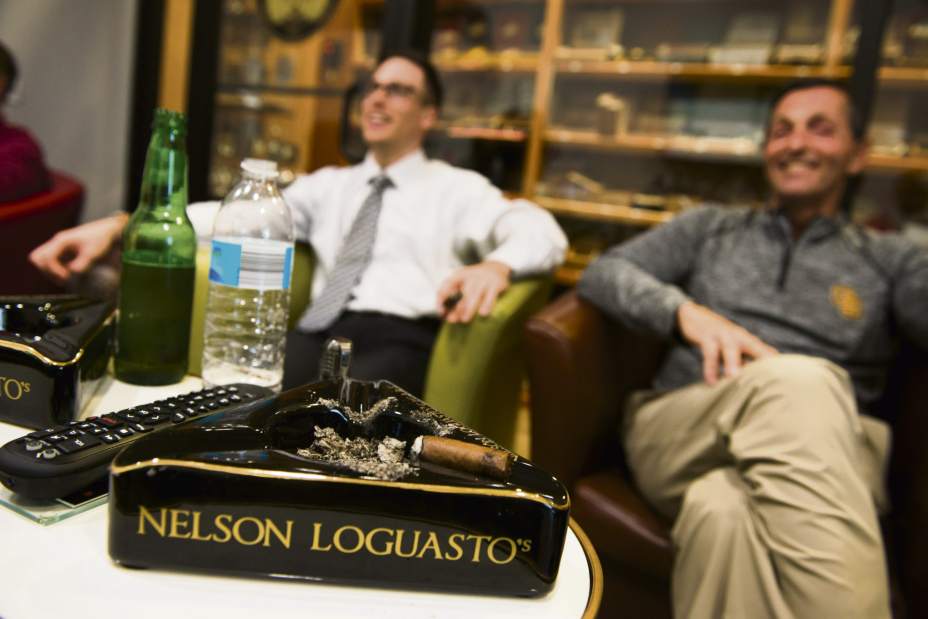
"There's a growing market for premium, artisanal-made cigars, which is what we specialize in," says Kolich, who considers Greensburg untapped turf despite the presence of other shops and lounges, including Nelson Loguasto's Cigars and Dal Forno Whiskey & Cigar Room.
Cigars are lighting up the Pittsburgh area, too, with a number of smoking venues, ranging from Cioppino Restaurant & Cigar Bar in the Strip to Allegheny Smokeworks in Blawnox.
Despite health warnings by the American Cancer Society, consumption of large, premium cigars has risen by nearly 180 percent since 2000, even as the number of smokers appears to be declining, according to the Centers for Disease Prevention and Control in Atlanta.
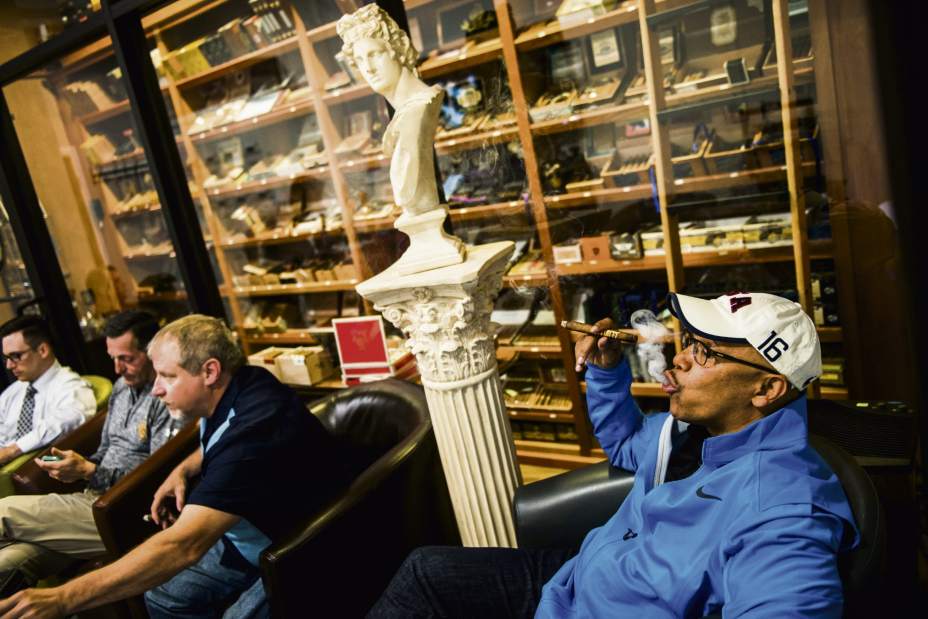
Industry observers chalk up the avidity, in part, to a social smoking and connoisseur culture encouraged by cigar boutiques.

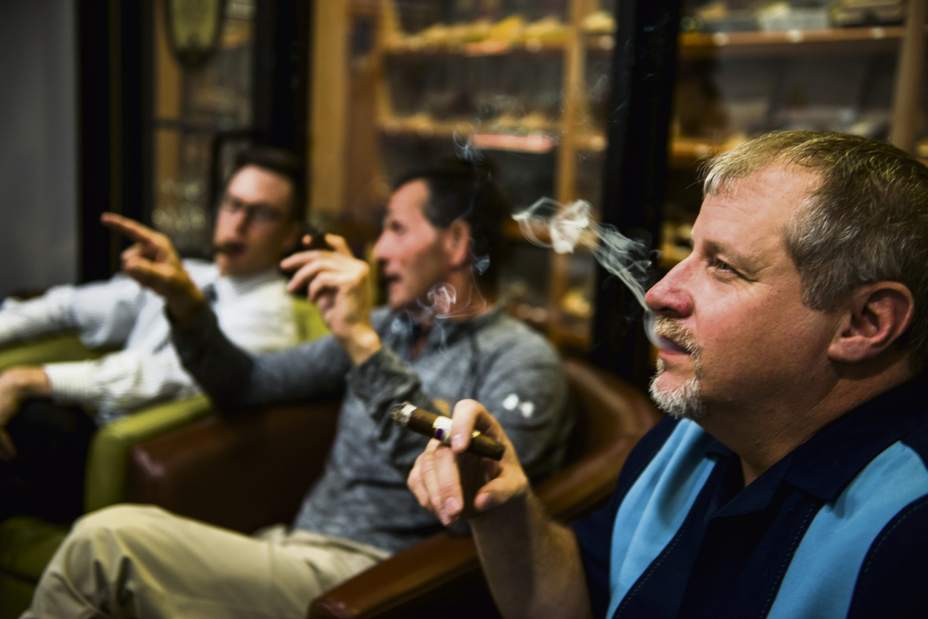
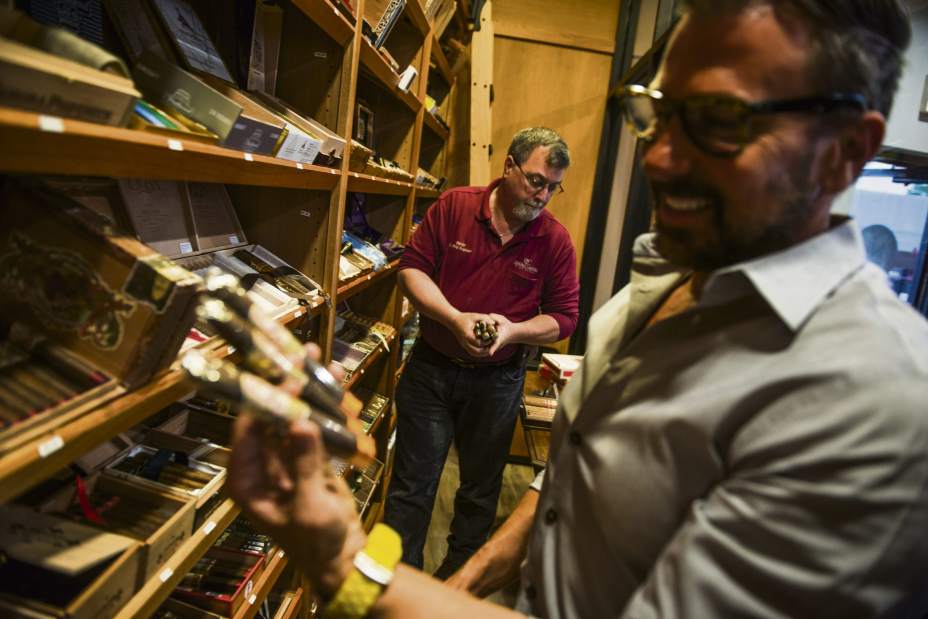
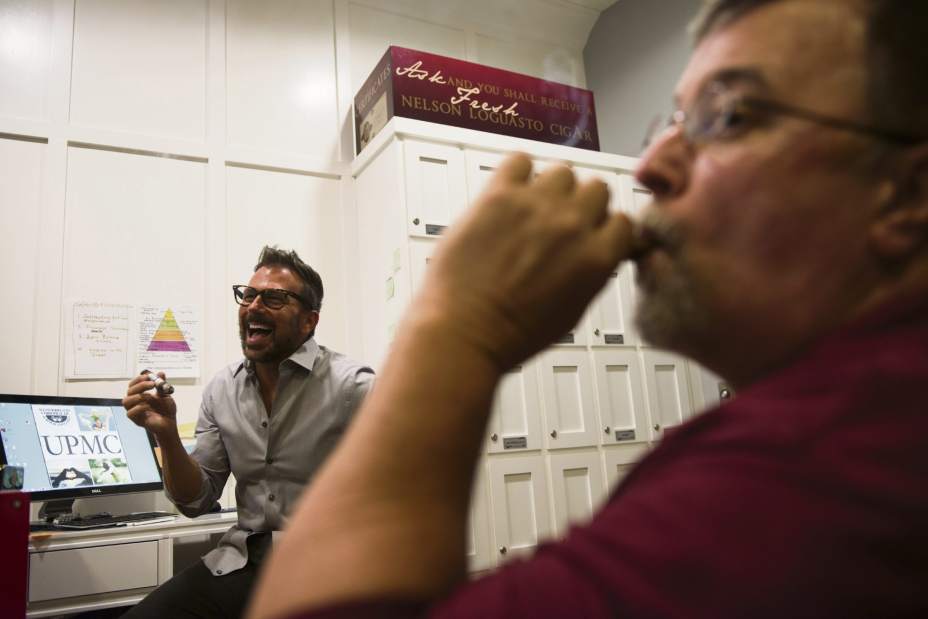
Owner Pete Loguasto of Nelson Loguasto's Cigars in Greensburg enjoys a cigar with friends and patrons, as co-owner Reed Nelson, background, helps customer Kevin Fink of Greensburg select cigars.
Photo by Shane Dunlap
"It is a culture," says Pete Loguasto, a former restaurateur who is partnering with chiropractor Reed Nelson in Nelson Loguasto's Cigars, a small shop located next to Nelson's practice on South Main Street in Greensburg. Loguasto's sells hand-rolled cigars that cost from $2 to $30 each, including the top-shelf Opus X, which is made in the Dominican Republic by a family that produces just 8,000 cigars a year, Loguasto says. The shop also stocks cutters, scissors, lighters, rods and other tools that are part of the smoking protocol.
"From our perspective, it's more of a labor of love than a business," says Loguasto, who maintains a base of about 270 customers, the majority of whom buy cigars for take-out. Some come for the club-like atmosphere and a few keep lockers where they can store their favorite libation, since Loguasto's is BYOB.
"If we seat eight to 10 people, it's a full house," Loguasto says. "We don't have regular hours. We do Penguins games, but the only time we're always open is Friday evenings."
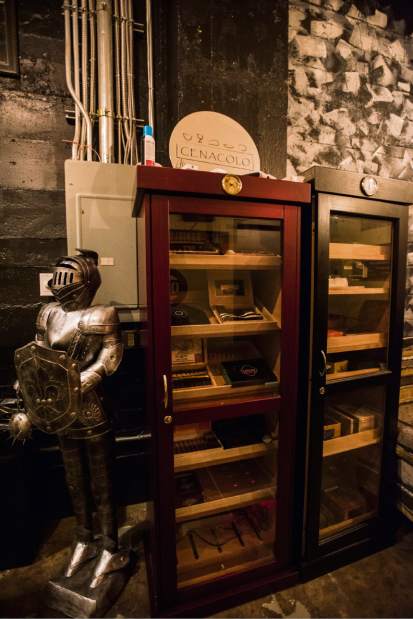
Cigar lounges are gathering spots — "like Cheers, without the booze," says Kolich, who plans to install a 12- by 16-foot walk-in humidor and smoking lounge in Greensburg on Main Street across from the courthouse. "People come for the camaraderie. It's a place where they can relax with friends."
Although price isn't always an indicator of quality, learning to appreciate different kinds of cigars is like developing a taste for Scotch or fine wines, says Kolich's stepson and business partner, Shawn Carroll, 33, who enjoys educating new smokers in cigar selection, as well as the rituals and etiquette around smoking a stogie. "It can be intimidating if you haven't smoked before. You wonder, 'Am I cutting (the cigar) the right way? Am I lighting it the right way?' "
Carroll talks about his own evolution as a cigar smoker. "When I first tried a cigar, I thought it was awful and I hated it," he says. "But then I tried flavored cigars — like coffee-infused cigars — and really liked them. Over time, I started to like the traditional stuff, too."
His appreciation deepened when he visited Nicaragua and saw the care involved in making high-end cigars. "These are often family-run operations, where cigar making is a long-time tradition," Carroll says, noting it takes years for a cigar to go from seed to box and each one passes through hundreds of hands.
Carroll enjoys combining cigars with craft beers, and has made pairings part of his marketing strategy. "When I first started in Tim's business, it was an older gentleman's place," he says. "I want to grow the younger crowd."

Bridget Dye (left) and Jill Pelchin enjoy a cigar inside the cigar lounge at Dal Forno, in North Huntingdon.
Photo by Dan Speicher
Dal Forno owner Steve Salvi sees women as an evolving market, and in May sponsored the restaurant's first Women's Wine, Bourbon, Chocolate and Cigar Night, since opening his Whiskey & Cigar Bar, or bruciare, in February on Route 30 in Irwin.
"Cigar-smoking is mostly still guys, but more and more women are showing interest in cigars and bourbons," Salvi says. "They like flavored bourbons and they like smaller, lighter cigars, like java mint, which has a sweet mint flavor."
Although acquiring a taste for cigars is a process of trial and error, experts on staff are there to provide guidance, says Salvi, 43, who also sponsors a whiskey and bourbon club on the third Thursday of every month that sometimes features vendors with new products.
A longtime cigar enthusiast himself, Salvi says his bruciare is attracting veteran smokers as well as curiosity seekers. "People who smoke are in here every weekend, and it's grown by word of mouth," he says. "On weekends, we get a younger crowd. It's definitely a mix."
Mike Pirmez, owner of Allegheny Smokeworks — one of the area's more established cigar venues — attributes the cigar-lounge boom to the ban on smoking in public places, and to the Internet, where folks can learn and blog about cigars.
Pittsburgh is just now catching up to other cities. "We're always about 10 years behind everyone else," he says and he predicts that the industry has peaked.
But Colin Simpson, general manager of Blend, an Indianapolis-based chain of cigar lounges that opened last fall in Pittsburgh, thinks the market will stay hot, especially for folks with fine taste.
"We're more of a concept," Simpson says. "We're not just limited to cigars, although it's a big part of what we do. We offer fine Scotches and bourbons and very high-end beers."
"Our concept is to provide a luxury environment, to treat everybody as if they were a member of a club, to get to know their preferences, and make sure they have a great experience."
The most expensive cigar in Blend's humidor is a $500 Oro Blanco, a one-and-a-half to two-hour smoke that Simpson compares it to a first-growth Bordeaux or burgundy wine. "And," he says, "it does sell."
Deborah Weisberg is a Tribune-Review contributing writer.
