


To many Americans, it must seem like this year's campaign is a joke.
While we all might be better off if presidential candidates left the comedy to the professionals, occasionally the roles reverse and comedians and comical characters make a run for the White House, often with hilarious results.
Satirical candidates have been a part of election-year hijinks since 1908, when Augustus Mutt of the comic strip “Mutt and Jeff” threw his proverbial hat into the ring. Since that time, hundreds of comical characters — real and fictional — have held aspirations for America's highest office. From Daffy Duck to Stephen Colbert, they have campaigned to varying degrees of success. But their campaigns should not be taken too lightly, as they have brought many issues to the forefront — from civil rights to environmental concerns.
Here, for your voting consideration, is a ballot filled with some of the most intentionally comedic candidates in history.
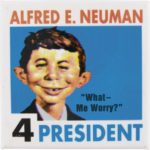
In the immortal words of Mad Magazine's candidate, Alfred E. Newman: “You could do worse ... and always have!”
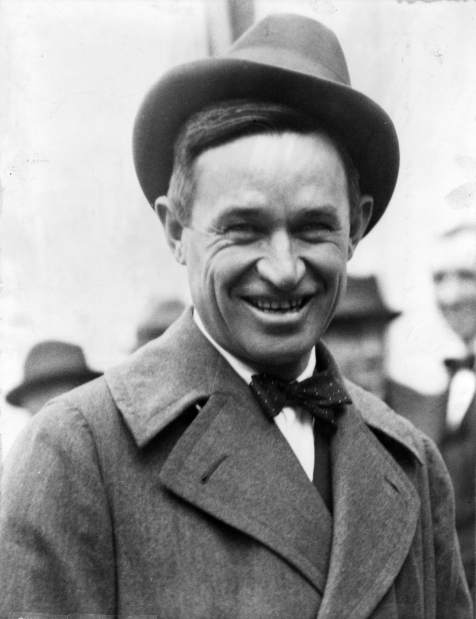
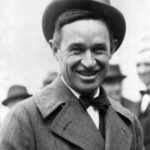
Will Rogers
Affiliation: The Anti-Bunk Party
Election year: 1928
Campaign slogan: “If elected, I will resign.”
Will Rogers joked about every prominent man of his time, but he never met a man he didn't like. “The Cowboy Philosopher,” with his trademark lasso and Oklahoma drawl, was America's first great political stand-up comic. He once modestly confessed, “I don't make jokes. I just watch the government and report the facts.”
In 1928, he reluctantly heeded the call of the people and Life Magazine and was roped into running for president.
Though he had once stated, “I belong to no organized party. I am a Democrat,” he ran as a member of the Anti-Bunk Party seeking support from “those who want nothing and providing the assurance of them getting it.”
Rogers received many write-in votes, allegedly garnering enough votes to win the District of Columbia.
His legacy continues to be felt in Washington to this day. A statue of Rogers still stands in the House of Representatives … where he can keep an eye on them.
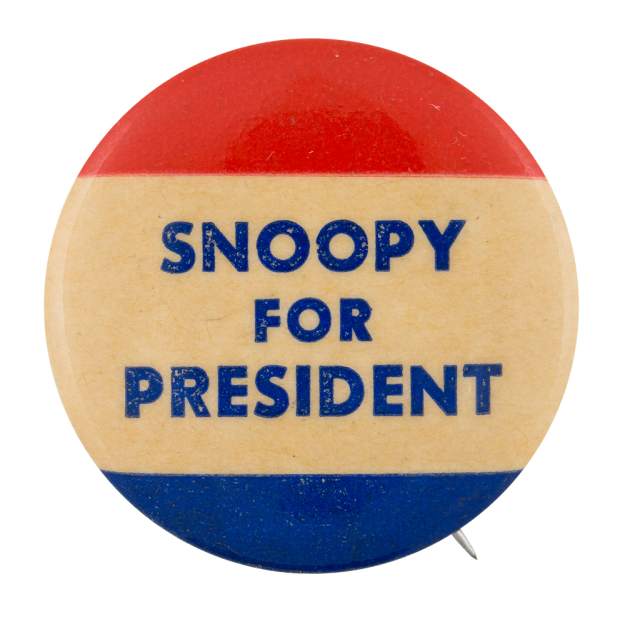
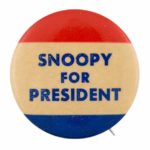
Snoopy
Affiliation: The Beagle Party
Election year: 1968 and most elections since
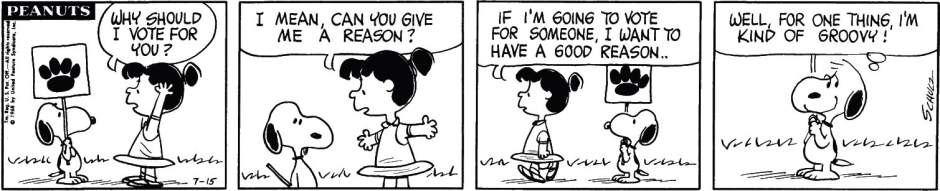
Campaign slogan: Paw power
Running on the platform of federal aid for surfing, pizza on every table and happiness for everybody, the world-famous beagle's political aspirations began with a line of merchandise from Hallmark. That same year, the Royal Guardsmen, who had hit records with “Snoopy vs. The Red Baron” and “Snoopy's Christmas,” released the song “Snoopy for President.”
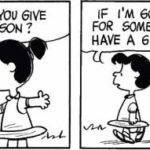
Over the years, Charles M. Schulz's comic strip “Peanuts” has had several campaign storylines, including one exploring Lucy Van Pelt's White House ambitions.
An exhibition of Snoopy's campaign paraphernalia and related comic strips is the subject of an upcoming exhibit at the Charles M. Schulz Museum in Santa Rosa, Calif. “Mr. Schulz Goes to Washington” will run April 30 through Dec. 4.
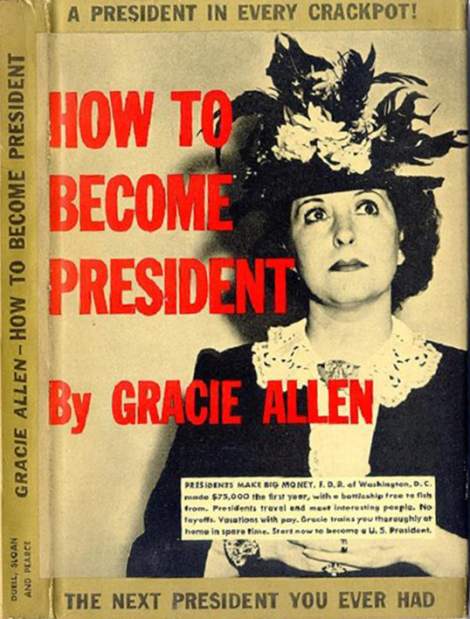
Gracie Allen
Affiliation: The Birthday Party
Election year: 1940
Slogan: “It's all in the bag!”
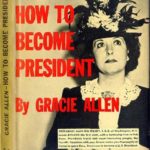
Gracie Allen was one-half of the real-life married comedy team Burns and Allen.
Her run for the White House began at their home in Beverly Hills, Calif., when she suddenly stated: “I'm tired of knitting this sweater. I think I'll run for president this year.”
So began her groundbreaking and hilarious campaign as one of the first women to seek the presidency.
Hers was a simple platform: redwood trimmed with nutty pine.
At the invitation of Eleanor Roosevelt, she spoke at the Women's National Press Club in Washington, D.C. In May 1940, Gracie and the potential “first man” George Burns boarded a train in Hollywood for a 32-city tour, culminating at the Birthday Party National Convention in Omaha. Thousands of delegates unanimously voted her as their candidate. With her party's nomination secured and the endorsement of Harvard University, Allen would soon take her place in history.
Although she lost to Franklin Roosevelt by about 27 million votes, her 42,000 write-in votes stood as a record for a female presidential candidate for 32 years.
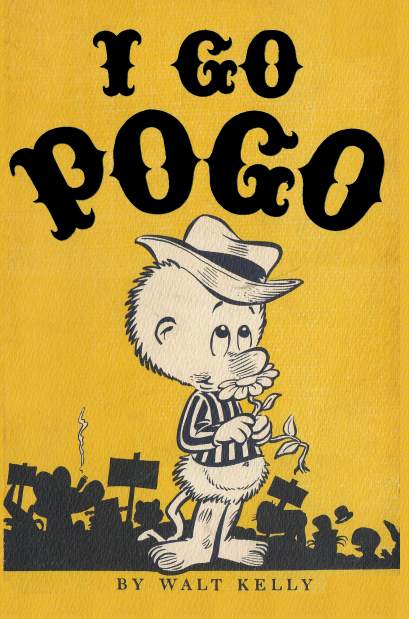
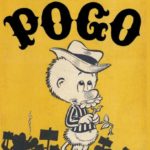
Pogo
Affiliation: The Pogo Party, The Double Deal Party
Election years: 1952 and 1956, respectively
Campaign slogan: “I Go Pogo”
Pogo once summed up all of America's problems with one simple phrase: “We have met the enemy, and he is us.”
“Pogo” was a rare, overtly political comic strip. Its creator, Walt Kelly, boldly took on Sen. Joseph McCarthy, Richard Nixon and J. Edgar Hoover, among others.
In 1952, Kelly decided it was time for a new kind of candidate, one who didn't want the job. In a brilliant piece of satire, the Okeefeenokee swamp offered up its favorite son, Pogo, for the presidency.
More than 150 college newspapers endorsed his candidacy, a million “I Go Pogo” buttons were sold, and NBC promised complete coverage of the campaign.
The swell of support came to a head in May 1952 as an estimated 50,000 college students gathered in support of Pogo at Harvard University. Kelly was slated to speak on behalf of the candidate that evening, but arrived late. As tensions between police and students rose, the situation erupted into a riot, and 28 students were arrested — five were editors of the Harvard Crimson.
The “Pogo Riot” became the first college campus riot of the 20th century and remains one of the largest to date. The peace-loving possum unintentionally kicked off an era of campus protests for social justice that became a powerful vehicle for young people's voices.
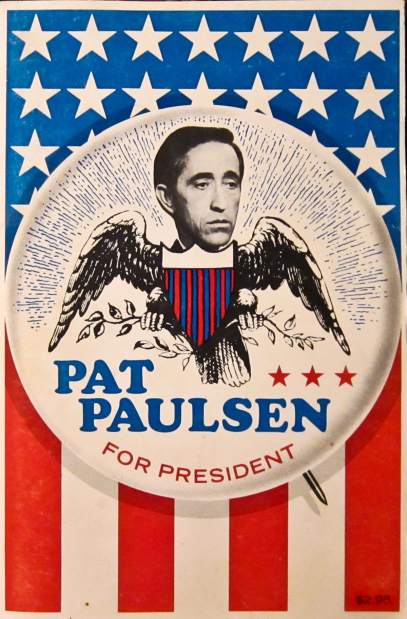
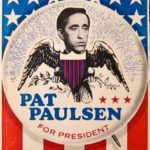
Pat Paulsen
Affiliation: The Straight Talk American Government (STAG) Party
Election years: 1968, 1972, 1980, 1992 and 1996
Campaign slogan: “We Can't Stand Pat!”
Comedian Pat Paulsen rose to prominence as part of “The Smothers Brothers Comedy Hour” in the late 1960s. He had the appearance of an old well-worn suit and a deadpan delivery well-suited to political parody. His portrayal as a conservative political commentator predated Stephen Colbert by four decades.
“He was like Bernie Sanders with a sense of humor,” says Tommy Smothers, from his home in Santa Rosa, Calif. “He saved our show. Anytime the show was faltering, we would put in Pat or a midget to deliver the punchline.”
Paulsen often delivered “editorials” on the show, tackling subjects considered taboo on television, such as sex education, the draft, gun control and poverty.
“We knew it was going to get censored,” Smothers recalls. “So I would tell him, ‘Move your head a lot when you speak; that way, if they cut it, it will be a sloppy edit!' ”
The popularity of his comical stands on the issues led to a presidential run in 1968. Though many considered him a left-wing liberal, Paulsen declared himself “middle of the bird” — explaining that if the left wing or right wing gained control of the country, it would probably just fly around in circles.
Paulsen had a range of celebrity and political supporters, including a begrudging endorsement by Sen. Robert F. Kennedy. His campaign proved so popular that Hubert Humphrey blamed Paulsen for siphoning off votes, leading to his loss to Richard Nixon.
The 1968 election would lead Paulsen into becoming a career comical candidate. He received 1,211 votes against Nixon in the 1972 New Hampshire primary. In 1992, he came in second to George Bush in the North Dakota Republican primary. In 1996, he received 921 votes, coming in second to Bill Clinton in New Hampshire. He campaigned in every election until his death in 1997, but continues to run “post-humorously.”
Bill the Cat
Affiliation: National Radical Meadow Party
Election years: 1984, 1988 and 2016
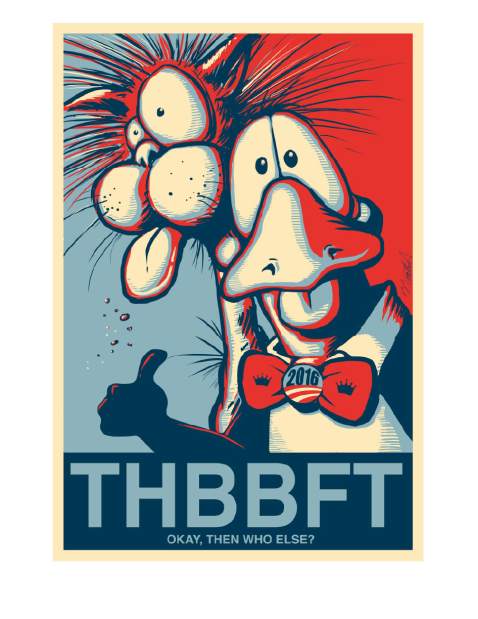
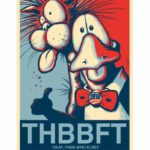
Campaign slogan: “THBBFT! OK, then who else?”
Bill the Cat is the occasionally deceased candidate of the National Radical Meadow Party in the popular comic strip “Bloom County.” He and his running mate, Opus, ran on a simple platform: A return to two spaces after a period and a ban on all leaf blowers.
Bill the Cat's White House ambitions in the comic were cut short due to scandal when he coughed up a hairball on Connie Chung.
The comic strip ended in 1989, but in July 2015, the strip was revived on Facebook after a 25-year hiatus. Once again, Bill is running for office.
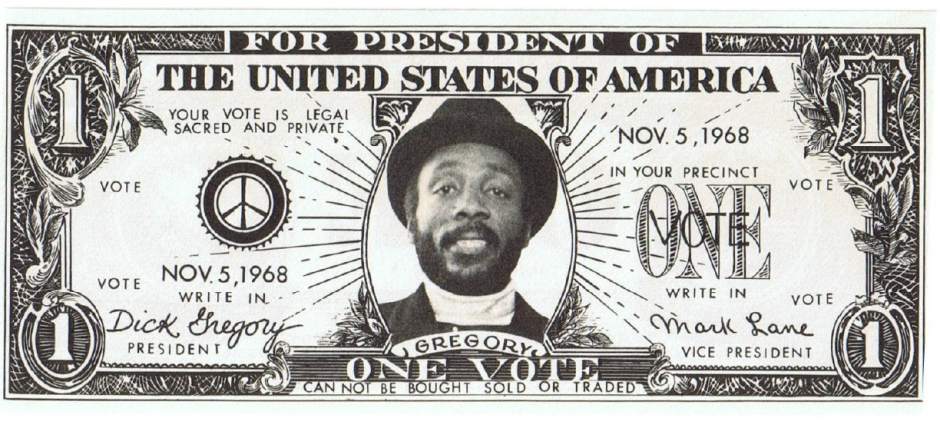
Dick Gregory
Affiliation: Freedom and Peace Party
Election year: 1968
Campaign slogan: “Write me in!”
It's hard to consider comedian Dick Gregory's run as a comical one. Best known for his biting sense of humor dissecting racial issues, he leveraged that recognition as a write-in candidate in the 1968 election. In the process, he became one of the first African-Americans to run for president, ultimately receiving 200,000 votes.
Though he ran on the serious platforms of civil rights and social justice, the campaign was not bereft of humor. Part of his platform included a plan to pay for foreign aid by installing pay toilets in federal buildings.
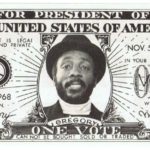
The campaign drew the attention of the FBI when “dollar bills” with his likeness were distributed as campaign fliers. He was forced to turn over the “bills” as counterfeit to the government, but no charges were filed.
Ambassador “Uncle” Duke
Affiliation: Reform Party
Election year: 2000
Campaign slogan: “Whatever it takes.”
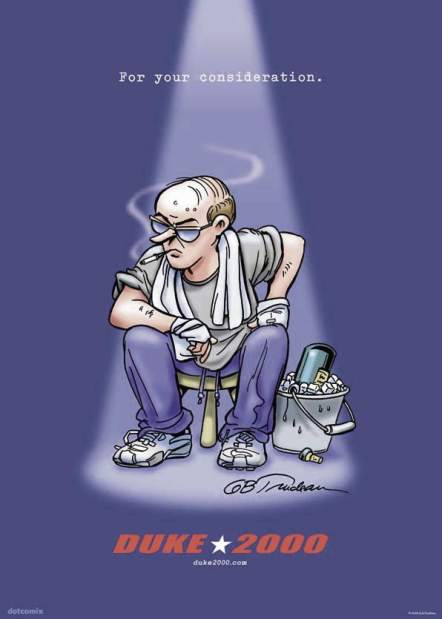
Uncle Duke was the popular Hunter S. Thompson-inspired character from the comic strip “Doonesbury” by Garry Trudeau. Duke's run proved that “the average citizen, with nothing more than a laptop, a few spam speeches and a sackful of soft money, could make political history,” Trudeau says.
In a unique spin to comic-strip candidates, Duke leapt from the funny pages into the “real world” via motion-capture technology. This allowed a real-time animated Duke to announce his run for president live on Larry King. He followed up with interviews on “The Today Show,” where he announced his running mate would be Kathy Lee Gifford (unbeknownst to her).
“It was one long experimental project,” Trudeau says. “While the 30 weekly films we posted (online) were scripted, all the TV interviews were improvised.”
The campaign was one of the first to “e-campaign” via web videos — many broadcast from his campaign headquarters at the E-Z Rest Motor Lodge in Coon Rapids, Mich.
Joe Wos is a Tribune-Review contributing writer.
