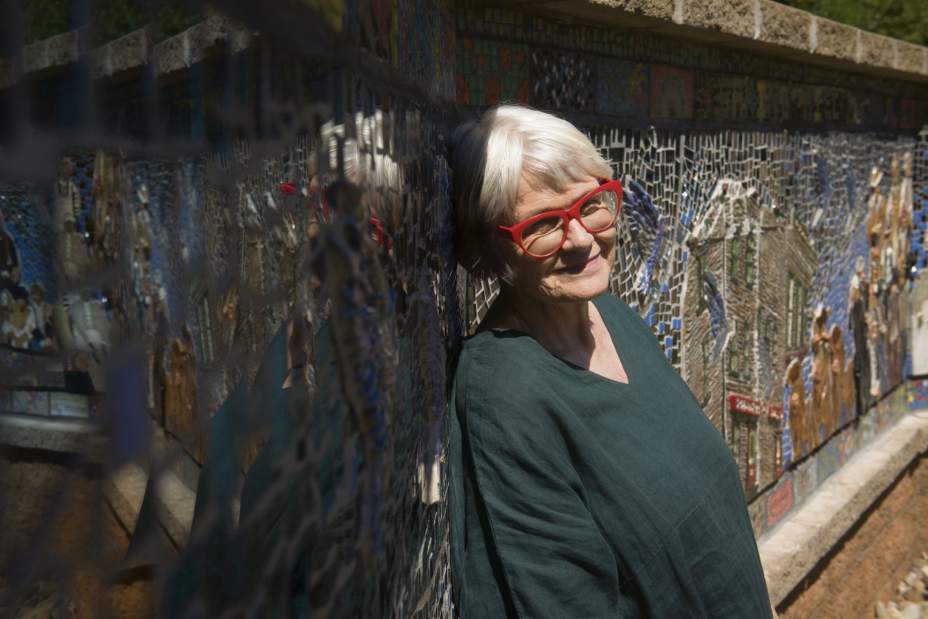
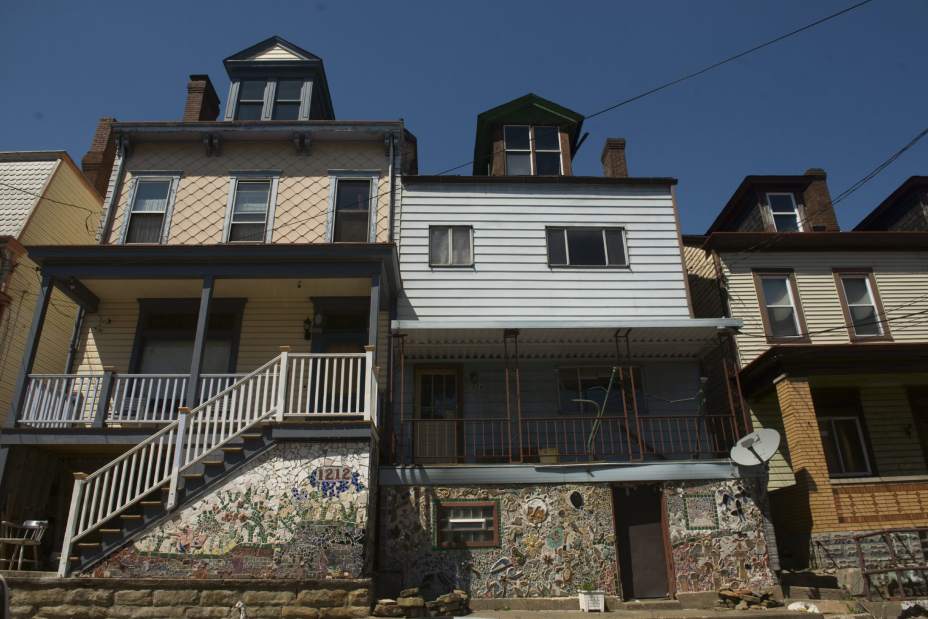
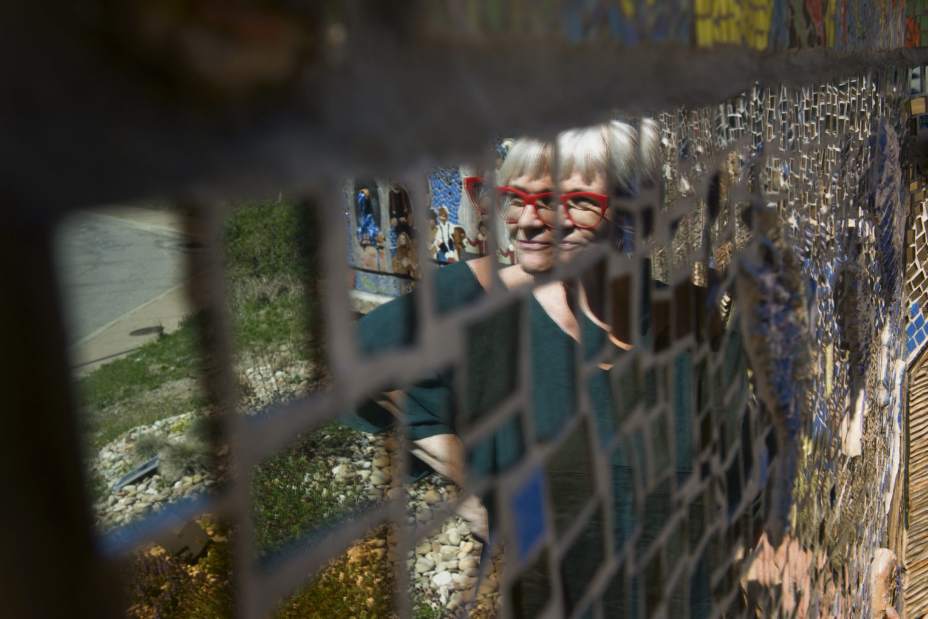
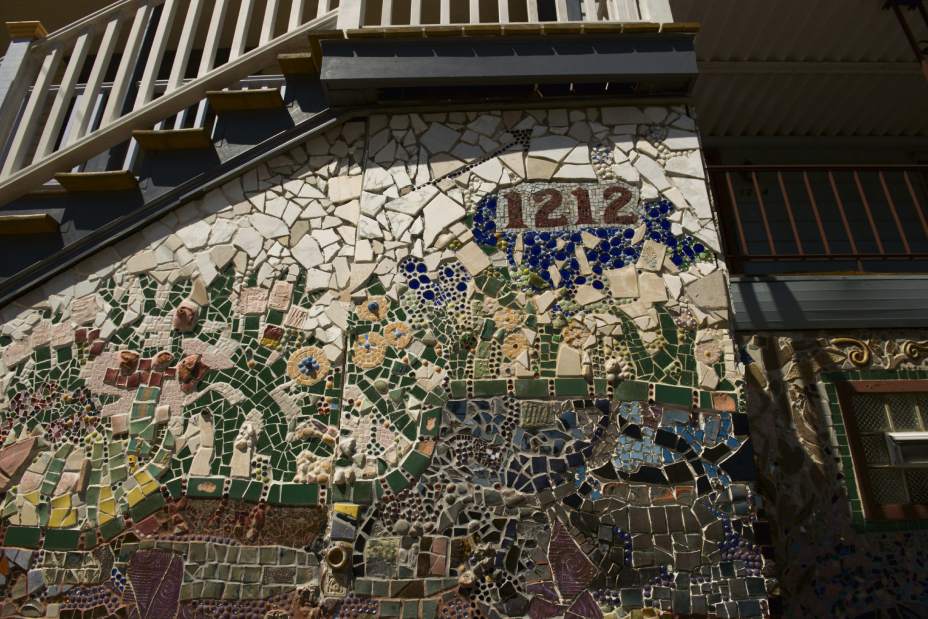
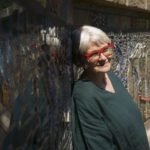

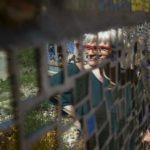
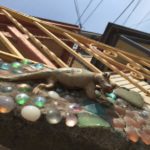
Only after Linda Wallen began breaking things up and gluing the pieces to the front of her house did neighbors begin speaking to her.
It was 1995, and Wallen had been living in her Spring Hill Victorian for eight years. Until that point, however, “nobody talked to me.”
“The neighbors, I think, were kind of afraid of me because I was an artist or something,” Wallen recalls. “So, when I started working on the mosaic, gluing stuff onto my house and making these flowers and other things, people would stop and talk to me. And they'd say, either, ‘You can't do that. That's crazy!' or, ‘That's fabulous! I'm really glad you're doing that.' ”
As the mosaic took form on the cement foundation of her Yetta Avenue home, supporters quickly outnumbered the naysayers.
And, in time, neighbors even started pitching in.
“People started bringing me materials,” she says. “One man left me a suitcase of strange-looking, whitish tiles and (explained) that they were his father's, that his father had worked on the Fort Pitt Tunnels, and these were the tiles left over.
“It was wonderful to get to know the people who live around my house and walk their dogs past my house. ... It becomes a really interactive activity, an inclusive activity. Making a mosaic is sort of like: Put globs together in a certain way and it comes together and it looks cool. It's accessible, and it's something that a lot of people can participate in and feel some gratification.”
Wallen came to mosaics later in her art career.
A native of South Bend, Ind., she was nine credits short of an art degree from the University of Iowa in the early 1970s when she abruptly dropped out and moved to New Orleans.
“I was not comfortable in academia,” Wallen says. “I wanted to be out in the world.”
So, she staked out a spot on a public square, set up her easel and quickly established herself as a talented portraitist. She was in demand for her ability to quickly paint accurate likenesses of her subjects. In the years since, she has completed commissioned portraits for the Scaifes, the Hillmans, the Rooneys, J&L Steel, Mellon Bank, Shadyside Hospital and Pittsburgh Ballet Theatre, she says.
“I did 4,000 portraits in five years; that was my training,” Wallen says. “I still get requests from people I did in the 1970s who want me to paint them now.”
From New Orleans, she moved to New York, met her husband, a Pittsburgh native, and, in 1981, moved here.
The artist took to the Steel City. She loved the beauty of its layout, she says, the friendliness of its residents and the affordability. Plus, she noticed other artists moving in, and decided that Pittsburgh “was not a bad place to be.”
Over the years here, she continued producing portraits, had a daughter, then watched her first husband suffer a series of heart attacks, the last of which was fatal. She took a summer job teaching art in France, where she would later marry her second husband.
Throughout her career, she had never tried her hand at mosaics.
Then, in 1995, she took a train from France to Barcelona, Spain, and everything changed.
“I was astonished to find these mosaics everywhere — the city let artists go wild,” she recalls. “I got tickets to three concerts in a row in the Palau de la Música, which is a gorgeous, gorgeous music auditorium that is mosaicked inside and out. And it blew my skirt up, knocked my socks off. I wanted to take it home with me. I came home and decided the cement-block foundation of my house was just too ugly.”
So, she got to work.
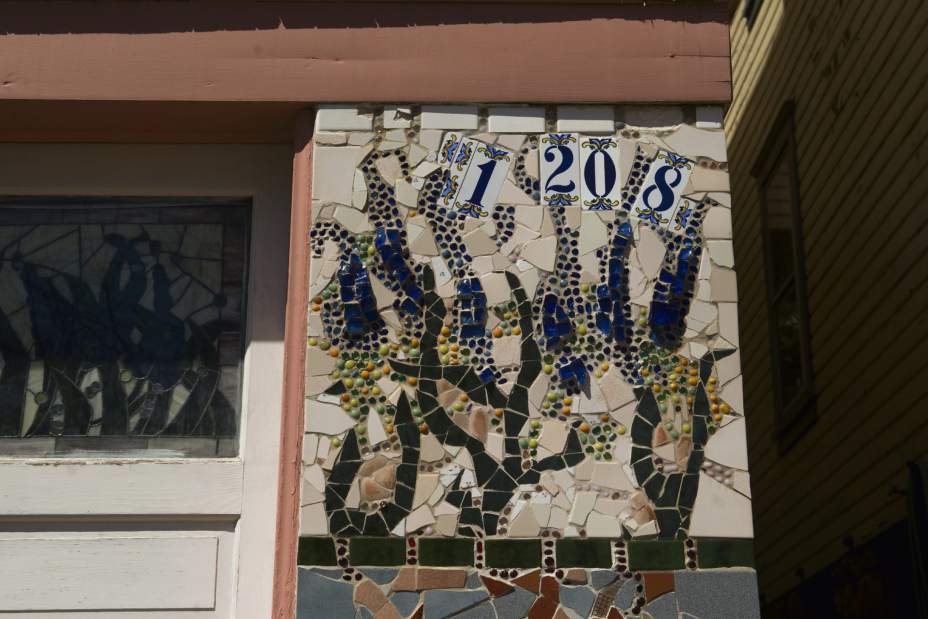
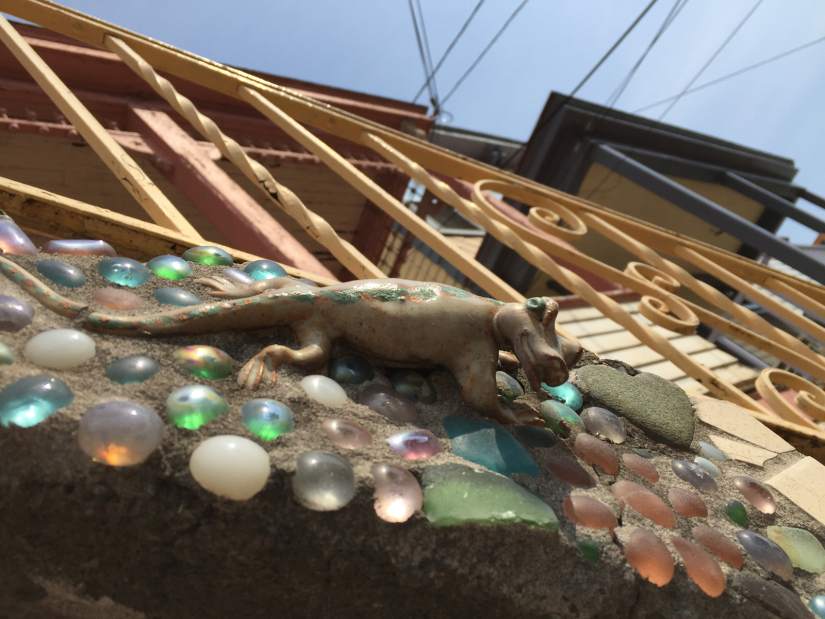
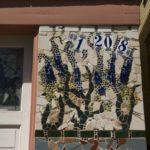
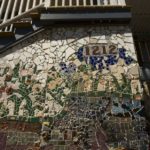
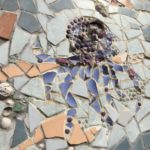
The first mosaic took seven years to finish. A brown horizontal line through the middle symbolizes the ground. Above the line are flowers and angels and lizards; below are roots and bugs and snakes.
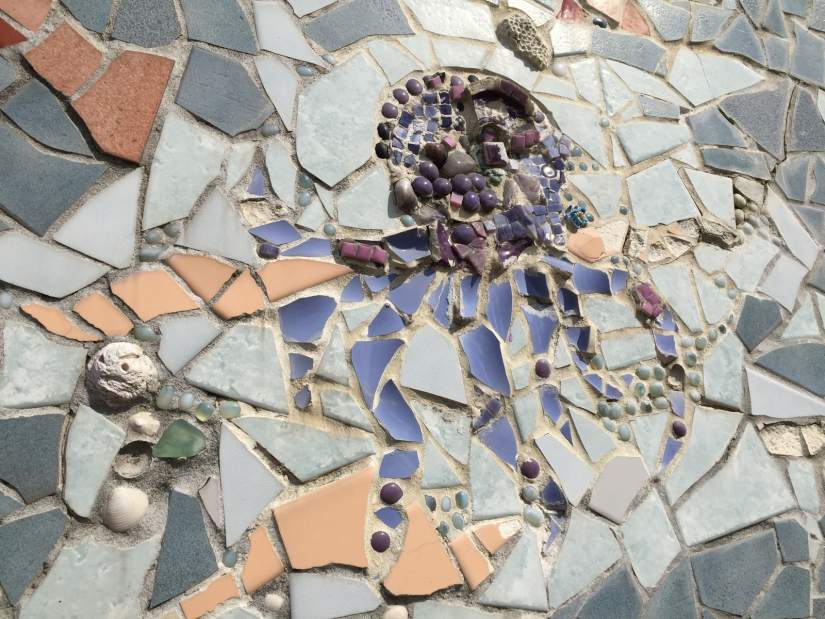
And a purple octopus.
It wasn't part of the plan, but when the 4-year-old girl down the street requested its inclusion, Wallen agreed that it was a lovely idea.
“I would get things in the mail from artists or people I didn't even know (who) had heard about the project,” she says. “I got an angel, I think, from Georgia. I got a ceramic lizard from New Mexico. I got three beautiful purple amethyst-like stones from Boston College.
“And then I got this box full of blue glass chunks from a glass artist in West Virginia. I wish I knew him because those were the cornerstone of my delphiniums. I made these beautiful blue delphiniums that made my heart sing.”
More than 20 years later, Wallen still paints and sketches.
But there's something about mosaics, she says, of which she has helped produce nine, mostly on the North Side.
The art begs to be touched, she says. It engages the entire community, even people who never imagined themselves as artistic.
And there is no age requirement.
When her daughter started teaching kids at the Manchester Craftsmen's Guild, Wallen helped. Eventually, they decided to involve the kids in creating new mosaics.
They started on Yetta Avenue.
The kids asked a couple, one from Puerto Rico and one from Philadelphia, what they would like on their home, then created a colorful landscape that involved images from both locations.
The Manchester Craftsmen's Guild was then asked to produce a mosaic for the Charm Bracelet Project, a series of public art installations started in 2006 in cooperation with the Children's Museum of Pittsburgh. With Wallen's guidance, they decided to create a mosaic for Spring Hill.
“We started researching the history of our community, which was German settlers coming over on boats with their pigeons, their own racing pigeons,” Wallen says. “They were butchers and brewers. There was a lot of imagery for the murals.
“We put glass tiles and mirrors in the background to make it really sparkly and shimmery. That's, I think, one of my favorites.”
The mosaic sits on Homer Street, across the road from an old fire station. Another is found at the base of city steps on Itin Street in Deutschtown. Five more are on Yetta, Pittsburgh's avenue of mosaics.
“It's the kind of thing where you get your hands dirty, and you're manipulating so many interesting things with your fingers — it's like a kid playing with mud cakes,” she says. “And cement. Mixing cement always makes me happy, smearing cement around like mud ...
“I think it's because I grew up on a farm. Maybe that's it. I'd play outside in the dirt and the sticks,and climb the trees and throw stones around. And now I build things with natural materials all the time. So, maybe there's an element in the building of a ceramic mural that is like being a kid on the farm again. ... And it's something I can share easily with other people.”
Chris Togneri is a Tribune-Review staff writer. Reach him at 412-380-5632 or ctogneri@tribweb.com.