
Dance destiny: Collaborative Texture company born out of founder's injuries

For most performing artists, life is a competitive struggle — besides vying among too few paying jobs, they are constantly working to improve their skills.
Yet, while plenty of artists struggle in isolation, there are many who take the opposite approach, teaming up with their “competitors” to stimulate and support each other.
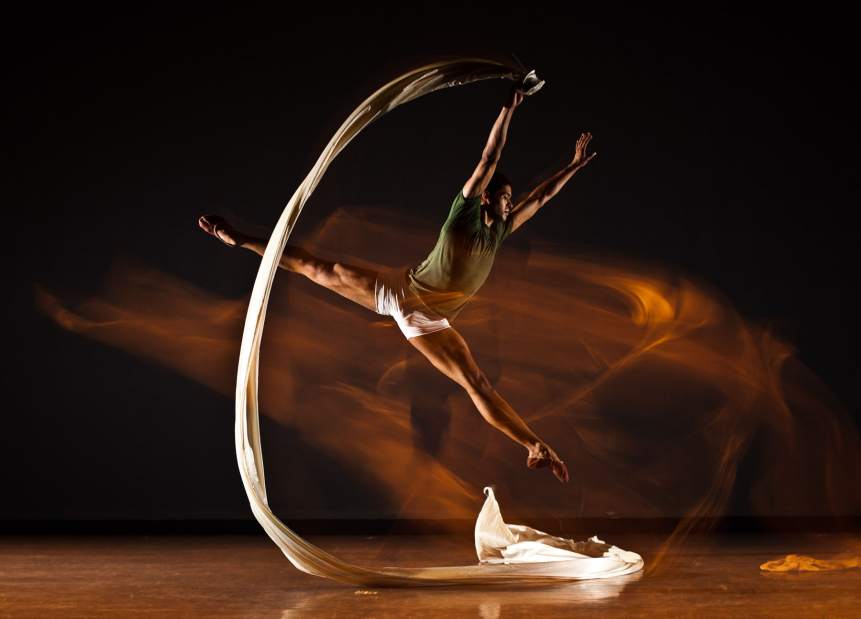
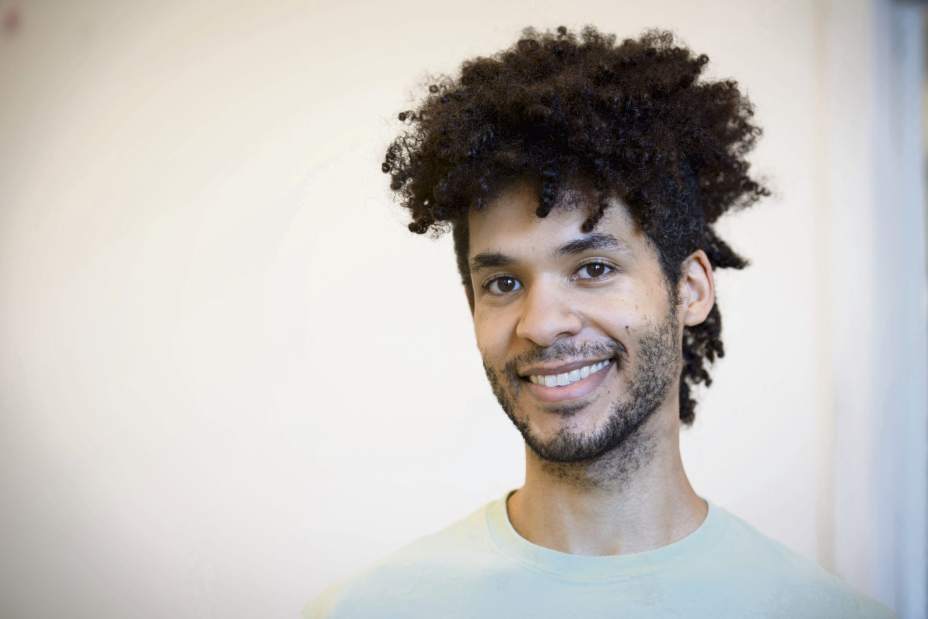
Partnering is one component of dancer and choreographer Alan Obuzor's natural gifts. A Pittsburgh native, Obuzor studied at Pittsburgh Ballet Theatre School before joining the company, where his career was cut short by injuries. In 2011, he formed Texture Contemporary Ballet, where his need to perform and create are allied with his generous and collegial personality.
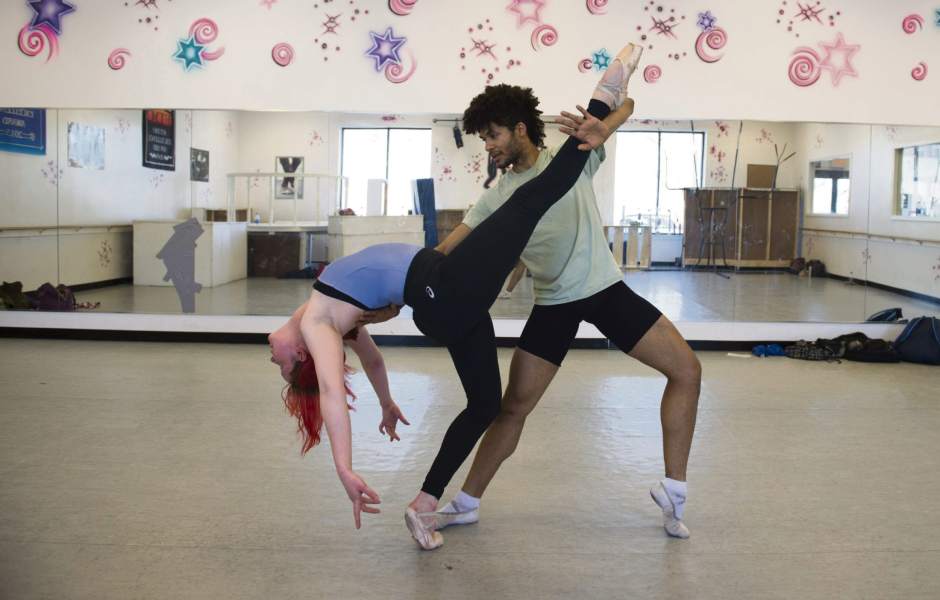
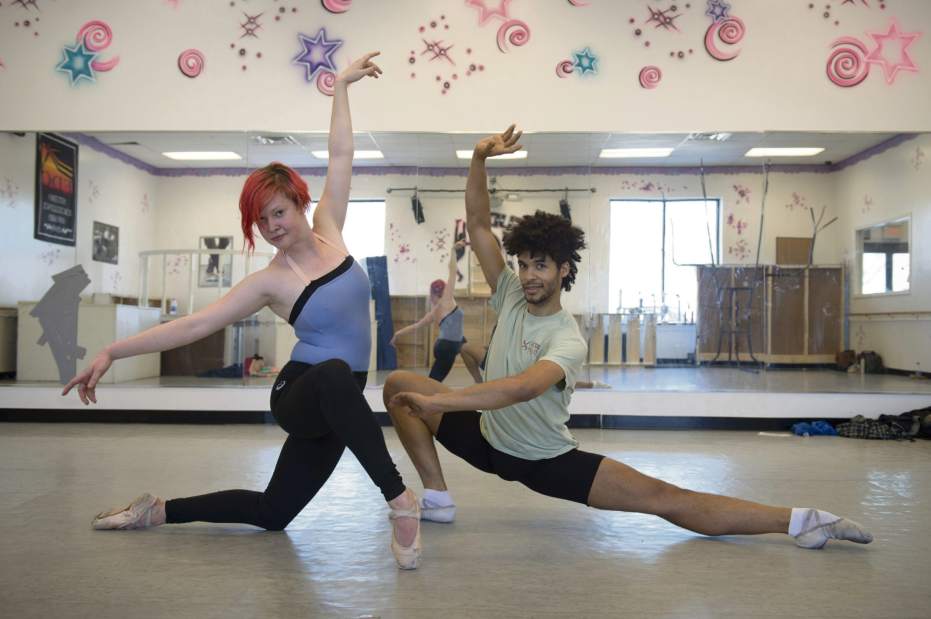
Texture is still very much an ad hoc company. It has a core group of dancers that is supplemented as needed for specific shows. It also has no base of operations. Rehearsals for its next production, “Reflections,” from March 18 to 20 at the New Hazlett Theater on the North Side, are taking place at the Studio 19 Dance Complex in Cranberry, where Obuzor teaches.
The program for “Reflections” exemplifies Obuzor's inclusiveness, because he's just one of five choreographers whose work will be presented. The others are company associate artistic director Kelsey Bartman, company dancer Jean-Paul Weaver, Pittsburgh freelancer Jamie Erin Murphy and Los Angeles-based choreographer Annalee Traylor.
Obuzor was raised in Manchester in a family with three sisters. His mother encouraged her children to try different things. Obuzor was into physical activities, like soccer and gymnastics, before he started dance.
Joanna Obuzor says she and her brother were treated similarly because “my dad's Nigerian culture is big on both first-born son and first-born daughter. We were best friends growing up. He was very talkative. You couldn't get a word in edgewise — talk, talk, talk. Now that he's grown up, he's the complete reverse. You can hardly get three words strung together.”
She was a dancer, too. But while her brother was drawn to ballet, for her it was anything but ballet. She's now a production manager with the Pittsburgh Cultural Trust and board chairwoman of Texture.
“When I took musical-theater class with my next sister, 14 months younger, they kept referring to ballet as the foundation,” Obuzor says. “After I took a ballet class, I knew I wanted to be a professional dancer. I hadn't seen a ballet yet, so my mom took me to PBT, and I fell I love.”
Alan Obuzor started studying at Pittsburgh Ballet Theatre School when he was 11.
“I saw him in the school and probably first noticed him when he was doing the Prince role in the Balanchine ‘Nutcracker,' ” says Erin Halloran, retired principal dancer. “He was one of the most extraordinarily talented students I remember ever coming through the school — a combination of real natural physical talent, musicality, extremely intelligent, obviously, and a great desire to learn. I got to know his family because his sister baby-sat for my kids when I was dancing. I just know he comes from a lovely family and is a fantastic person.”
Later, Halloran had the opportunity to dance with Obuzor and also created two duets with him.
“He is a fantastic partner,” she says. “Even with the best training, there is something instinctual about it, feeling the weight of your partner and anticipating where she needs to be. He's just so with the person and also has incredible strength.”
Among the principal and solo roles Obuzor performed were in the ballets “The Nutcracker,” “Swan Lake,” “Symphony in C,” “Carmina Burana,” and “Divertimento 15.”
Knee problems ultimately forced Obuzor to leave the ballet.
“I kept getting stress fractures in my knee cap,” he says. “I had my first one at 17 and a total of five fractures at PBT. So I'd be out and work my way back, and it would start to bother me again.”
He hasn't had a fracture since leaving the company.
“I think one thing is knowing my body better,” he says. “When you're a dancer, you need to figure out your body, when you need to push and when you need to take it easier. Also, classical ballet is very hard on the knees. The biggest thing that bothers it is jumping, and classical ballet variations are mostly jumping and head-turning.”
When Obuzor began dancing, he says he was already wondering what he would do after he stopped performing. Dancing, per se, is a short career. But while many dancers go on to other fields, such as law or physical therapy, Obuzor knew he wanted to be involved in dance.
“I realized, if I start a company, I can have a place where I don't have to dance too much ... a place where I can teach, where I can choreograph and still have the give-and-take interaction where I learn from people,” he says.
Texture is a stylistically eclectic company.
“A lot of our stuff, but not all of it, has a ballet base to it,” he says. “All of us started in ballet, but we like to use different stuff together. Within a certain piece, we like to have a lot of different aspects put together but still have a cohesion that makes it work. Some are classical, some neoclassical, others more off balance and constructed differently. Others are more modern and on the floor, moving shapes and contracting shapes. Still others have that higher energy, jazz-type feel to it.”
Many of Obuzor's pieces are non-narrative and mostly based on the music.
“If I find a piece I really like and am inspired by, I will create off that,” he says. “A few pieces have a bit more narrative, but I keep that in my head. It doesn't make sense to me to share that with the audience because I've seen pieces which didn't make sense in terms of what they were supposed to be about but which I like anyway.”
Shortly after starting Texture, Obuzor invited Kelsey Bartman to become co-director. They met while he was in the ballet and she was in the ballet school. She went on to dance with Nashville Ballet in Tennessee.
Bartman says her mother, who had a dance studio, told her she'd “be a dancer when I popped out.” The first ballet she went to was a double bill of “The Firebird” and “Petrouchka.”
There were different levels of excitement going on when she and Obuzor created a duet together when she was in school and he was in the company — first, a student with a pro, no matter how young he was at the time. The two also were very compatible in choreography and in moving together. In addition, she was best friends with Obuzor's sister.
Bartman was planning to join another company out of town when she heard about Texture.
“I realized this is something awesome, really my cup of tea,” she recalls. “I asked what I could do to help the company, and shortly after that, Alan asked me if I wanted to be co-director.”
The company's aesthetic openness is deeply appealing to her.
“Being a tapper and having some modern and jazz, I really like being able to do not just ballet,” Bartman says. “I do everything from classical ballet to lying down on the floor to story ballets. I like quirky, crazy things on pointe. Regardless of what the style is, most of my stuff had a lot of emotion.”
Applause isn't the only recognition.
In 2013, Obuzor was named one of “25 to Watch” by Dance Magazine for his work with Texture.
“In one sense, it was humbling and made me grateful,” he says. “So many talented dancers work so hard, and a lot of recognition is very fleeting. The next day, you come back to the studio, and you're back at square one. It's nice to see something that acknowledges the craft you've put in to that point.”
Mark Kanny is a Tribune-Review staff writer. Reach him at 412-320-7877 or mkanny@tribweb.com.
