


Writing comic books is pretty much a dream job. You won't get any argument about that from Ed Piskor, 29, of Munhall, one of a handful of people in Pittsburgh who has been able to do it.
It's also a lot more effort than anybody expects, especially if you want to tell your own original stories. Piskor's approach has been incredibly successful, but it's definitely taking the path-less-traveled.
“I'm a fan of DIY (do-it-yourself) culture in general,” Piskor says. “I am a control freak. To be the master of my own destiny is a comfortable position. But it gets taxing, at some point.”
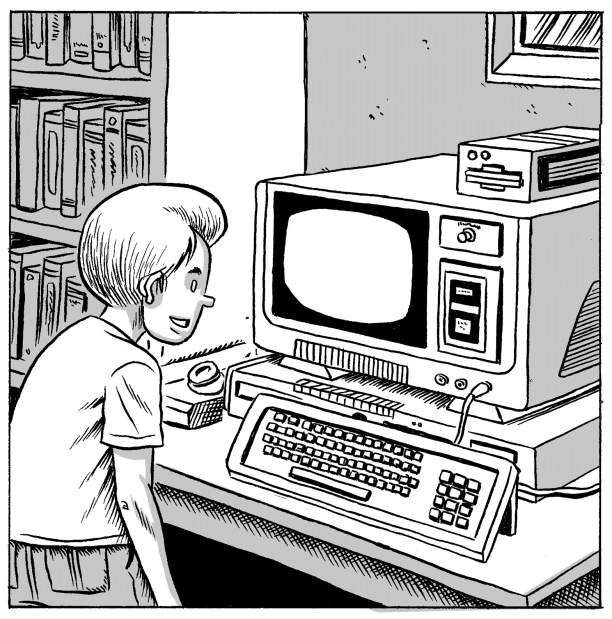
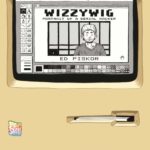
After self-publishing chapters of “Wizzywig — about the early days of computer hacking — for years, he now has a major indie-comics publisher, Top Shelf, ready to do some of the heavy lifting. There will be a book-release party Friday at the Toonseum for “Wizzywig,” now collected into a 288-page graphic novel.
Some of Piskor's other credits include designing the characters for Cartoon Network/Adult Swim's “Mongo Wrestling Alliance,” illustrating late comics legend Harvey Pekar's “American Splendor,” and Pekar's history of the Beat Generation writers, “The Beats.”
“Wizzywig,” though, is closest to his heart. It's a fictionalized retelling of the birth of computer hacking — how a few smart teenagers curious about exploring the computer, early Internet and phone systems gradually became wanted criminals.
“Comics is my first love,” he says. “But I do have a lot of other outside interests — one of those being hacker culture. The only way for someone to insult me is to suggest that I'm a dabbler or a hobbyist. I want to know everything about what I happen to be obsessed with at the time.
“My main character is an amalgamation of a dozen of the most notorious hacker guys from the past 30 years. Probably the most notorious is Kevin Mitnick, who was captured and sat in prison for two years without facing trial — they were just stacking charges.”
In his research, Piskor stumbled upon the archive for a radio show from 1988 called “Off the Hook,” which was kind of a nexus for the early hacker community.
“The owner ... had this privileged position to speak to people who eventually became notorious. These people would be on the show, even as co-hosts — then, suddenly, they're not there, and you find out they're in prison. Then, sometimes, they're co-hosting the show from jail.”
“Wizzywig” goes into some technical detail, but the story is more about the personalities involved.
“My interest in niche American subcultures is more human. I don't really know much about computers, but I'm really interested in hackers as people,” he says. “I see them as a lot like cartoonists — the true definition of what it is to be a hacker. These are people who can take popsicle sticks and duct tape and do something cool with it. As cartoonists, we're faced with a blank piece of paper, and we have to find a way to make you laugh, touch your soul, whatever.”
Another subculture that has caught his attention is the early days of hip-hop, when it was this low-tech, low-budget musical movement that turned into a revolution. He's currently creating a weekly column for the online tech- culture hub BoingBoing (boingboing.net) called “Brain Rot,” illuminating the “Hip-hop Family Tree” with stories about Kurtis Blow, Russell Simmons and Grandmaster Flash.
There will be a gallery opening, featuring original art from the (online) strips at Most Wanted Fine Art Gallery in Garfield in early August. When it comes time to collect them into a graphic novel, there will be lots of options.
“Every indie comics publisher has made an offer,” Piskor says. “A lot of them have offered to do whatever I want — I can determine the size, paper, everything. ... It will probably be a series of books, like 600 pages.”
Michael Machosky is a staff writer for Trib Total Media. He can be reached at mmachosky@tribweb.com or 412-320-7901.
