





When you talk to kids about the human body, they especially want to know about the funny stuff.
“They want to know about how astronauts go to the bathroom and where body noises come from,” says Dennis Bateman, director of exhibits at the Carnegie Science Center and project director of its new exhibit.
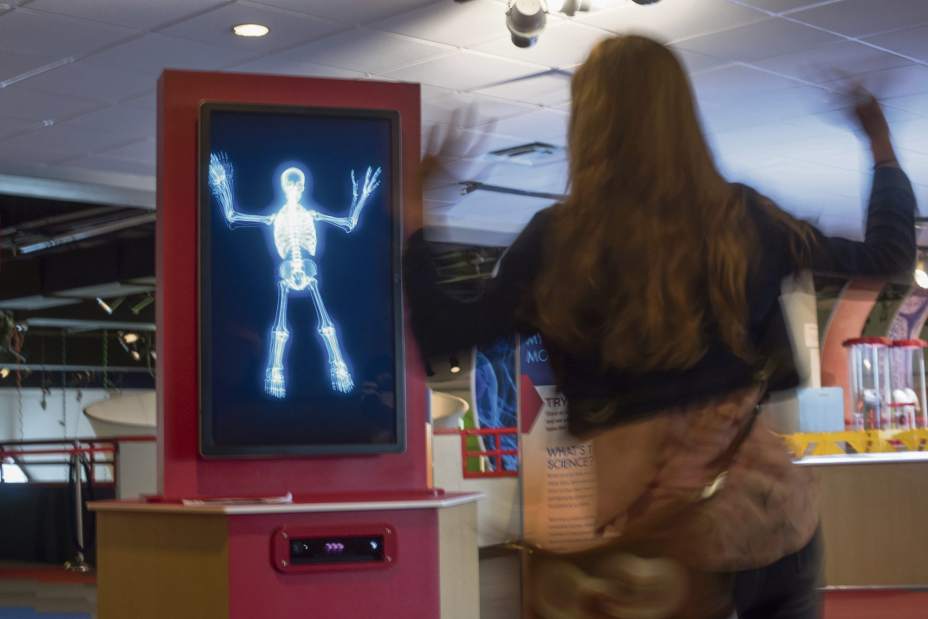
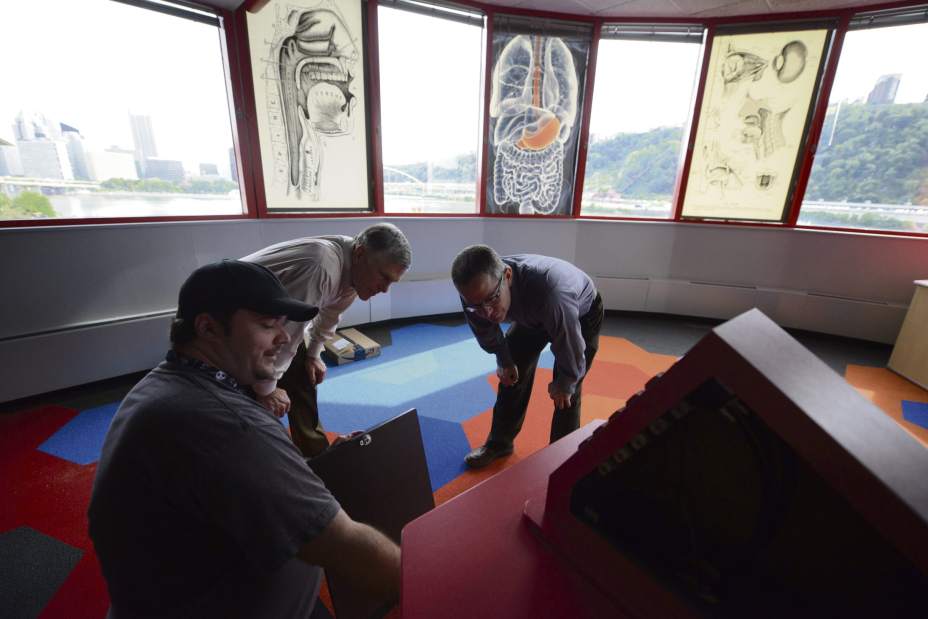
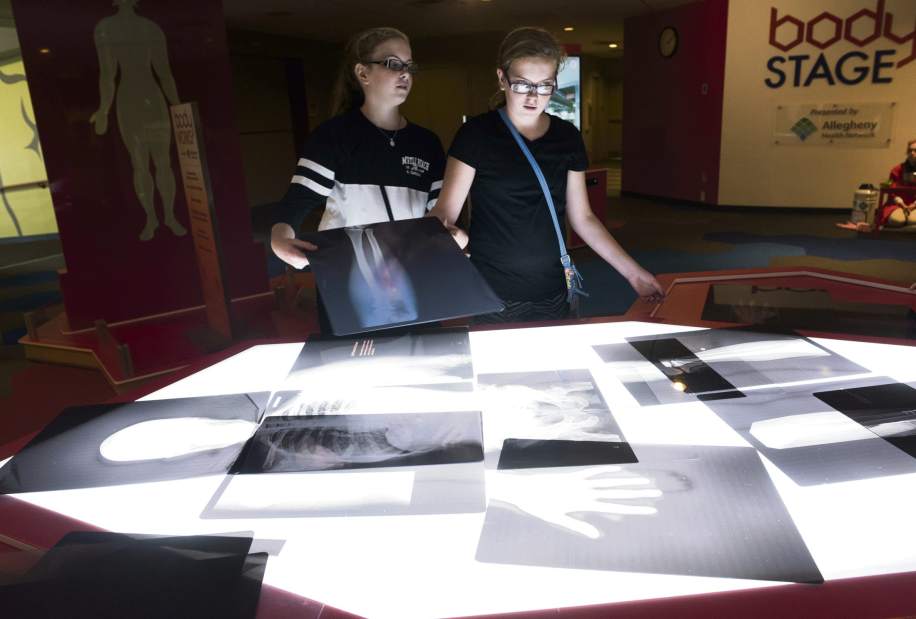
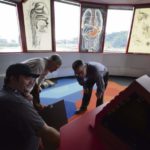
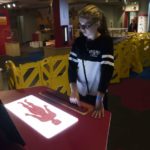
Visitors to the North Side center will get their satisfaction of such curiosities at the new “BodyWorks” exhibit, presented by Allegheny Health Network. The permanent exhibit, housed on the third floor and opening Oct. 15, explores the many parts and functions of the body, including the comical and gross things.
Sounds of flatulence filled the exhibit during a preview, as giggling kids created air pressure by squatting up and down on a tirelike seat in the exhibit portion called “Why Do I Fart?” Nearby groups of kids played tug-of-war with a black rope that reflects the length of human intestines: The small one is about 25 feet long, and the large one is about 6 feet long.
Hannah Reynolds, 9, of West View says she loves the exhibit and learned things such as how senses can deceive the brain.
“It's really exciting for me because when I first came here it was the aquarium exhibit. … Now, it's this,” says Hannah, referring to the old fish-themed setup in the space.
The most fun part of the exhibit? “I think it's the fart machine,” she says, grinning.
Hannah's mom, Melissa Reynolds, observes that kids don't have to stop to read the written parts of the exhibit. They pounce right on the hands-on stuff and have fun with it.
Other components of the exhibit — across the hall from the Body Stage (formerly the Kitchen Theater), which will have body-themed programming — include manufactured body parts such as bones. It also has a few authentic, preserved parts, including lungs and a heart, from people who agreed to donate their bodies to science. Two pairs of plastinated lungs — one from a smoker and one from a nonsmoker — illustrate the consequences of smoking, and visitors can squeeze bulbs to inflate balloons like lungs.
In another area of the exhibit, visitors can put their hands on sensors attached to a drum, and a drumstick will strike the drum to imitate their heartbeat. They can examine microscopic tissues on a slide and slide a sensor over a dome to view pictures of a real pregnancy sonogram. Two side-by-side tubes with red liquid demonstrate how arteries get clogged: One has solid white plaque in it, while the other is clear.
One corner of “BodyWorks” features a giant funnel with illustrations of neurons. The funnel rises above several hands-on exhibit pieces that show how senses can confuse your brain, with things such as hot and cold temperatures and noises that sound alike. On another wall hangs more than a dozen flasks illustrating body fluids we produce, including saliva, mucous and urine.
“People are fascinated by the human body … and there is good educational content,” says Bateman, who worked with medical experts in creating “BodyWorks.”
Kellie B. Gormly is a Tribune-Review contributing writer.
