

Phipps Conservatory and Botanical Gardens has added another honor to the Pittsburgh list of firsts.
The Conservatory's Center for Sustainable Landscapes is the first and only project in the world to meet all four certifications for the International Living Future Institute's Living Building Challenge, making it one of the greenest buildings on the planet, the Phipps announced Tuesday.
Seven buildings have achieved one or more of the certifications, but the Center for Sustainable Landscapes, which opened in 2012 on Phipps' Oakland site, is the first to achieve them all.
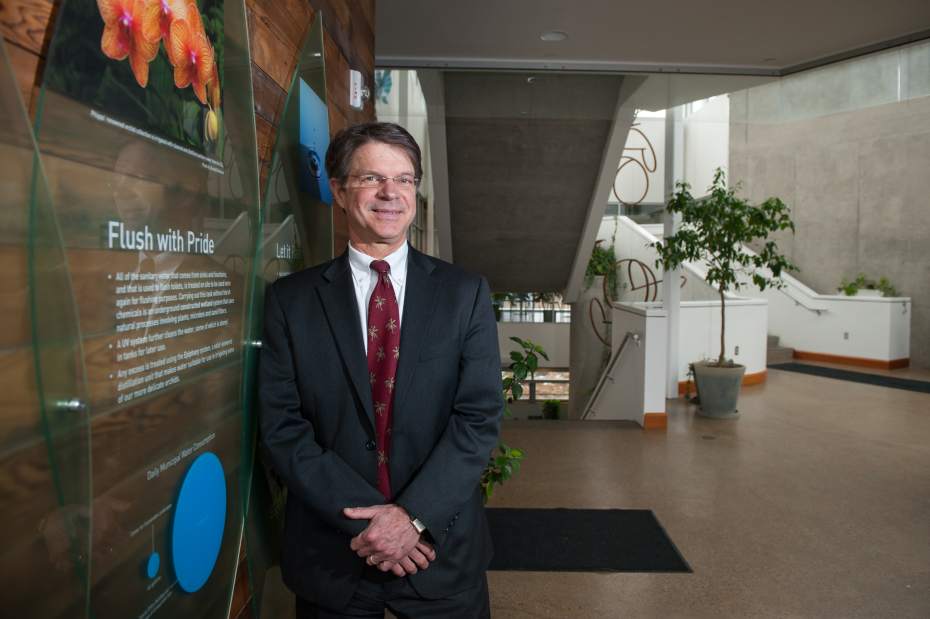
“I am really excited, glad, elated,” said Richard Piacentini, executive director of Phipps.
“The staff put a lot of work into it, and we had a lot of funders who believed in it,” he said. “This makes it a very special building.”
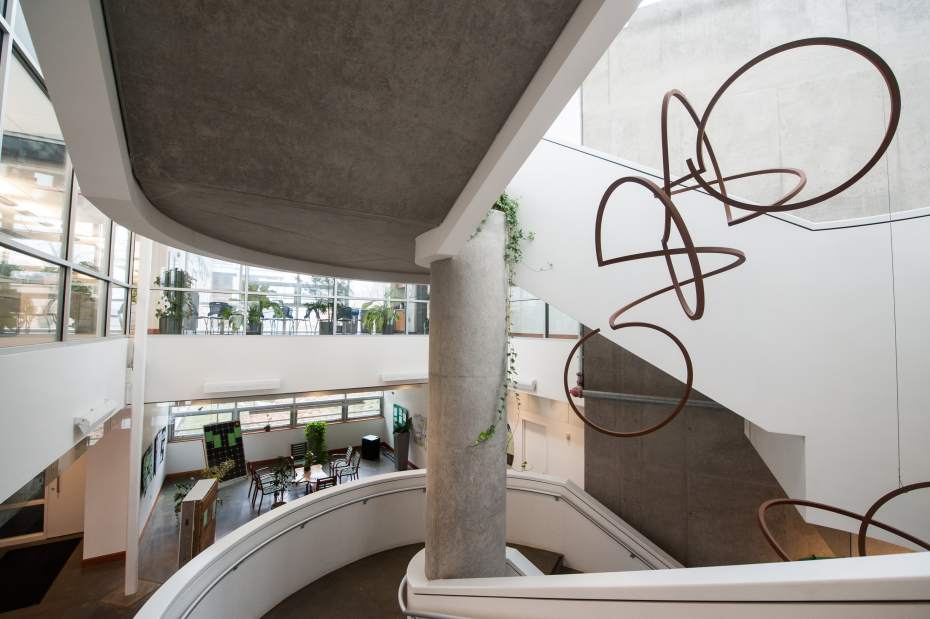
To meet the challenge, buildings must meet stringent requirements related to site, ecological balance, beauty and materials. The Phipps' center is energy independent, built with materials that avoid all known cancer-causing chemicals, uses natural techniques for lighting and ventilation and has a system to retain, treat and recycle its storm and sanitary water, officials said.
“It's a building that is taking responsibility for itself,” said Eric Corey Freed, vice president of the International Living Future Institute, which fosters green building and infastructure improvements.
A building must prove that it produces all of its required energy and that all water used in the course of an entire year is captured, treated and reused.
“Phipps' Living Building is one of the most important projects of its kind in the world, demonstrating to the design community and thousands of annual visitors a profound new paradigm for responsible design and construction,” said Jason F. McLennan, CEO, International Living Future Institute, in a statement.
Phipps accepted the challenge in 2007 when it began raising funds for what would become its Center for Sustainable Landscapes, which houses sustainability research and science education programs. Construction began in 2010 on the building. The center is topped with an outdoor public garden.
The building was constructed on a former brownfield site on a steep slope behind the Conservatory.
Solar panels, a wind turbine and geothermal wells provide on-site electricity. The building uses natural ventilation and daylight throughout. A system of cisterns, rain gardens, a lagoon and wetlands treat storm and sanitary water.
Piacentini says the two challenges that required the most effort were generating enough independent energy to run the building and finding suppliers who met rigid standards for building materials that contained none of a long list of toxic chemicals, such as formaldehyde and PVC.
Even as Piacentini and his staff celebrated their achievement, plans are under way for a classroom to demonstrate elements of a healthy environment, as well as revamping a warehouse behind the greenhouse to become a Conservatory exhibit staging center.
Alice T. Carter is a staff writer for Trib Total Media. She can be reached at 412-320-7808 or acarter@tribweb.com.
