Matt Lamanna recalls the thrill he experienced as a high school kid in upstate New York when the original “Jurassic Park” came out in 1993 and quenched the insatiable curiosity he'd had about dinosaurs since he was 4.
“I had already decided I wanted to be a paleontologist, but it had a big effect on me,” says Lamanna, assistant curator of vertebrate paleontology at the Carnegie Museum of Natural History in Oakland.
“I still remember seeing it for the first time and seeing that first Brachiosaurus ... and thinking, ‘Oh my God, somebody finally put on the big screen what I had been imagining in my head my whole life,' ” says Lamanna, 39, a native of Waterloo, N.Y. “It was a pretty magical moment. ... I was so awestruck, I had to go back and watch it a second time.”
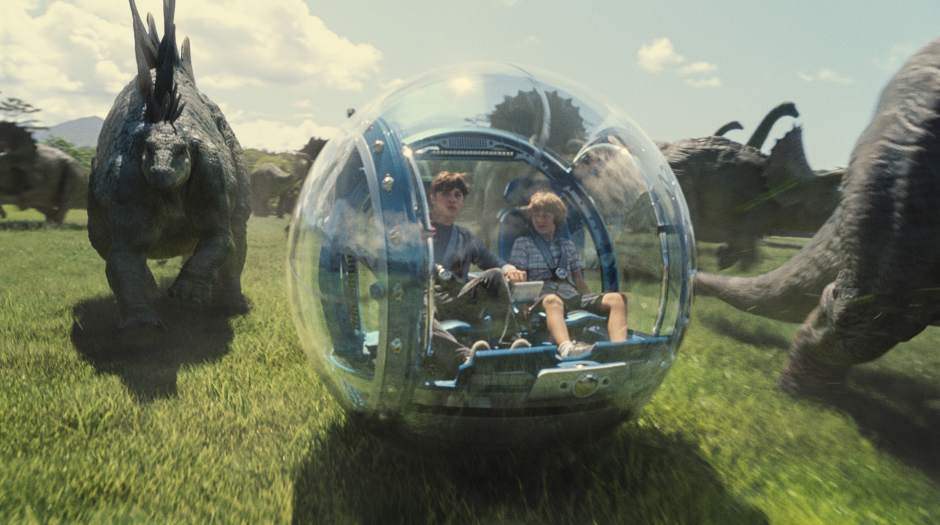
Lamanna, a self-described sci-fi and fantasy geek who lives in Seven Fields, Butler County, didn't expect to enjoy the franchise's latest entry, “Jurassic World,” as much as he did when he saw a preview this week.
“I think it's an entertaining movie,” he says. “I could recommend it to friends if they're looking for a good time. Of course, I'm a biased observer, but there were moments where the whole theater erupted in shouts and cheers. I think that's telling you something.
“Some parts are cringeworthy,” Lamanna says, referring to some of the film's less factually accurate moments. “But there are some parts that are spectacularly awesome.”
He says the dinosaurs portrayed in the Jurassic movies are relatively accurate historically, although this movie doesn't update the dinosaurs to reflect what paleontologists have learned in the past several years: that many dinosaurs evidently had feathers, or at least fuzzlike structures called filaments. But the movie explains why its dinosaurs have scaly skin and look reptilian rather than birdlike: People want the traditional scary image.
A creature that looks like a giant chicken just doesn't look as mighty and threatening as a lizardlike beast, Lamanna says.
“For most people, I think, this ... image of a scaly, crocodilelike or snakelike (dinosaur) is more terrifying,” he says. “I would say they're not totally accurate, but they're not embarrassingly flawed either.”
Lamanna earned his Ph.D. and master's degree in earth and environmental science from the University of Pennsylvania in Philadelphia, and received his bachelor's degree in geoscience and biology from Hobart College.
Some paleontologists complain about the fallacies in the movies, he says, but the shows are “supposed to be fun and opinion, not a textbook. It's not a documentary. It's a sci-fi movie. It's entertainment.”
Kellie B. Gormly is a staff writer for Trib Total Media. She can be reached at kgormlytribweb.com or 412-320-7824.