
Review: New 'Cinderella' excels with old-fashioned charm





In this age of revisionist, modernized Disney fairy tales, where we've learned that some of our favorite characters really aren't what they seemed, the striking thing about the studio's sumptuous new live-action “Cinderella” may not be what it is, but what it isn't.
It isn't revisionist. It isn't modernized. The good guys are still good, the bad still bad. Prince Charming? Still very charming, not a “Frozen”-style cad. And the evil stepmother? She's not, like Angelina Jolie's Maleficent, merely misunderstood. As embodied by Cate Blanchett, she remains evil to the core.
What “Cinderella” is, though, is touching, visually stunning and very satisfying.
Director Kenneth Branagh, working with a high-wattage cast led by the winsome and genuine Lily James, sticks to tried-and-true narrative formula and infuses it with wit and style. If the glass slipper ain't broke, he seems to be saying, why fix it?
A prologue shows us Cinderella's childhood, as a girl named Ella — a lovely thing who's kind to all, and has a way of communing with animals. She lives in a country home with her loving parents (Hayley Atwell, Ben Chaplin), and all is perfect until, of course, Cinderella's mother takes ill and dies.
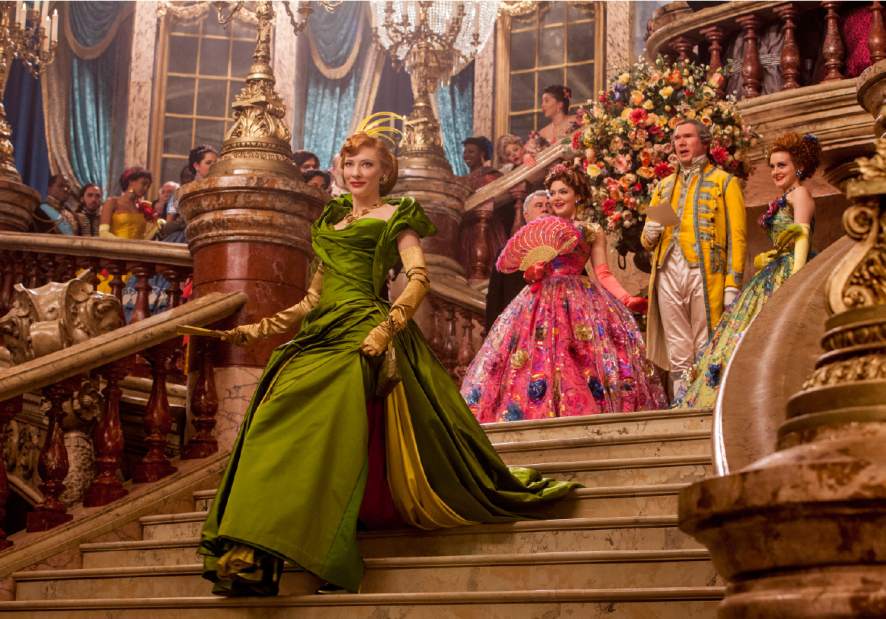
It won't be long before Dad will take up with the widowed Lady Tremaine, who arrives with her dim-witted daughters and starts rearranging things. We all know how bad things get, but when Blanchett shows up with her raven hair, her chic '40s-style glamour and the first of many jaw-dropping dresses, well, it's hard not to secretly root for a villain with such stunning fashion sense.
But the story's about Cinderella. Already relegated to the attic, her life changes for good when her father dies, rendering her not only an orphan but a slave, too.
In the forest one day, Cinderella encounters a steed chased by hunters. She admonishes the lead hunter — a young man called Kit — to spare the animal. Her logic and pluck charm Kit, who, of course, is Prince Charming (a ridiculously attractive, azure-eyed Richard Madden).
Desperate to see that country girl again, he opens the upcoming ball to all women in the kingdom. But Lady Tremaine forbids Cinderella to attend. Natch, this is where Fairy Godmother turns up, in the campy, fun-loving personage of Helena Bonham Carter, who's a bit rusty with the magic.
The palace ball is as sumptuous as any little girl could want, and Branagh makes the ending, that magical moment where the slipper fits, as suspenseful as it can be when we've all known the story our whole lives.
There's a message here, and it may disappoint anyone looking for a new feminist heroine to emerge from the cinders. It's about kindness and forgiveness, and sticking to your life ethos no matter what confronts you.
Hardly revolutionary. But somehow, like that glass slipper, it fits just right.
Jocelyn Noveck is a film critic for the Associated Press.
