
Artist offers new look at historical Pittsburgh

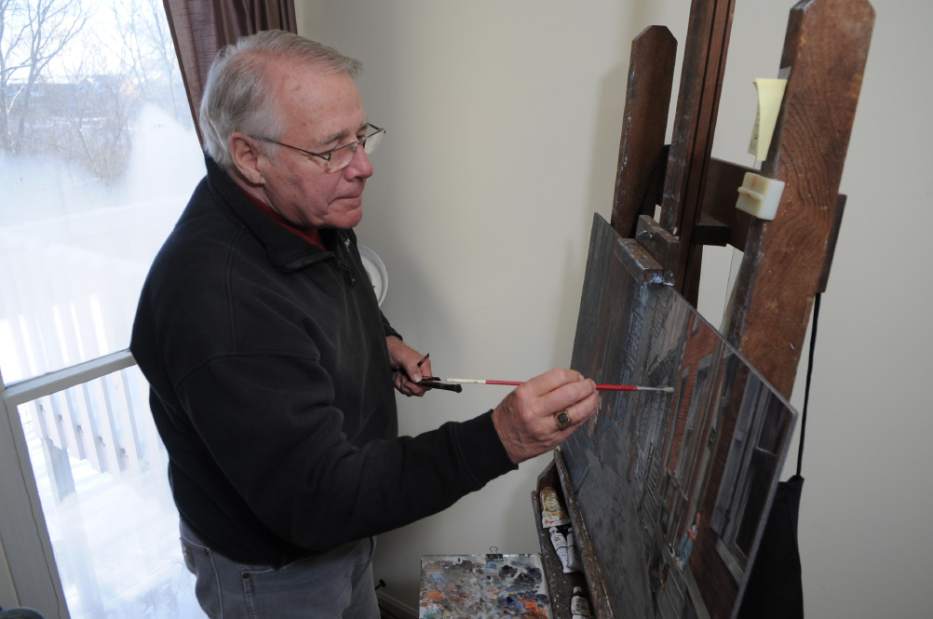
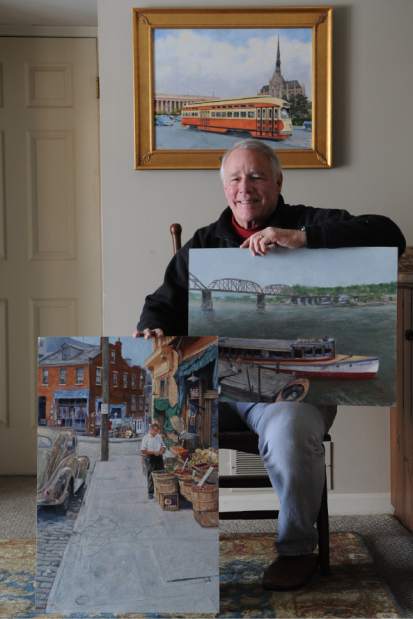
After a long career that took him to the Bahamas and beyond, artist Fritz Keck has returned to his hometown of Pittsburgh and fallen in love with the place all over again. So much so, that he can't stop painting it, especially images of Pittsburgh's past.
Keck still has relatives in the region, and his family has a long history in Pittsburgh. There are two streets on the North Side that are named for forefathers on his mother's side of the family — Goehring and Yetta. “There is still a mansion-type house (now a duplex) referred to as the Goehring Mansion on a hill overlooking the confluence of the rivers at the Point,” he says.
“This, of course, intrigued me and led to my idea of creating images of the colorful and diverse history of the region. Something nobody else was doing or had done,” Keck says.
Keck is now focusing on creating original oil paintings of old Pittsburgh and the Western Pennsylvania region and limited-edition canvas prints and notecards through his website, fritzkeck.com.
Currently, Keck lives in Harmar, just on the edge of Fox Chapel. But he grew up in Edgewood. After graduating from Carnegie Mellon University in 1967 with a degree in industrial design, Keck went on to work in various sales positions and as an entrepreneur, in places as diverse as Chicago, Steamboat Springs, Colo., South Florida and the Bahamas.
Eventually, Keck and his wife moved to Bigfork, Mont., where they started a company that developed the technology for original licensed artwork on kiln-fired tiles for murals and backsplashes. The stable of artists ran the gamut from Western to old-master images — Norman Rockwell, Vincent Van Gogh, Charlie Russell, Pierre-Auguste Renoir and many more artists both living and deceased.
“Our customer base included Cabela's, Lowe's, Sears and other entities,” Keck says. “The LLC was successful to a point, but not something on my bucket list of things to do in running the business.”
A lifelong friend recruited Keck to return to Pittsburgh almost three years ago to use his talents in developing products for a high-tech process in manufacturing for the consumer market. “The timing was perfect,” Keck says. “That commitment ran its course, and it was time to start on a path that was fulfilling to me.”
For Keck, the next step was to return to painting, which he had done as an avocation throughout his long career, having completed commissions for Rockwell International, Nemacolin Woodlands, the Greenbrier resort in West Virginia and many personal commissions.
But, Keck says, painting full-time was, “something I have wanted to do for many years.”
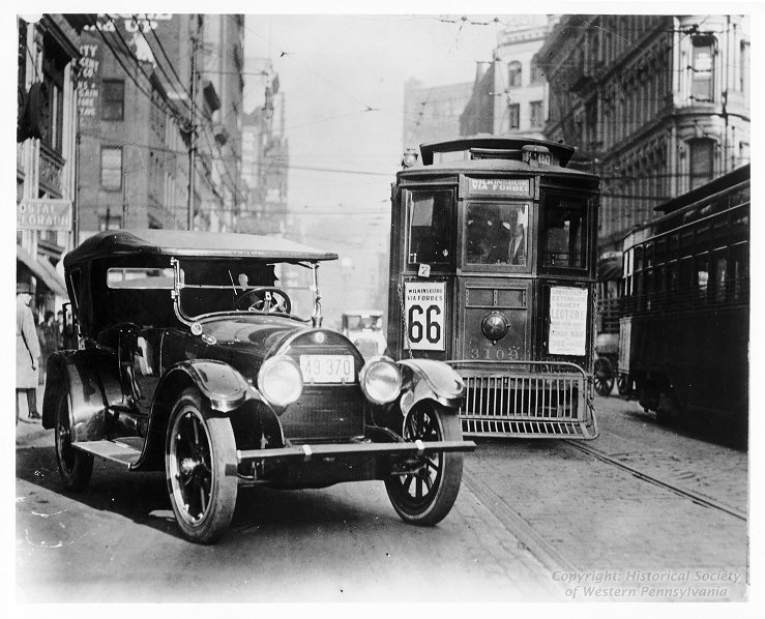
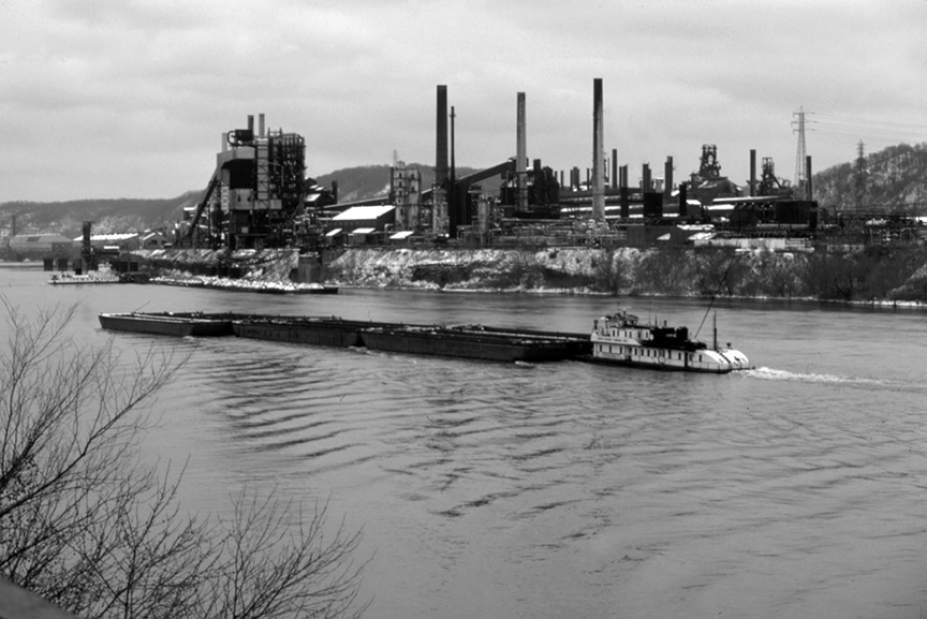
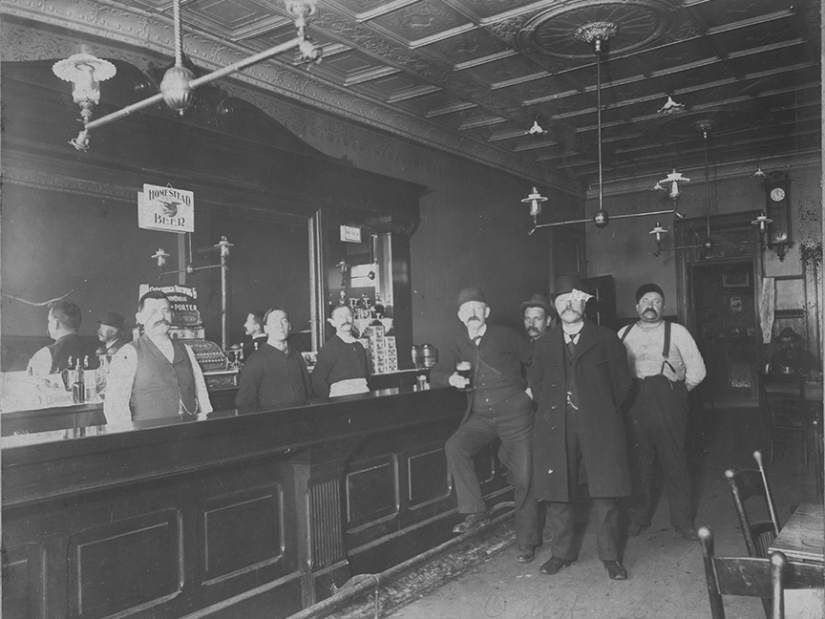
The Pittsburgh-area paintings are based on old black-and-white images provided by and in cooperation with the Senator John Heinz History Center, the University of Pittsburgh, the Pennsylvania Trolley Museum and Rivers of Steel.
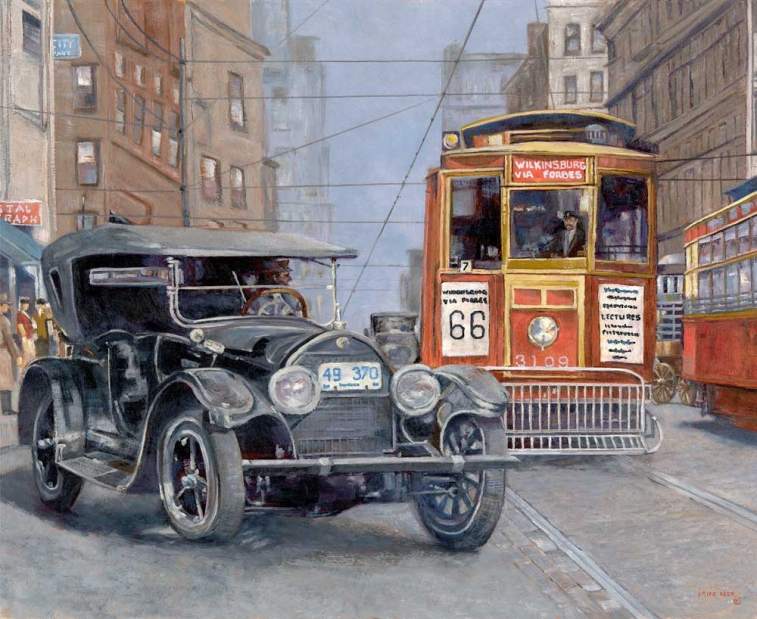
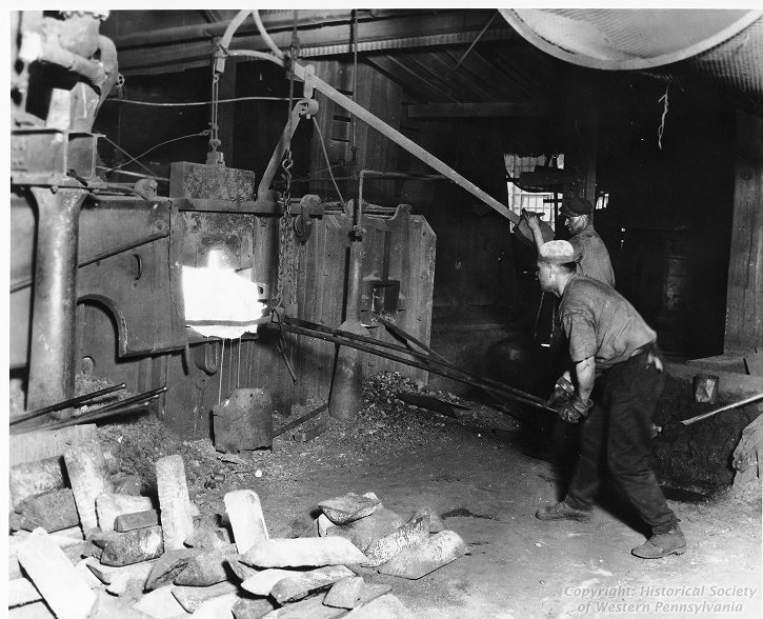
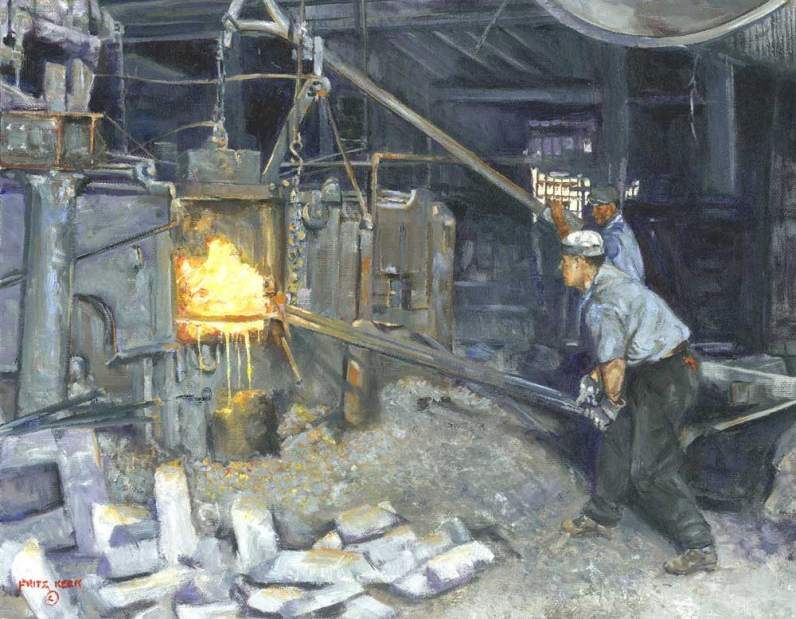
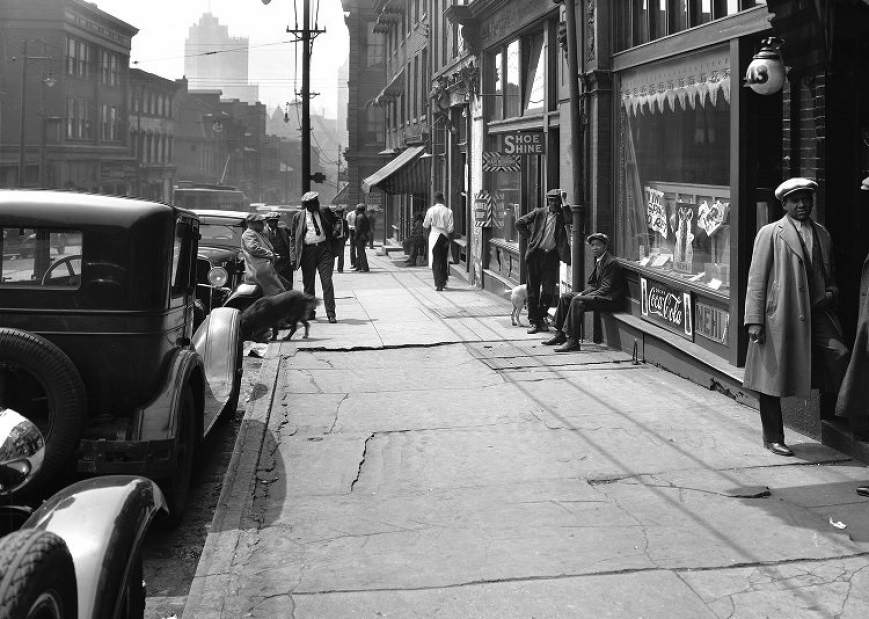
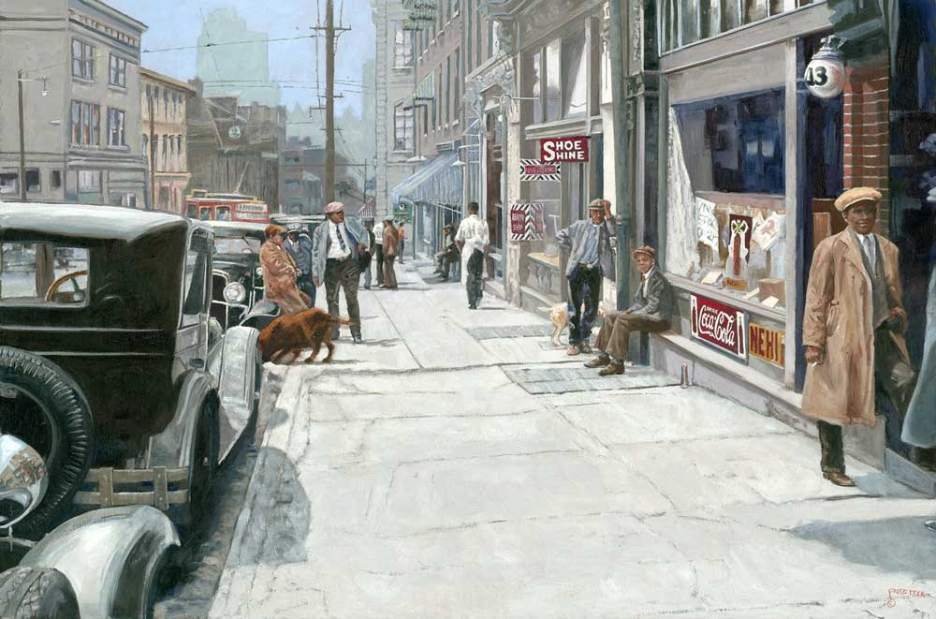
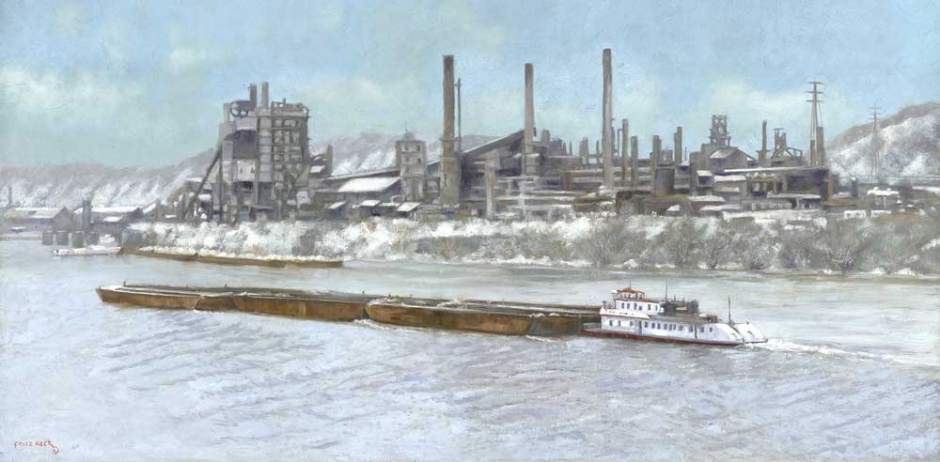
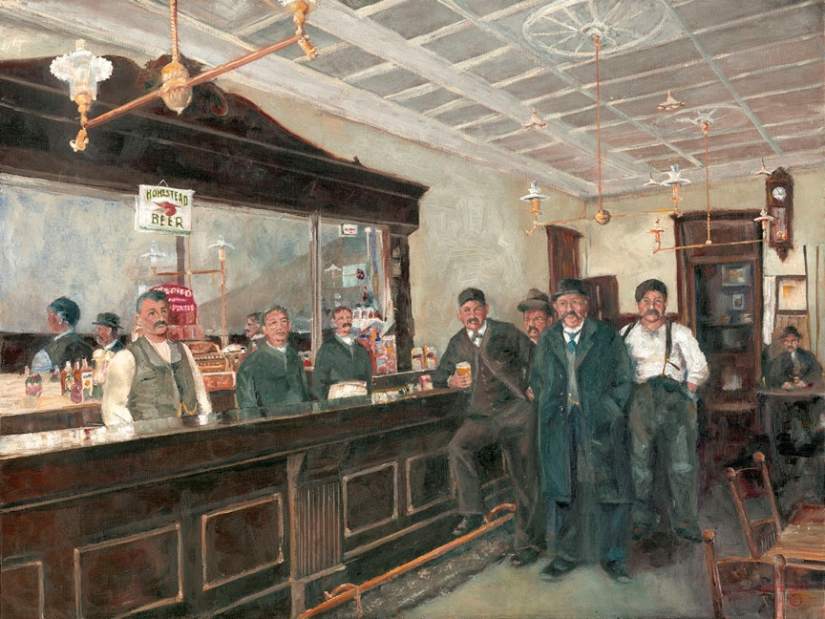
The archival images in black and white are used as source material for the original oil paintings done in color. Though each painting is true to its source image, the artist takes liberty in determining the colors used, with the exception of historical subjects such as streetcars.
“The color brings the subject matter to life using a palette, which reflects the rediscovery of the unique and diverse character of the Pittsburgh region,” Keck says.
Keck's paintings reflect the region's history in steelmaking, mining, ethnic neighborhoods, trolley cars, the rivers and other iconic images embedded in the minds and memories of Pittsburghers young and old.
For example, there's “Shenango Coke Works, Neville Island,” the source image of which Keck found in the J&L Collection at the Heinz History Center.
“I found this image to be typical of traffic on the river even today,” Keck says. “The date is unknown, but I assume it was sometime in the 1950s or 1960s.”
“Burg Hotel 1907” also is based on an image Keck found in the J&L Collection at the History Center.
A portrait of bar patrons in period dress, Keck says of it, “Pittsburgh had more than its share of saloons. This saloon and hotel became Yarski's and was located at 2724 Carson St. The men pictured here are all identified, and I wonder if their relatives are still around, which intrigued me to paint the picture.”
Riding a streetcar, always a favorite memory of those over the age of 50, is the subject of “Wilkinsburg via Forbes, 1935.” Keck found the source image at the Pennsylvania Trolley Museum in Washington.
“This painting intrigued me because of the vintage trolley,” Keck says. “As a student at CMU, I rode the Wilkinsburg-Edgewood trolley route frequently.”
Keck found several historic neighborhood shots to work from at the University of Pittsburgh Archives Service Center. Among them “Shoe Shine — Hill District, 1930” is a real standout.
“My favorite images are ones that show character, which this one certainly does,” Keck says. “Wiley Avenue was the hub of commerce in the Hill District and the home of a mix of ethnic and racial groups. It remains to this day a very historical area.”
Then, there is “The Puddlers,” which brought back personal memories for Keck.
“Removing the ball from the iron puddling furnace seemed like a typical steel-mill image to me, besides the fact that I worked at the Clairton Works in my early years,” he says.
Keck says that both Alexis Macklin, director of the library and archive center at the Heinz History Center, and Miriam Meislik, media curator for the University of Pittsburgh's Archives Service Center, have been supportive in allowing him the use of the black-and-white source material for his paintings.
“Without the cooperation and support of both Alexis and Miriam, I would not be able to pursue my dream,” Keck says. “I am deeply indebted to both of them. So far, there has been significant interest in the concept of bringing to life old Pittsburgh and the region's images.”
“I would say that Fritz does an excellent job of staying true to the photographs, adding warmth and interest through his detail-oriented work,” Meislik says. “His color choices are excellent. For instance, his views including streetcars use colors that are very close, if not exact matches, to the colors in which the cars were painted at the time the original photographs were taken.”
Kurt Shaw is the art critic for Trib Total Media. He can be reached at kshaw@tribweb.com.
