



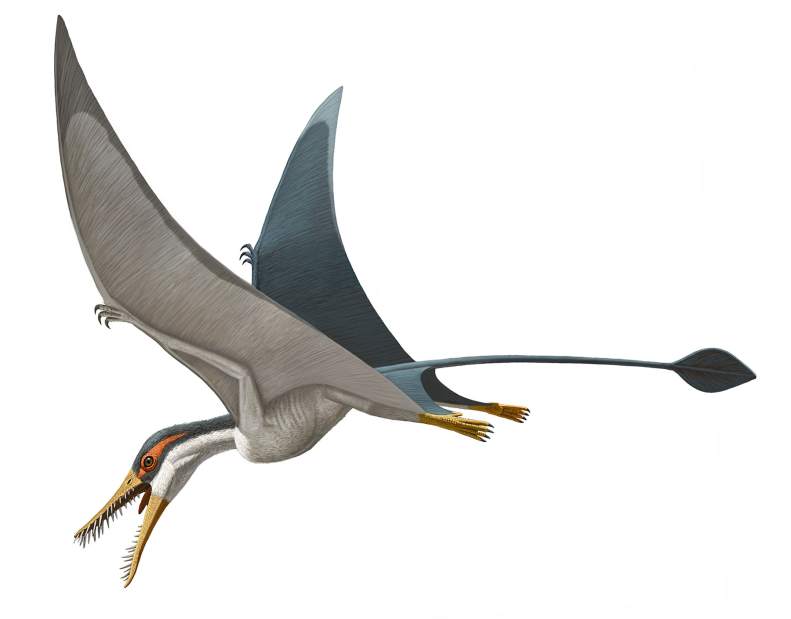

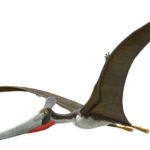
Millions of years ago, flying reptiles — some with wingspans as wide as F-16 fighter jets — sailed the skies over much of the globe.
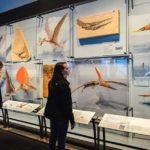
Although they disappeared with Tyrannosaurus rex, these prehistoric vertebrates are being brought to life in a blockbuster new exhibit, “Pterosaurs: Flight in the Age of Dinosaurs,” at the Carnegie Museum of Natural History in Oakland.
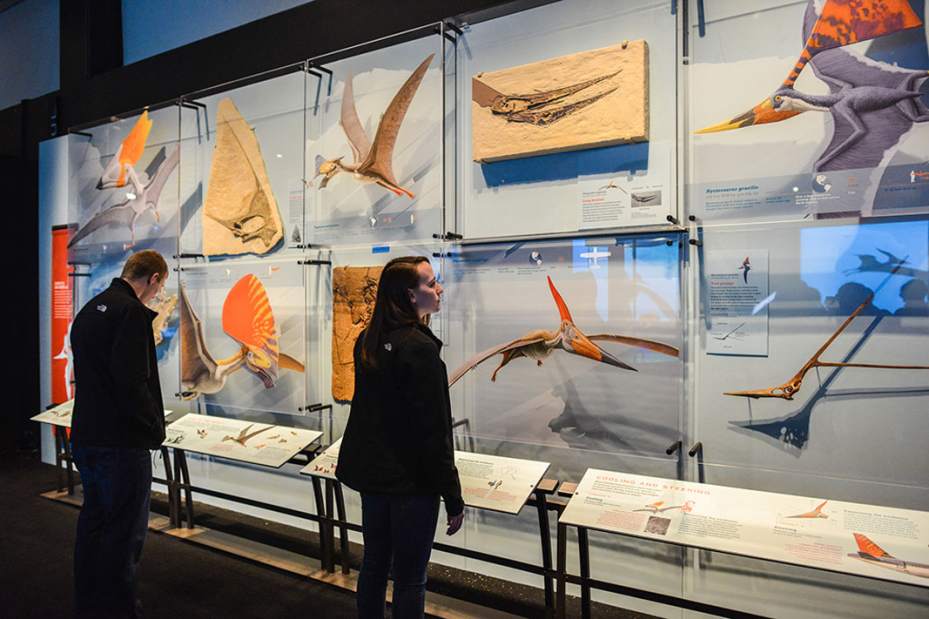
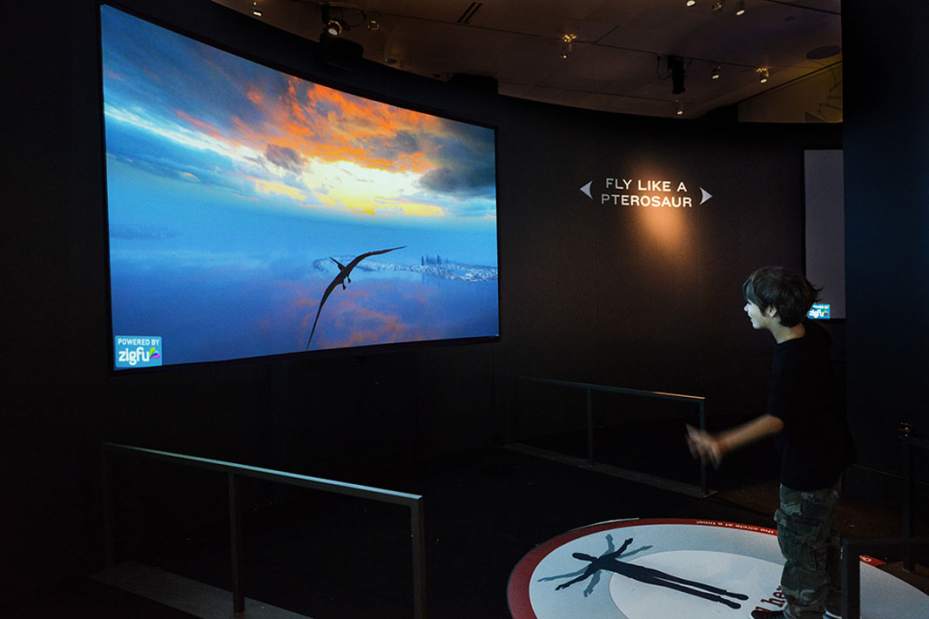
On loan from the American Museum of Natural History in New York, the show runs from Jan. 30 through May 22 and features fossils and life-size models of these highly evolved creatures — including the colossal Tropeognathus mesembrinus — as well as exhibits that immerse visitors in their world and their flight. A virtual wind-tunnel will enable show-goers to explore pterosaur aerodynamics, while a motion sensor-based interactive will let them pilot a pterosaur over oceans and volcanoes.
“Pterosaurs were the first back-boned animals to fly ... the dominant aerial animal,” says Matt Lamanna, the Carnegie's assistant curator of vertebrate paleontology. “For 100 million years of the Earth's history, they were the undisputed kings of the sky.”
Pterosaurs (Greek for “winged lizard”) evolved from tiny reptiles during the dinosaur age about 235 million years ago, Lamanna says. “They were relatives of dinosaurs, but not dinosaurs themselves.”
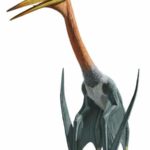
More than 100 species of pterosaurs have been documented since one of their fossils was first described in the early 1800s, and they represent an astonishing range of sizes, he says. “Some were as small as robins and some, like Quetzalcoatlus northropi, were as tall as giraffes, with wing spans of up to 36 feet.”
The largest ones had 9-foot-long heads and weighed as much as a grizzly bear — about 500 pounds — but many of their bones were hollow, and, by jumping a couple of meters, they could launch themselves into extensive flight, according to Michael Habib, a paleontologist and expert in animal aeronautics, who consulted on the exhibit when it was being organized in New York.
“They used their hands and feet to launch,” says Habib, a research associate at the Carnegie and at the Dinosaur Institute at the Los Angeles County Museum of Natural History. Once affiliated with Chatham University, he is an assistant professor of cell and neurobiology at the University of Southern California.
“We don't know how high they went,” Habib says, “but a big guy cruising in the range of 40 to 50 miles per hour wouldn't have been out of the question.”
While huge pterosaurs may have preferred to fly on the slow side, they could have reached sprinting speeds of 80 miles an hour, he says. “And the really big guys could have gone a long way. They could have covered hundreds and even thousands of miles in a single trip, depending on conditions.”
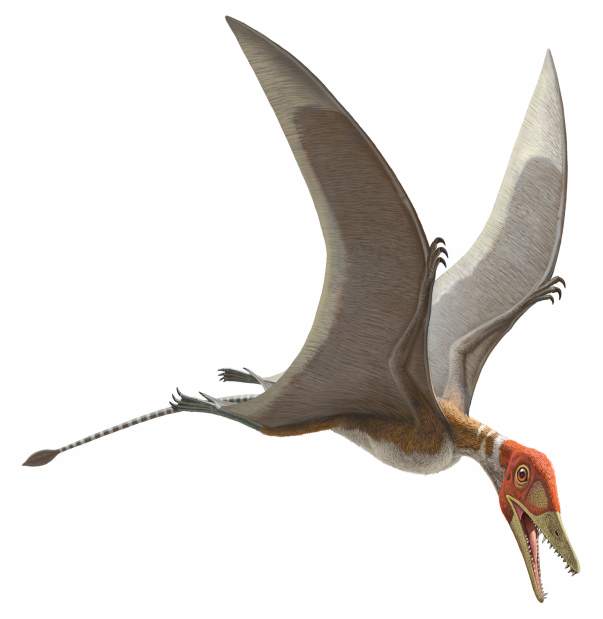
Even so, they weren't birds; nor did they evolve into birds, Lamanna notes. “Birds descended from dinosaurs. Pterosaurs came from another type of reptile, and they were probably warm-blooded and covered with fuzz — not scaly and cold-blooded like snakes and other reptiles we think of today.”
Many lived in coastal areas, probably colonizing by species, and occupied a range of ecological niches, Lamanna says. “Some dove for fish, some chased insects, and some lived like flamingos and strained plankton from the water.”
They reproduced by laying eggs, he says. “We've found eggs with babies inside.”
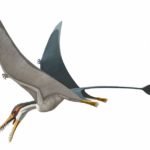
Perhaps the pterosaur's most distinctive feature was a head-crest, which varied by species in how large and elaborate they were. While their function is somewhat of a mystery, they are thought to have helped a pterosaur identify its own kind, and thus played a role in mating and reproduction, Lamanna says.
“A lot of the weirder-looking crests were most likely sexual display structures. If a male had one, a girl pterosaur might think he looked pretty hot.”
The show's gallery display of crests will illustrate their diversity, from dagger-shaped blades that jut from the head to giant, sail-like extensions.
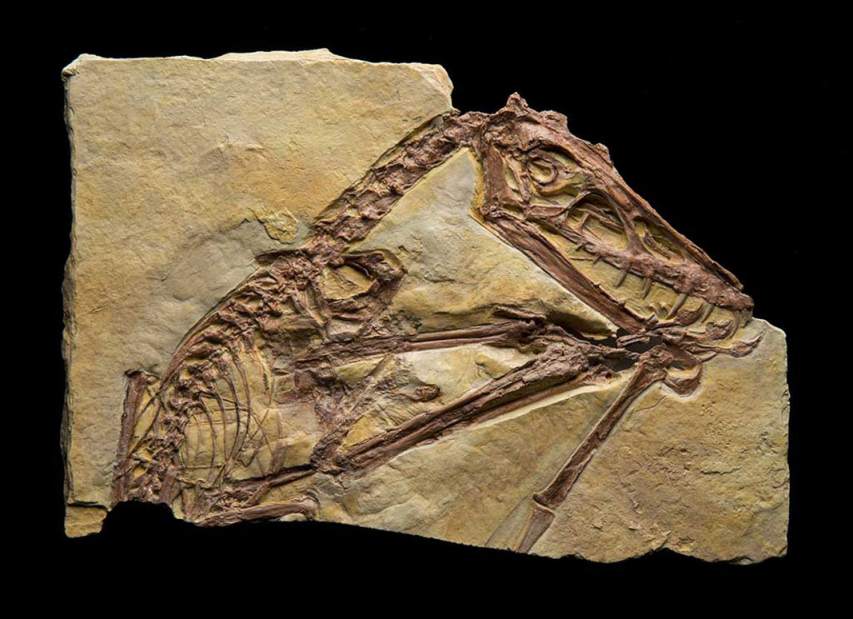
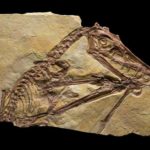
Pterosaur fossils have been discovered on every continent, but are rare, Lamanna says. “The Rocky Mountains West is where most North American fossils have been found. Some have also been found in what is today Kansas, but the richest sites so far have been in China, southern Germany and Brazil.”
Visitors will be able to view some of these scientifically important fossils as well as fossil casts under high-powered inspection scopes.
“One thing people will get out of this exhibit — even the ‘paleo-nerds' in the family — is how many species of pterosaurs there were,” Lamanna says. “They were an astonishingly diverse group and a great illustration of how our conception of the past is changing all the time.”
Many of the species we know about today have been discovered just in the past 25 years, he says. “It emphasizes how much we still don't know, and (it) can show kids that if they grow up to be scientists, there's still loads of stuff they can discover.
“I'm 40 and wanted to be a paleontologist since I was 4, and I get knocked out of my chair by some discovery every year.”
The exhibit's other important lesson has to do with evolution because pterosaurs went from being on top of the world to extinction, Lamanna says. “They went from crushing the competition, evolutionarily speaking, to ultimately disappearing.”
It may have been a double-whammy, he says. “Midway through the age of dinosaurs, birds evolved and it's quite possible they out-competed smaller pterosaurs for the same habitat and food.”
The final blow is believed to have been the catastrophic impact of an asteroid the size of Mt. Everest that slammed into Earth, leaving a 100-mile-wide crater and causing a global environmental catastrophe.
“The same impact killed off dinosaurs, too,” Lamanna says. “Only birds survived. Pterosaurs left no descendants.”
Deborah Weisberg is a Tribune-Review contributing writer.
