
Bluegrass jam sessions bring out all types of musicians, fans


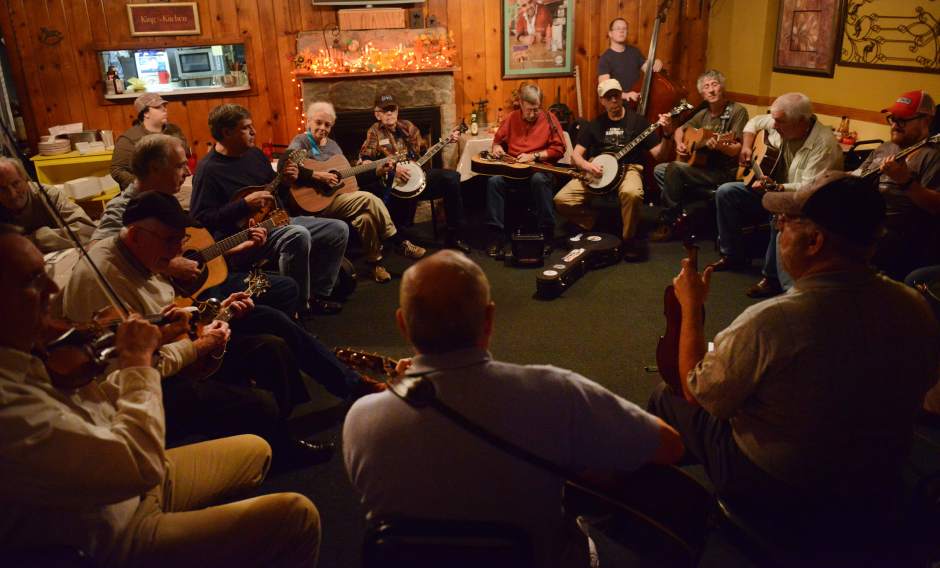



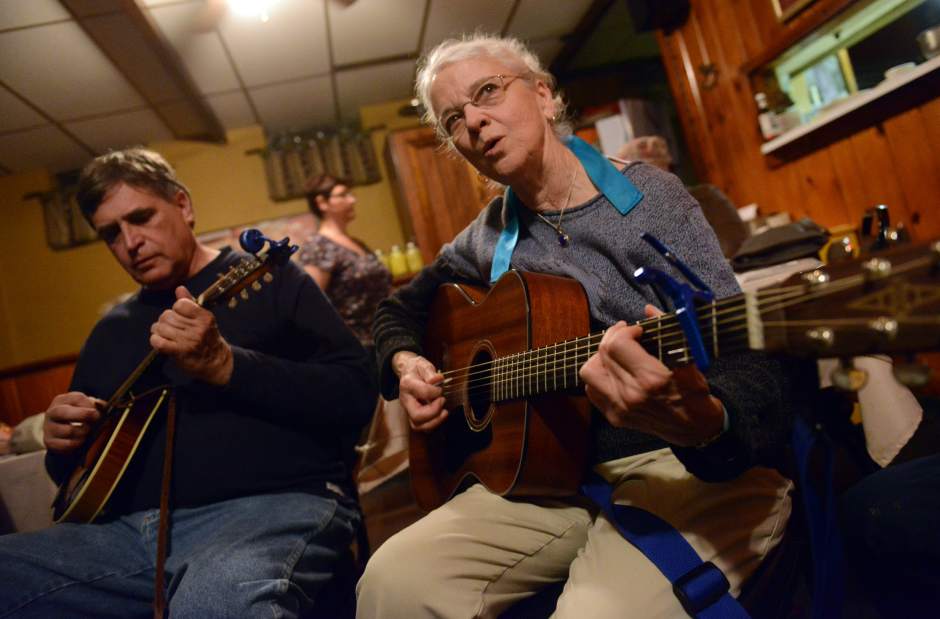


Bluegrass music may still find its soul in the haunting “high, lonesome sound” said to be the essence of the genre.
It is anything but lonely, though. Its passionate purveyors and fans of all ages throughout the Pittsburgh region are helping to not only keep it alive, but also celebrate it as the communal experience that is its lifeblood.
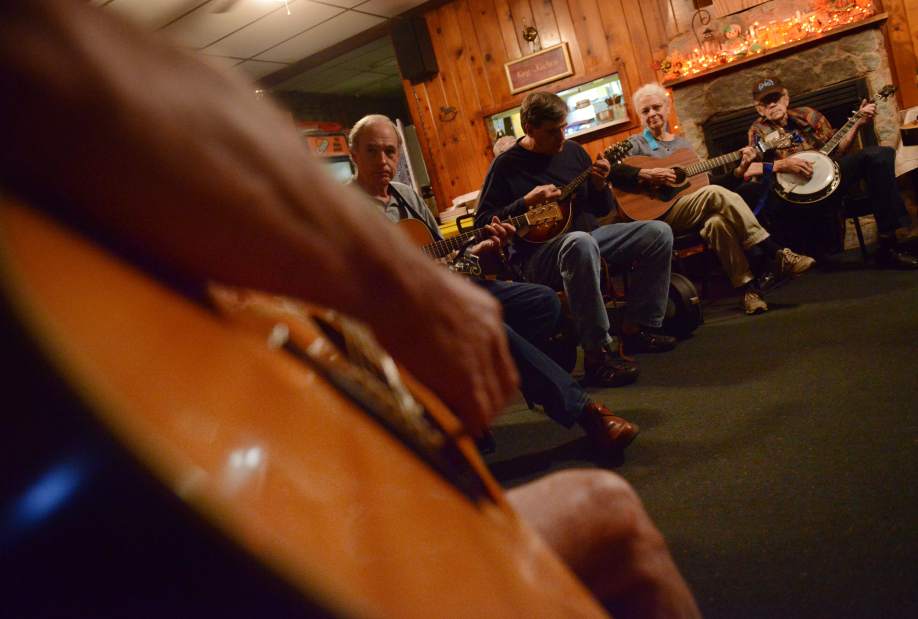
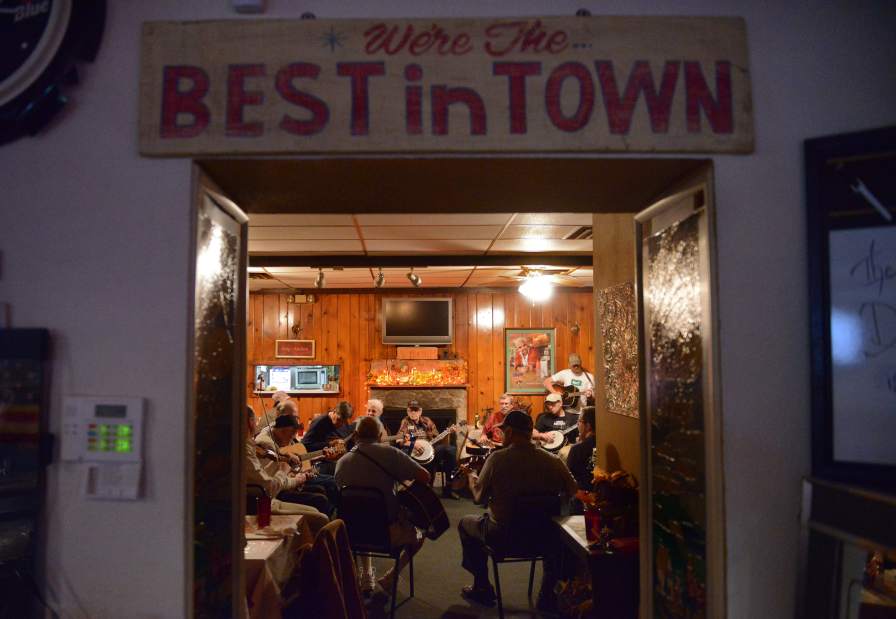
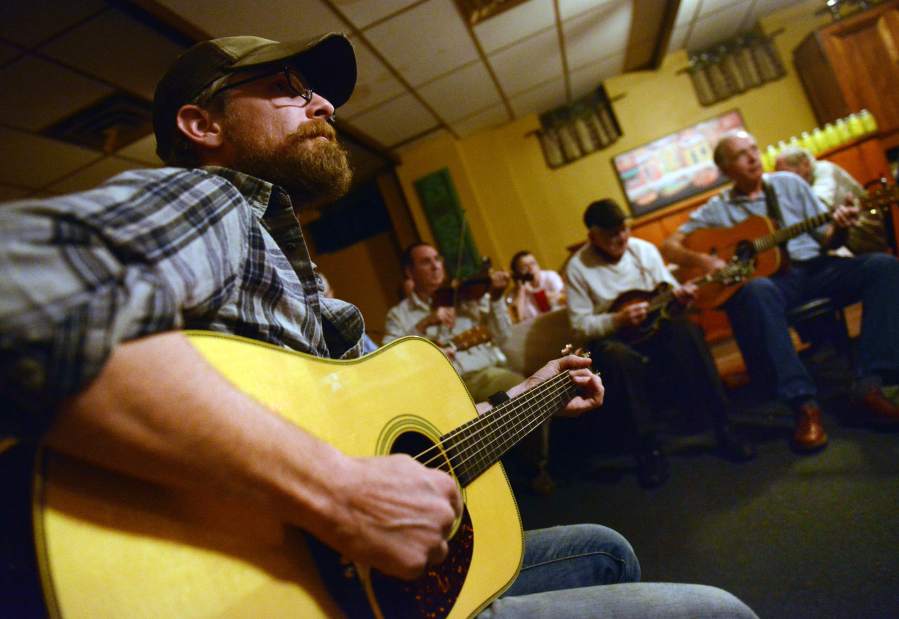
Gathering weekly, monthly or somewhere in between in lounges and clubs, churches and halls across Western Pennsylvania, informal bluegrass jams honor the spirit of the music's acknowledged founding father, the late Bill Monroe, even as they sometimes explore new possibilities for this happy marriage of acoustic, stringed instruments.
Experienced and neophyte players, on fiddle, acoustic guitar, upright bass, mandolin, banjo and resonator guitar (best known as the Dobro), inspire and learn from one another as they render traditional, modern and even unexpected tunes with heartfelt enthusiasm.
It's a great outlet if you want company, suggests veteran guitarist Lew Scheinman of Point Breeze, co-founder of the Western Pennsylvania Bluegrass Committee and organizer of the Tuesday-night jams at the Starlite Lounge in Blawnox, which started in the 1990s.
“Bluegrass is an ensemble music. You don't play it by yourself,” Scheinman says. “Beginners come to meet people and to learn. Fans and listeners come for the music and come back for the camaraderie.”
Jams offer the opportunity to listen to some “homemade” music, Scheinman says, “and to see how much fun and enthusiasm jammers are having and showing.”
Dr. Jonathan Finder of Highland Park, a banjo player for 30-plus years, considers playing the Starlite the highlight of his week.
“It's the only opportunity for me, a busy physician who is not in a band, to play with others, sing and sing harmony. It's a joyful experience,” says Finder, a pediatric pulmonologist at Children's Hospital and a professor at the University of Pittsburgh medical school.
He sees bluegrass as “truly the great equalizer.”
“It's the basis for friendships that might never arise otherwise. All are equal in the jam,” he says.
The tradition, says Scheinman, comes from the Appalachian and mountain folk who worked hard days and relaxed by getting together to play music.
“Much of the music is authentic, built on real-life experiences,” he says.
“Bluegrass is America's music, born and bred right here in America on the virtues of the hard times and hard work of common-class folks,” adds Tim Custer of Friedens, Stonycreek, Somerset County, who leads the Brush Creek band and directs the Coleman Station Bluegrass Festival in July in Friedens.
“When you don't have loud amps and a booming drum set covering up the sound, you are left with pure acoustic music,” Custer says. “That pure feeling I get performing and listening to bluegrass is a huge release for me.”
The music's subject matter, including love, loss, hardship, survival and faith, tend to be topics to which most people can relate, says Bruce Mountjoy of Ingram, host of WYEP's (91.3 FM) “Bluegrass Jam Session,” airing from 8 to 10 p.m. Sundays.
“I think that bluegrass has an honesty and a directness that touches people in a way that some other styles of music do not,” Mountjoy says. “The instruments are played with often amazing virtuosity without benefit of any sort of electronic enhancements.”
Crossing generations
“It is a music that reaches across generations because the message and values relate to people across the age spectrum. Pop music tends to be sort of generation specific,” Mountjoy says.
While there are many who don't like bluegrass because they view it as rural or simple, he says, “I think they would enjoy it if they were to put those prejudices aside. There are amazing instrumental components, beautiful harmonies and touching messages.”
It is an expression with roots in many musical traditions, including Scots-Irish, African-American blues and Southern string band. And while it may appear to be an old art form, Mountjoy says, the first bluegrass music was not recorded until 1945. “So, bluegrass only predates rock 'n' roll by no more than a decade,” he says.
Good bluegrass, says longtime musician Jeff Bell of Fairfield, Adams County, an organizer and master of ceremonies of the Laurel Highlands Bluegrass Festival near Ligonier in June, has a solid pulse, a good story told with expressive vocals and tight harmony and a touch of instrumental flash.
“When its ‘right,' there is nothing like it,” he says.
Bell, whose band once had the honor of opening for bluegrass pioneer Earl Scruggs and his Revue in Uniontown, describes bluegrass as “easy to learn, but difficult to play well.”
It's possible to learn a few basic guitar chords and play in some jam sessions for hours, he says.
“Many jammers are more than happy at this level, and there's absolutely nothing wrong with that,” Bell says. “For others, the music becomes a lifelong journey of exploring all the aspects of the bluegrass sound — more songs, more techniques and the history behind it all.”
Bluegrass and Bach
Listen to a recording of Del McCoury, Bill Monroe, Doc Watson, Earl Scruggs or other bluegrass artists, and you hear two things almost every time: They play fast, and it is clean and precise, says musician Trish Imbrogno of Lawrenceville.
“Playing bluegrass is as difficult as playing Bach or Beethoven, and the greats of the genre are as good as Josh Bell or Yo-Yo Ma,” says the classically trained double bassist, who performs with the Butler Symphony Orchestra as well as in a folk-blues duo (The Grifters), an electric blues-jam band (Charlie Hustle & the Grifters) and country group (Molly Alphabet Band). “Bluegrass players also have to make it up as they play; no one is putting a sheet of music in front of you to replicate on your instrument, which makes it even more difficult to do.”
She has been playing bluegrass since 2011 when she joined the Shelf Life String Band, the house band at the Wednesday-night bluegrass jams at the Park House on the North Side. She also takes part in the Starlite jams in Blawnox.
“When you get bitten by the bluegrass bug, it's hard to shake,” she says. “It's been a wonderful way to meet people, and nothing beats sitting down with a group of musicians you have never met and being able to play music for hours. I've made more friends through playing bluegrass than any other genre.”
Multi-instrumentalist Vaughn Neill can relate. He lives in Youngwood and works in Pittsburgh, enabling him to take part in several jams, including the Bullskin Opry at the Bullskin Grange in the Mt. Pleasant area.
“I enjoy how musicians who haven't met can generally play bluegrass in an ensemble and make it sound as though they all know each other,” he says.
It's about sharing the love for the music, says musician-artist Marilyn Rea, founder of the Armstrong County League of Arts and host of the jams at its log cabin in Slate Lick, North Buffalo.
Working together
For bluegrass fans who just come to listen, the laid-back environment of a jam offers an inside look at how musicians work together, Imbrogno says.
“Often, players are learning a song on the spot, and someone is calling out chords or teaching them to the group before the tune starts,” she says. “Everything is impromptu, and you'll never see the same thing happen twice.”
Never knowing who is going to attend is part of the charm. “I've walked into the Starlite jam and found Mac Martin, the godfather of bluegrass in Pittsburgh, playing his mandolin, which was pretty sweet,” she says.
The Park House has hosted a number of popular regional bluegrass bands, owner Zamir Zahavi says.
He finds the subgenres within bluegrass interesting, too. “There's traditional, religious, and then there's thrash grass, which is more edgy and can reach a younger audience,” he says.
Imbrogno sees a growing string-band scene, some of which falls into the bluegrass realm, in the region. That includes an old-time music jam Sundays at Hambones in Lawrenceville and a number of impromptu “picking scenes” that pop up in good weather, such as the Bayardstown Social Club on Penn Avenue in the Strip District and the parking lot at Shadyside Nursery on Ellsworth Avenue.
Scheinman says there will be opportunity for “24/7” jamming all weekend at the local bluegrass granddaddy of them all, the January Ice Jam festival in the Butler Days Inn, Jan. 2 and 3. The event attracts about 3,000 people each year.
Fiddler Jim Durham of Richland, among many drawn to the Ice Jam festival as well as year-round jams like the Starlite, accepts that bluegrass likely will never be part of the mainstream.
“Those who love it, love it. I enjoy playing with some really good musicians who do amazing things with their instruments,” he says. “The general public has no idea what it's all about and thinks it's all some kid with no teeth playing a banjo.”
Rex Rutkoski is a staff writer for Trib Total Media. He can be reached at 724-226-4664 or rrutkoski@tribweb.com.
