

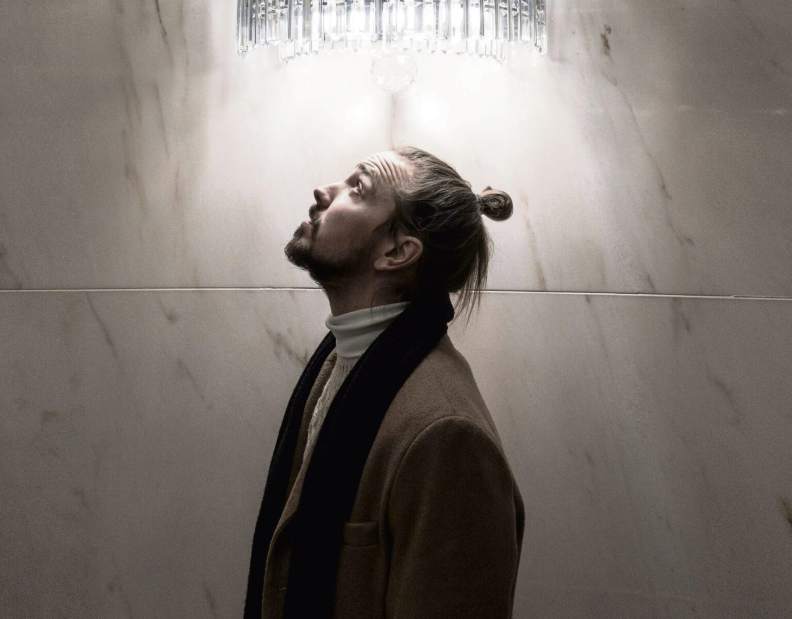
There aren't a lot of people in hip-hop who are a bigger deal right now than Chance the Rapper. He's one of the most distinctive and original voices in the game, and seems perfectly suited for the times.
A few years ago, though, he was still grinding away in obscurity, just starting to develop the sound that would launch himself into the stratosphere. One of the people he turned to, to craft the sound on his breakthrough mixtape “Acid Rap” (2014), was a kid from Scottdale named Nate Fox.
They ran into each other at the new music showcase South By Southwest, in Austin, Texas.
“We went to a party, a big mansion party, crazy rappers and celebrities. I saw him there. The Midwest knows the Midwest — he was known, even before ‘Acid Rap.' And I asked, ‘Hey, are you Chance the Rapper?'
“He said,' “Yeah, are you Nate Fox?' ”
You could say that Chance — who's performing May 20 at the PPG Paints Arena — took a chance on Fox, whose musical career, at the time, was a mess. He had to shut down his small recording studio in Cleveland, and moved back to the Pittsburgh area.
His father helped him get a job working construction, building a nursing home in Ebensburg. He ended up living in the half-completed nursing home, while it was being built.
“I didn't have a car or the Internet,” says Fox. “The (construction) guys would go home, and I'd be at a five-story half-empty nursing home. That was my life until ‘Acid Rap' came out.”
Fox produced tracks on “Acid Rap” include the songs “Juice,” “Lost” and “Chain Smoker.”
He's part of the band Donnie Trumpet & The Social Experiment, whose album “Surf” was, for all intents and purposes, another Chance the Rapper record. Though, in a curiously self-effacing move, Chance left his name off of the title. Fox was also a major contributor to Chance's “Coloring Book” (2016), one of the most acclaimed hip-hop records of recent years, which won a Grammy for best rap album.
The warm, soulful gospel-inflected sound Chance has been expanding upon was a good fit for Fox.
He used to build tracks from samples. Lately, he's been moving away from that approach.
“I didn't have access to a lot of instruments at first,” Fox says. “I've learned a lot a of techniques to cut sampling out. When you put an album out and that person (sampled) wants 60 percent (of sales) … I'd rather pay a musician a union rate of $500 bucks — a clarinetist to play something I want. And the sample limited you in the first place.”
Growing up in Scottdale, Fox got a lot of support from his family. Although Chance grew up in vastly different circumstances in Chicago, this is something they found that they had in common. (Chance is probably the only rapper to write a song about how much he loves his grandma, “Sunday Candy,” and make it stick.)
“My dad was a big musician,” Fox says. “He was a singer in a traveling opera company, though he ended up going to school and getting into medicine. He went down a different route. He tried putting me into piano class, guitar lessons.”
Then, a friend who was into hip-hop invited him to help make some songs.
“We struggled in the beginning,” Fox says. “We didn't know anything about programs, microphones. We were getting instrumentals off Napster and using those old pencil microphones that came with your Windows desktop. We had no idea.”
“Eventually, we got a song done. We sent it to a friend to listen. It was obviously terrible. He could have said anything. But he said, ‘This is pretty good.' That was all the spark we needed.”
Fox has done some live shows with Chance, but won't be coming on this particular tour. After some trial and error, he realized that his place is the studio.
Fox lives and works full time in Los Angeles now. He's not just making beats for rappers. If anything, his clients are actually getting bigger and bigger.
“We did a Paul Simon record,” Fox says. “It came out already. It was a reworking of three songs from his most recent project, ‘Stranger to Stranger.' Neil Young — did a song with him, on his most recent album. Another in the process is Randy Newman. People on that kind of a plateau.
“Me and Nico (producer/trumpeter, also known as “Donnie Trumpet”) have a passion for classic songwriters — the Joni Mitchells and Carly Simons and James Taylors of the world. While there's interest from the music world, we're reaching out.”
If he's making beats, though, it's easy to decide what to do with them.
“I'll get that inkling, that tingle, that feeling that this is something special — and it'll go to Chance.”
Michael Machosky is a Tribune-Review contributing writer.
