

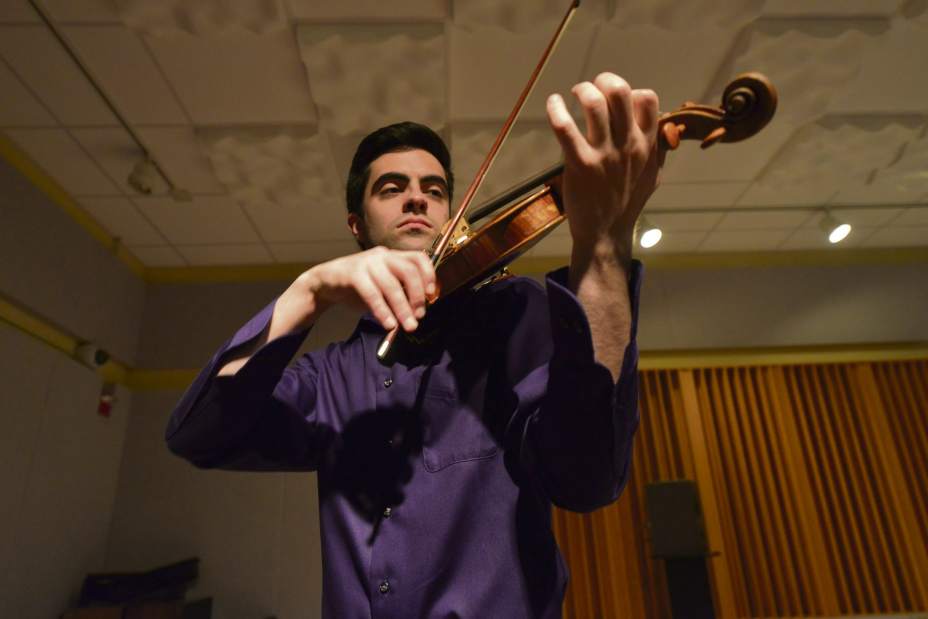
Standing in the center of the studio, Philip Manning tucks the violin under his chin.
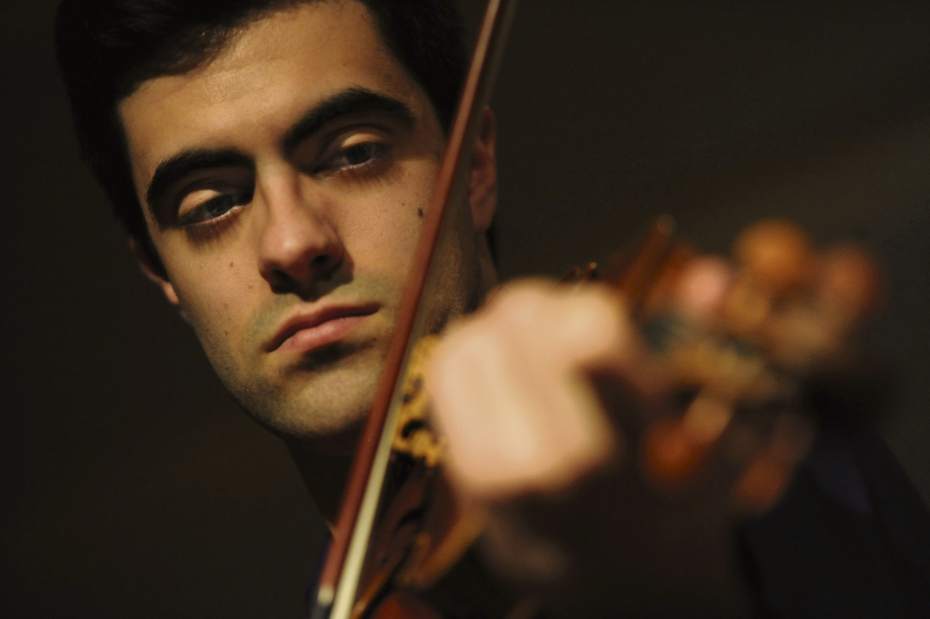
He pauses and inhales slowly, focusing his thoughts. His right hand extends as he lifts the bow. Then, his eyes narrow and, as he gently slides the bow over the strings, producing the opening notes, his face takes on a dreamlike appearance, as if he is in a trance.
“The goal of music, the main goal in my mind, is to convey the music to the listener in such a way that they can relate it to something in their own lives,” says Manning, 24, a violinist who recently finished his graduate work at Duquesne University's Mary Pappert School of Music.
“That's what gives music real meaning. During a performance, everything you've done on your own hopefully will come together.”
For Manning, everything is coming together.
A native of Victoria, British Columbia, Manning recently pulled off a remarkable feat by earning job offers as a First Violinist following his first two auditions. The first audition, in April, was for the Calgary Philharmonic Orchestra; the second was for the Victoria Symphony last month.
He chose his hometown Victoria Symphony. The first concert of the summer season is July 20.
“To get an audition for a major symphony orchestra anywhere in North America or Europe on a first try is really unusual,” says Charles Stegeman, Manning's violin professor at Duquesne. “Normally, you get it after several attempts. The fact that he got two in a row is just staggering, actually.
“But what Philip has is an unbelievable discipline and attention to detail and an ability to work hard,” Stegeman says. “He's very disciplined. He doesn't let mistakes get by. He's an extremely accurate player, and that's what it takes.”
Stegeman and his wife, Rachel — also a violin professor at Duquesne — saw to it that Manning was ready for the auditions.
Throughout the winter and spring, Manning practiced alone for five hours a day, perfecting pieces by Beethoven, Brahms, Mozart and others. Then, the Stegemans had him play his audition material in front of classmates and professors, “to help him get more comfortable with playing for significant periods of time accurately,” Stegeman says.
Playing alone is much different than performing in front of an audience, Stegeman and Manning say.
During the endless hours of solo practice, the musician focuses on the technical aspects of a piece, on playing each note perfectly, methodically, almost robotically.
Then comes the performance, they say, when the musician must “let go” and express the piece emotionally, not just play it. Only then can the musician transform silent, centuries-old notes into a shared experience, a living event all the more powerful for its transience. The music is reborn every time it is played.
“It does become something you share with the audience,” Stegeman says. “That's what makes these events still viable hundreds of years after being written.”
Playing at an audition, Manning says, is unlike playing alone or in front of a traditional audience. Rather, it's a combination of the two experiences, because judges seek technical perfection as well as emotional artistry.
“Basically, you have to be perfect,” he says.
If he wasn't perfect in Victoria, he came close.
“There's a standard — you have to play in time, you have to play in tune, and Philip did all of that,” says Peter Burris, the Victoria Symphony Orchestra manager. “He was a dream. We're more than thrilled to have him coming.”
The Victoria audition on May 3 was the symphony's “third or fourth” audition for a violinist, Burris says. Previous applicants simply were not good enough.
But when Manning began playing, Burris and the others immediately took note. The auditions were blind — the violinists played behind a screen and the judges did not know their names or resumes — but everyone knew when Manning was playing. He was simply that much better than the competition, Burris says.
Choosing Victoria over Calgary “wasn't that difficult,” Manning says. “This was my first choice as a place to live. My family is here. And it's a fairly spectacular part of the world.”
Manning finished his studies at Duquesne in the spring and has returned to Victoria, where he will live with his parents until he finds a place of his own. He credited his parents and his Duquesne professors for his early-career success.
“The Stegemans absolutely made sure I was ready,” he says. “And my parents have supported me so much over the years, this is as much a victory for them as me.
“I still have so much to learn. But this is great, for sure.”
Chris Togneri is a Tribune-Review staff writer. Reach him at 412-380-5632 or ctogneri@tribweb.com.
