
https://archive.triblive.com/aande/music/pittsburgh-symphony-marks-120-years-since-it-first-formed/
Pittsburgh symphony marks 120 years since it first formed

• |
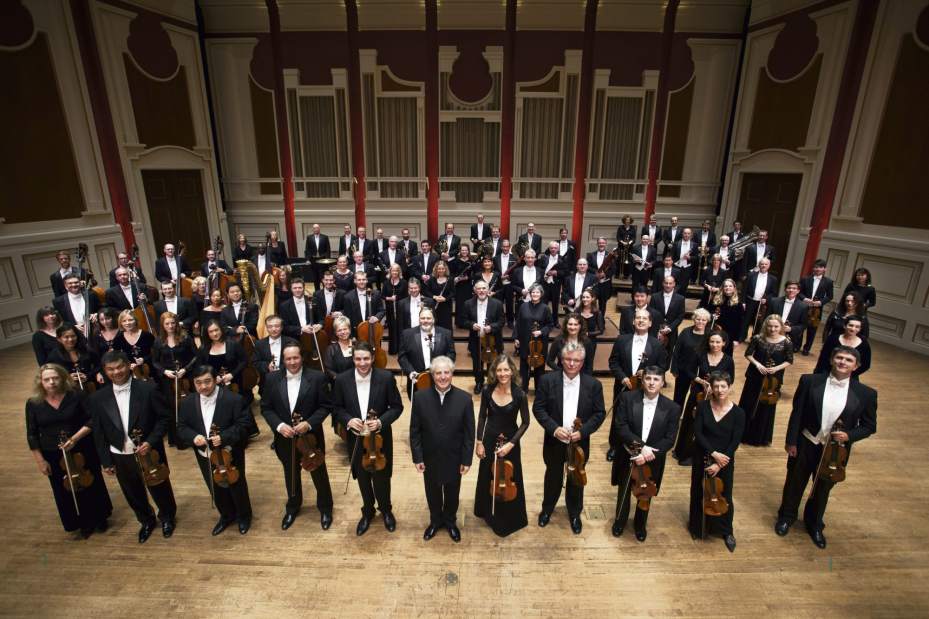
Pittsburgh Symphony
Manfred Honeck and the Pittsburgh Symphony
Silver and gold aren’t the only ways to recognize significant anniversaries, not that any orchestra would turn them down. For performing organizations, the stage is the perfect place to celebrate the achievement of longevity.
Exactly 120 years to the day after the Pittsburgh Orchestra first performed, the Pittsburgh Symphony Orchestra will return to its birthplace, Carnegie Music Hall in Oakland, for a concert featuring music selected for its historical relevance.
Manfred Honeck will conduct the Pittsburgh Symphony’s 120th Anniversary Celebration on Feb. 27 at Carnegie Music Hall in Oakland. The event will include comments by Honeck, members of the orchestra and guests.
Honeck understands personally what an orchestra’s history means because he was a member for a decade of the Vienna Philharmonic, which was founded in 1842.
“I’m extremely proud to be the music director in Pittsburgh, succeeding some really great conductors — not only Mariss Jansons and Lorin Maazel, who I knew personally — but also back in history,” he says.
A $1 million gift from Andrew Carnegie enabled the Pittsburgh Orchestra to be formed in 1896. It performed in the Oakland concert hall he had built the previous year. (Carnegie Hall in New York City opened earlier, in 1891.)
Two years later, the orchestra hired cellist and composer Victor Herbert to be its music director. The orchestra’s early years featured some of greatest musicians of the age, ones who are legends today. Guest conductors included composers Edward Elgar and Richard Strauss. Soloists included violinist Fritz Kreisler and pianist Sergei Rachmaninoff.
Honeck chose three selections to represent the early years: Camille Saint-Saens’ “Marche heroique,” which was played on the first program, Herbert’s Festival (Auditorium) March and Johann Strauss Jr.’s “Artist’s Life” waltzes.
“Victor Herbert played in the Strauss Orchestra in Vienna and knew what it means to be an orchestral musician,” Honeck says.
Accumulating financial problems caused the Pittsburgh Orchestra to fold in 1910. An attempt to raise an endowment to cover deficits started too late and failed. Touring orchestras, such as Gustav Mahler and the New York Philharmonic, filled in.
It wasn’t until 1926 that a Pittsburgh orchestra was reborn. It began with a group of local musicians, backed by the musicians’ union, putting on a concert in the Syria Mosque in Oakland. Then, the Pittsburgh Symphony Society was formed and concert life resumed, although on a much smaller scale. Nevertheless, the Pittsburgh Symphony Orchestra brought in stellar guest soloists and was broadcast on the radio throughout the country.
Major fundraising enabled the symphony to raise its standards. In 1937, conductor Otto Klemperer was hired to reorganize and expand the orchestra. But although his work was well-received, it was Fritz Reiner who became music director in 1938.
Reiner was an inspired choice. He possessed incomparable baton technique and demanded perfection from the musicians. He excelled at a broad repertoire, from the Baroque Era to world premieres.
The Pittsburgh Symphony began making commercial recordings in 1940 under Reiner. There is no documentation of orchestral performance in Pittsburgh before then.
Reiner also fired musicians in droves. And with World War II raging and so many male musicians called to service, Reiner hired more than two dozen women to be members of the symphony. Honeck decided to honor Reiner’s gender-barrier breaking record by inviting Jennifer Koh to be soloist in the last movement of Antinon Dvorak’s Violin Concerto.
William Steinberg became music director in 1952 and proved to be another inspired choice. Steinberg wasn’t interested in being the disciplinarian Reiner had been. But he provided the singular rewards of being deeply grounded in German and Austrian repertoire. The opening of Heinz Hall in 1971 featured Gustav Mahler’s Symphony No. 2 (“Resurrection”).
Honeck will conduct the last movement of Ludwig van Beethoven’s Symphony No. 7 for the Steinberg era, a piece he conducted in his first season and twice recorded with the symphony.
When Andre Previn became music director in 1976, he brought fresh energy and a much broader repertoire. Through the television series “Previn and the Pittsburgh,” tours and recording, Previn greatly expanded the reach of the symphony.
The anniversary concert will include the last movement of Previn’s Triple Concerto played by the same principal players for whom it was written — William Caballero, horn; George Vosburgh, trumpet; and Craig Knox, tuba.
Lorin Maazel had been a member of the second violin section during his college years at the University of Pittsburgh, but it was concerts he conducted in the fall of 1984, after Previn resigned suddenly, that made him the obvious choice for the next music director. He immediately raised the level as a guest conductor, and after two years as music adviser, became music director in 1988.
The symphony toured frequently during Maazel’s tenure, including its first trip to China in 1986, and made numerous recordings. Maazel, who died in July 2014, also became the first conductor in Pittsburgh to earn $1 million.
The concert’s Maazel moment will be the first movement of Benjamin Britten’s Sinfonia da Requiem, which opened his first concert in 1984.
Mariss Jansons achieved a more spontaneous feeling to symphony concerts during his tenure, which began in 1997. The orchestra was less tight under the Latvian conductor, who brought singular authority to his performance of music by Dmitri Shostakovich.
Jansons’ first season included Leonard Bernstein’s “Divertimento,” from which Honeck will conduct two movements. Bernstein had a close relationship with the Pittsburgh Symphony in the 1940s, conducting the world premiere of his Symphony No. 1 (“Jeremiah”) and wrote much of his Symphony No. 2 (“Age of Anxiety”) while touring with the orchestra.
The concert will conclude with the last movement of Beethoven Symphony No. 5, which Honeck recorded with the symphony in 2014.
“It’s a very good movement just to give a stamp to the ending,” Honeck says. “The great final movement also says, ‘We are here.’ ”
Mark Kanny is the Tribune-Review classical music critic. Reach him at 412-320-7877 or mkanny@tribweb.com.
Copyright ©2026— Trib Total Media, LLC (TribLIVE.com)