
$275M Antero Resources plant will treat water, send it back to well sites

When Conrad Baston discusses the “water problem” that shale gas producers face, he's actually talking about several problems.
“We need a lot of water,” Baston, general manager of civil engineering for Antero Resources, said about the hydraulic fracturing process that requires millions of gallons for each gas well. It needs to be pulled from sources in ways that don't harm the ecology or flow of waterways, and moved to drilling sites in ways that don't disrupt the lives of neighbors.
Then, companies must figure out what to do with the salty wastewater that comes back out of wells. Municipal treatment plants can't handle it, and the historical practice of injecting it underground is quickly falling out of favor over earthquake concerns.
“That water that comes back is not fit for discharge,” said Paul Ziemkiewicz, director of the West Virginia Water Research Institute.
Antero believes it has a smart solution.
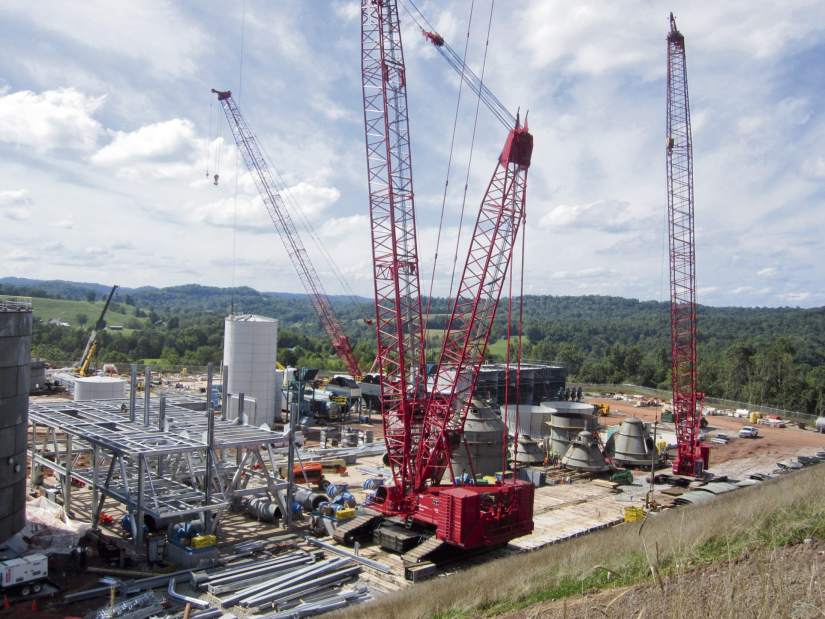
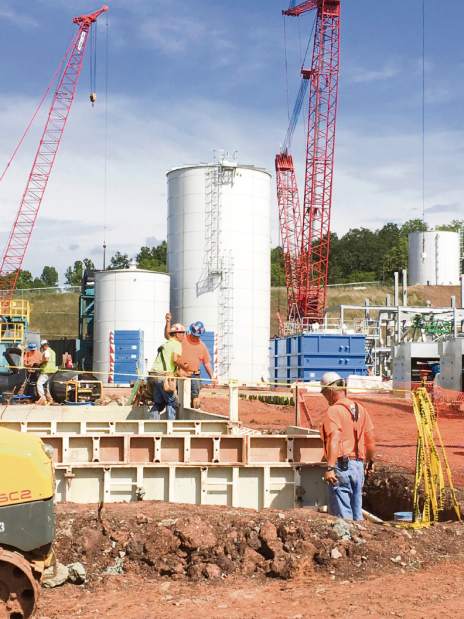
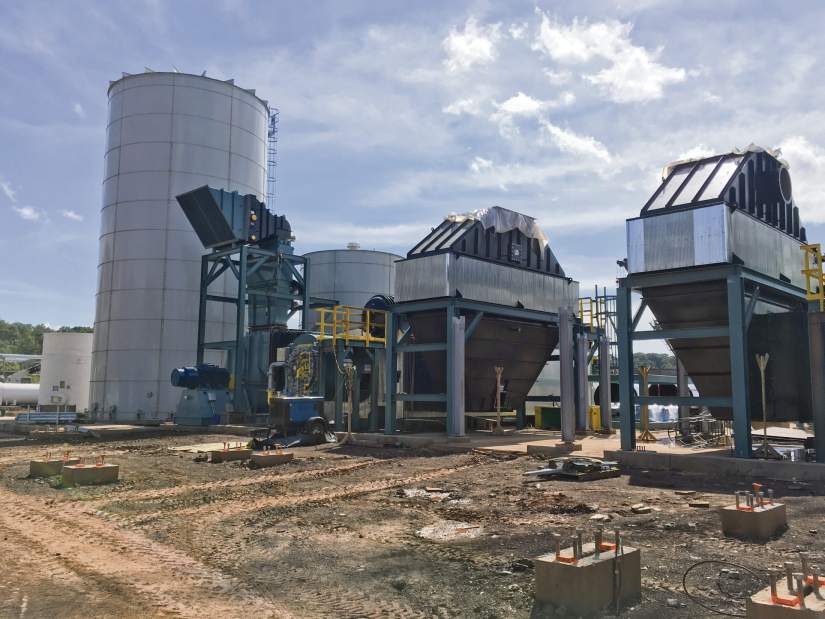
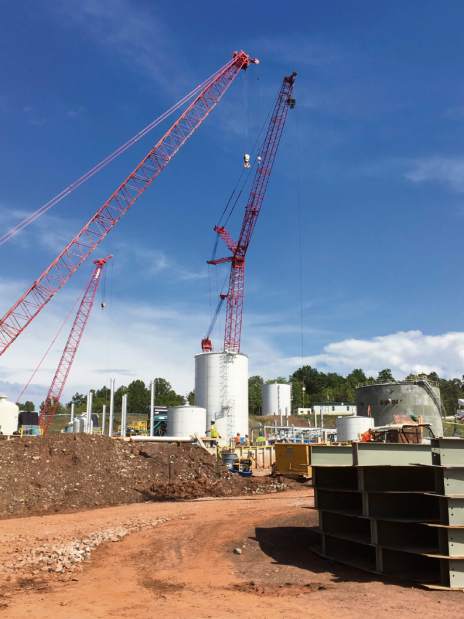
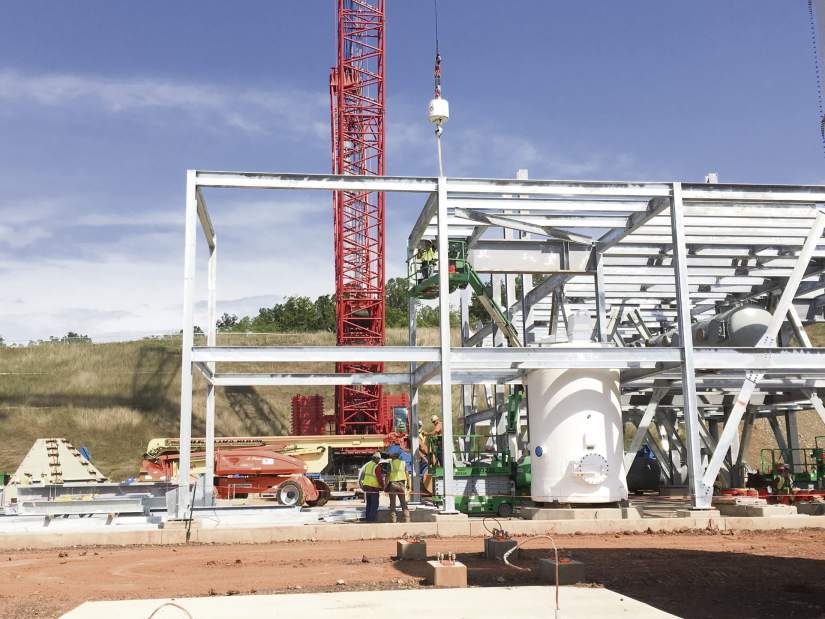
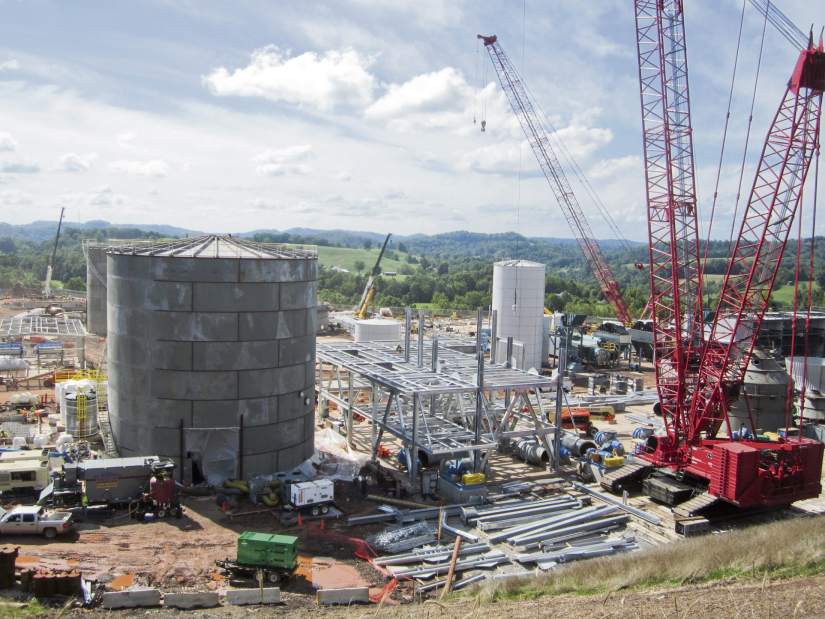
The most active driller in the Appalachian basin, Denver-based Antero, is building a $275 million wastewater treatment plant in the heart of its operations in Doddridge County, W.Va. When it's finished next year, it will take wastewater from trucks, treat it and deliver it back to well sites via a nearly $500 million pipeline system 115 miles long. Salt pulled from the wastewater will go to a proposed landfill next to the treatment facility.
“There's so few producers today that can suggest that with the cradle-to-grave approach to water that ... I know where every drop of my water comes from for every well, and I know where every drop of disposal water … has been placed,” said Al Schopp, regional senior vice president and chief administrative officer at Antero, which is the eighth-largest gas producer in the country.
“This is a long-term solution, this is a long-term investment, but somebody in the industry needs to step up and find good alternatives to disposal methods for U.S. natural gas to be successful,” he said.
Several gas producers for years have taken their water and waste to specialized treatment facilities, which in turn provide drillers with recycled water to use in their next wells.
Antero said its Clearwater treatment facility — which it is building with Veolia Water Technologies — will be the first in the Marcellus and Utica shale plays owned by a gas producer that addresses so much of the water use cycle. Schopp said he expects other producers to follow suit.
“It is notable that a (gas) producer is putting together its own facility,” Ziemkiewicz said.
Susan LeGros, executive director of the Pittsburgh-based Center for Sustainable Shale Development, this month made a public call in an online post for the industry “to demonstrate how they intend to address environmental challenges.” Her group, a collaborative between drilling companies, environmental groups and nonprofits, has developed a set of voluntary standards through which producers can gain certification.
She said she could not say whether Antero's water system would meet those standards. “With that in mind, I am pleased and encouraged to see innovative approaches to managing water that maximize reuse opportunities and minimize road transport,” LeGros said.
Antero's plans have met some resistance. Several groups are concerned about how close the treatment facility will be to a water intake on a river, and about emissions of volatile organic compounds into the air.
“The industry needs to take its own responsibility and build their own facilities. But they need to site the facilities responsibly,” said Julie Archer, a project manager with the West Virginia Surface Owners' Rights Organization, a watchdog group based in Charleston.
Baston said Antero's entire water handling system is based on efforts to move water and waste safely while lessening the potential impact on roads and the environment.
Antero brings its water into the new pipeline system from four river intakes where it constantly monitors flow levels. The pipeline system, installed over the past several years, eliminated more than 1.1 million miles of travel by trucks that used to deliver water to sites, reducing wear on the roads and emissions from their exhaust.
To find the right site for Clearwater, Antero analyzed GPS-generated maps of routes taken by trucks that remove wastewater from well pads and then looked for suitable locations in the heart of those routes, close to Route 50 but away from neighbors.
Next to the facility site, Antero plans to build a state-of-the-art landfill for salt that is processed out of the wastewater. The only trucks leaving the plant carrying any product will be those hauling small amounts of solid waste to a landfill in the western United States that is licensed to take waste with low levels of radiation, a natural byproduct of shale gas extraction.
“Instead of a diverse pattern of water going out, it's centralized,” Baston said. Antero predicts the facility will eliminate millions more truck trips.
The facility will have capacity for other companies to potentially have water treated there. It will use a process patented by Veolia that lessens the amount of energy it will consume.
Removing salts requires boiling the water. Veolia's process uses a vacuum to lower the boiling point, reducing how much heat is required, said Michael Pietropaoli, a Moon-based project director for Veolia.
Ziemkiewicz said he is interested in seeing how Antero succeeds in handling all the water coming from wells.
“We're at the very early stages of the learning curve on how to treat produced water and how to manage it,” he said.
Schopp said he expects Antero's system to serve as an industry template.
“When people look at this process from beginning to end, we believe this is leading edge and a very good model,” he said.
David Conti is the assistant business editor at the Tribune-Review. Reach him at 412-388-5802 or dconti@tribweb.com.
