
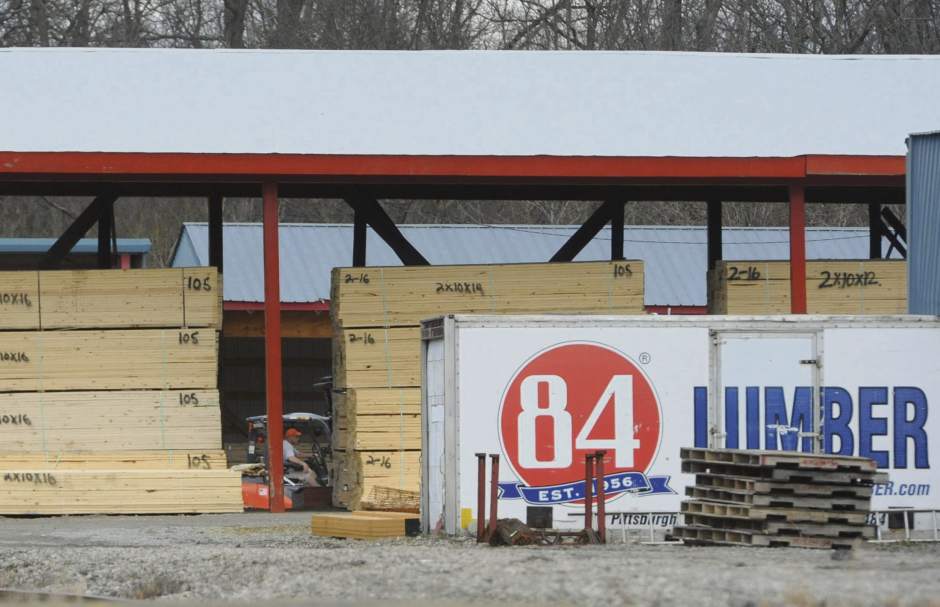
84 Lumber finds latest opportunity to refocus in tiny homes


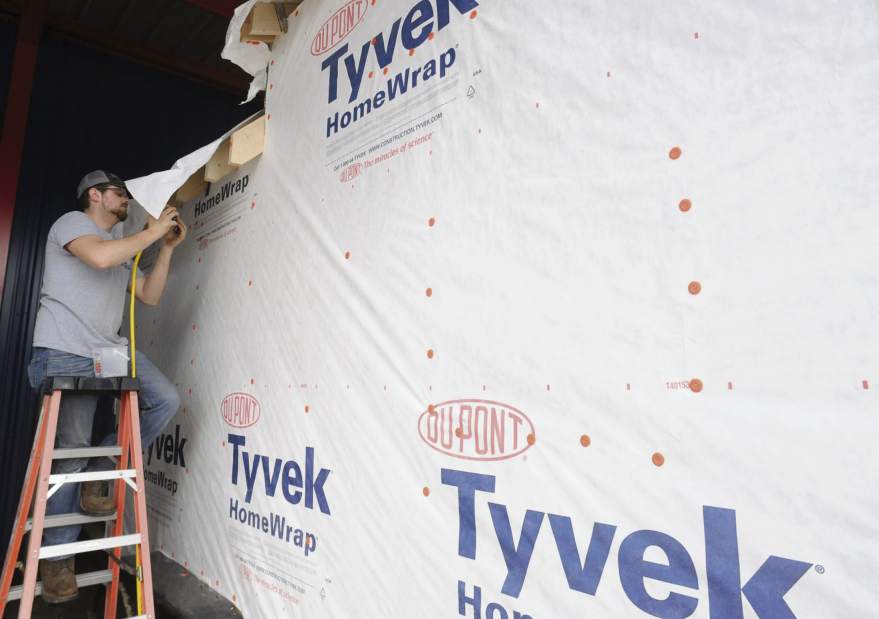
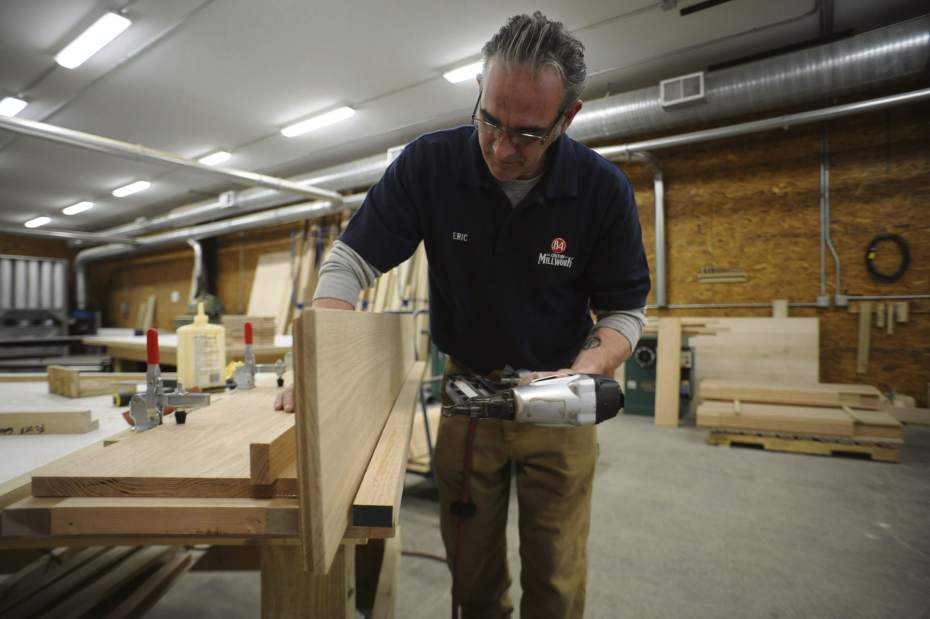

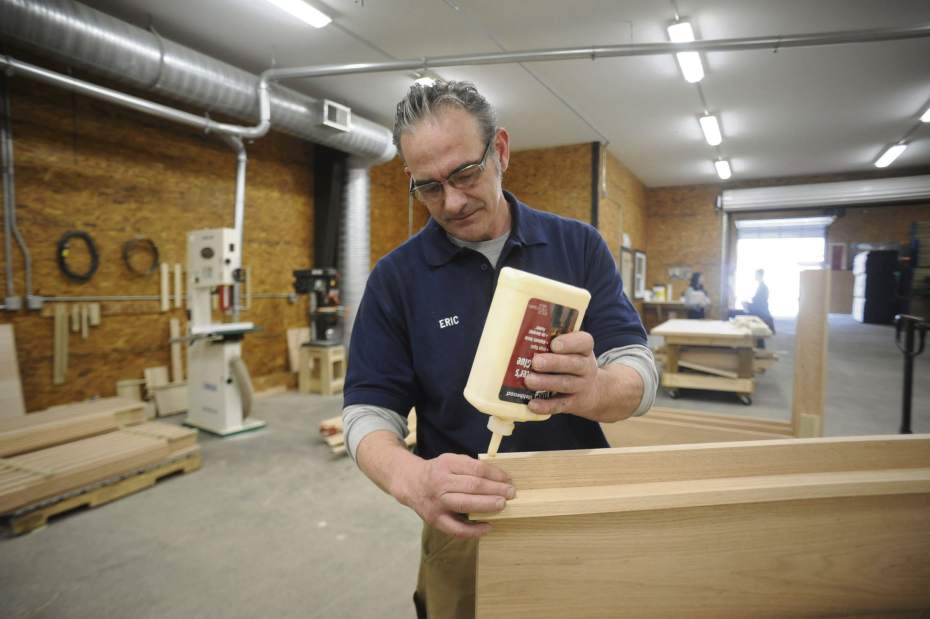
The smallest home 84 Lumber has ever built attracted a huge response.
People around the globe want to know more about the 154-square-foot “tiny” home that the building materials company began offering this month.
“We knew this would be a very cool niche to be in. But the interest has actually been pretty overwhelming so far,” said Becky Mancuso, the company's vice president of marketing and public relations. “Just this weekend, we had a crazy number of inquiries from Australia and New Zealand.”
Shipping them outside the United States may not be practical, Mancuso said, and nobody at 84 Lumber knows how many of the tiny homes, which cost up to $50,000, will be sold. But it is a new market that owner Maggie Hardy Magerko thinks 84 Lumber is uniquely poised to serve, Mancuso said.
The 60-year-old Washington County company has the expertise, materials and scale to sell them coast to coast. It claims to be the first major retailer to offer tiny homes, tapping into the “micro living” trend.
This entrepreneurial attitude has defined 84 Lumber under the stewardship of Magerko, who took over the business from her father Joe Hardy in 1992. As a private company, 84 Lumber has a nimbleness not enjoyed by its publicly traded competitors, who have lately been preoccupied with slashing costs and merging companies.
The roughly $500 billion U.S. construction supplies industry is still adjusting nearly a decade after the housing bubble burst. Four of 84 Lumber's competitors have merged in the past year — BMC with Stock Building Supply, and Builders FirstSource purchased ProBuild.
Executives at 84 Lumber believe they can take advantage by responding to customers and the needs of the market faster while its competitors are focused on combining their operations and cutting costs.
“We're in an industry where we feel like everybody's changing, merging,” COO Frank Cicero said. “We're very uniquely poised right now.”
This isn't the first time 84 Lumber has needed to pivot amid broader changes in the market. Facing the growth of big-box competitors Lowes and Home Depot in the 1990s, 84 Lumber moved away from consumer retail and focused on selling materials and services to commercial contractors, who account for more than 90 percent of sales.
The company also responded faster than competitors during the housing crisis, said Jeff Burd, president of Tall Timber Group, which tracks the construction industry. Home building activity plummeted between 2006 and 2009, going from 1.8 million new home starts to just 380,000 in that period. In response, 84 Lumber closed nearly half its stores and went from 9,500 employees in 2006 to 2,900 three years later.
“84 Lumber was a quick reactor,” Burd said. “They got smaller quicker. You had to close stores.”
The company has rebounded with the housing market recovery and now has 4,700 employees. But growth in new construction has been slow and 84 Lumber has in recent years looked to diversify its revenue.
One key emphasis has been its “installed sales” program, in which 84 Lumber will not only sell contractors materials for a project but also provide the construction crew. Contractors have struggled to find enough carpenters and skilled laborers, who left the trades for other industries during the recession. About nine out of every 10 contractors say they are having difficulty filling key positions in their crews, according to a survey last year by the Associated General Contractors of America.
The company has built a network of skilled tradesmen throughout the country to frame out a house, put on a roof, or install windows and doors. As a percentage of sales, the program is gaining 3 to 5 percent per year and could account for one-fifth of total revenue in 2016, said Mike McCrobie, who runs the program for 84 Lumber.
“It's value that we add to the builder,” McCrobie said.
Not every builder has found it so valuable. Several years ago, two minority contractors in Louisiana accused 84 Lumber of cheating them on rebuilding two schools and a fire station after Hurricane Katrina. The contractors said 84 Lumber used them to win access to contracts through the Federal Emergency Management Agency, and then failed to uphold promises that included obtaining the necessary performance bonds to do the work.
The company has denied the allegations. However, 84 Lumber agreed in August to be monitored by the Louisiana State Licensing Board for Contractors for a year to avoid having its license revoked.
Cicero said the problems in Louisiana were isolated to a couple of contractors and had not damaged the company's relationship with its thousands of other customers.
Contractor John Thompson said he has had only positive experiences with 84 Lumber's installed sales program. He relies regularly on 84 Lumber subcontractors to work on framing for town homes or apartment buildings. They are price competitive and remove the pressure of scrambling to find a crew, he said. If a carpenter gets sick, there are no delays in finding his replacement because 84 Lumber can pull from its network of 1,000 tradesmen.
“It makes sense to have 84 do it because that's a headache I don't have to worry about,” said Thompson, senior vice president of A.R. Building Co.
Now, with tiny homes, 84 Lumber is offering to build the entire home for its customers. It may never become a major part of the company's business, but testing new ideas is inherent to 84 Lumber's culture.
“This company is full of entrepreneurs,” Cicero said.
Chris Fleisher is a Tribune-Review staff writer. Reach him at 412-320-7854 or cfleisher@tribweb.com.
