

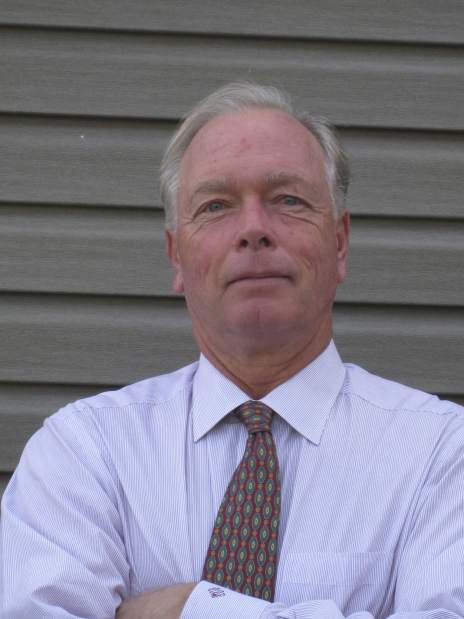
John Stilley started Amerikohl Mining Inc. in 1978 with a loan from his former adviser at Penn State University and a $4,000 advance on a MasterCard.
Today, the Butler-based surface mining company has 130 employees and a second office in Stahlstown. In addition to coal, it has started producing aggregates and natural gas.
“I liken it to a three-legged stool,” Stilley, the company's president, said of diversifying its offerings about 10 years ago. “If one of those posts is a little wobbly, you have the other two posts to provide some stability for the company.”
As the coal market wobbles under the pressures of low demand and prices, and competition from natural gas, Stilley spoke with the Tribune-Review about staying competitive and nimble.
Trib: What's at the heart of the coal industry's economic struggles in this area?
Stilley: We've lost a significant portion of our customer base. Somewhere between a half dozen and a dozen power plants that we've historically shipped to have chosen to shutter their plants over the past six to eight years. ... It's for a variety of reasons, of course. One is the capital requirements to upgrade the older plants to comply with the new environmental standards. The owners of those plants can't justify that capital investment based upon the demand for their product, which is electricity.
Trib: Has the wave of closures subsided, or do you expect it will continue?
Stilley: I'm hoping for the most part that the plants that are still operating have upgraded adequately to stay in compliance. Those include all of the FirstEnergy plants, Keystone Conemaugh, Homer City and a few of the industrials we serve as well.
Trib: What steps has Amerikohl taken to adjust?
Stilley: Our primary thrust in trying to remain competitive and being able to supply a product to our customers of a quality and at a price that suits their requirements is: we spend between $2 million and $4 million every year in acquisition and development. ... That's land, exploration, geologic mapping, permits; It's similar to what a manufacturing business would spend on research and development.
Trib: That's a constant investment.
Stilley: It really is, because you have to make certain you have, for lack of a better description, some competitive advantage that makes your product better and more valuable to the customer. … It has to do with quality and mining costs, logistics and relative location of mines to where the markets are. It's very simple, but you've got to really focus on that particular portion of the business to make as certain as you can to remain competitive on pricing and at a quality the customer needs.
Trib: What will it take for companies to survive this market?
Stilley: It's very difficult to answer. The excess capacity that exists in the coal mining business is, to a large extent, a function of the reduced demand for our product to generate electricity, along with a diminishing overseas export market. It's sort of a feast or famine business; it's either red hot or ice cold …We're using less and less of the product now than we were over the last 10 to 15 years.
Trib: How do you keep employees focused and positive?
Stilley: Every day is a new day here, and every day we try to be better than we were yesterday. My standard sermon to the guys as I visit the mine sites once a week is: It sounds difficult, but we need to increase efficiencies and productivity and operating practices, and get better by small increments — 1 or 2 or 3 percent — as often as we can. Those increases are available if everyone just, not so much works harder, but works smarter, to put every machine to its best use, to make sure we're not doing the same work twice, to make sure every move counts, and just paying attention to the detail.
Trib: Does focusing on surface mining, as opposed to underground mining, help make every day new with the logistics of moving sites?
Stilley: It really does. Our mine sites typically last anywhere from six months to three years. We have a portfolio of reserves based upon our acquisition and development effort that we can pick and choose a little better than the big underground complexes, and on that basis, deploy our assets to what I think is their best use depending on what the market is, and is not at any given time.
David Conti is a staff writer for Trib Total Media. He can be reached at 412-388-5802 or dconti@tribweb.com.
