
ATI and GE Aviation partner to develop meltless titanium for jet parts

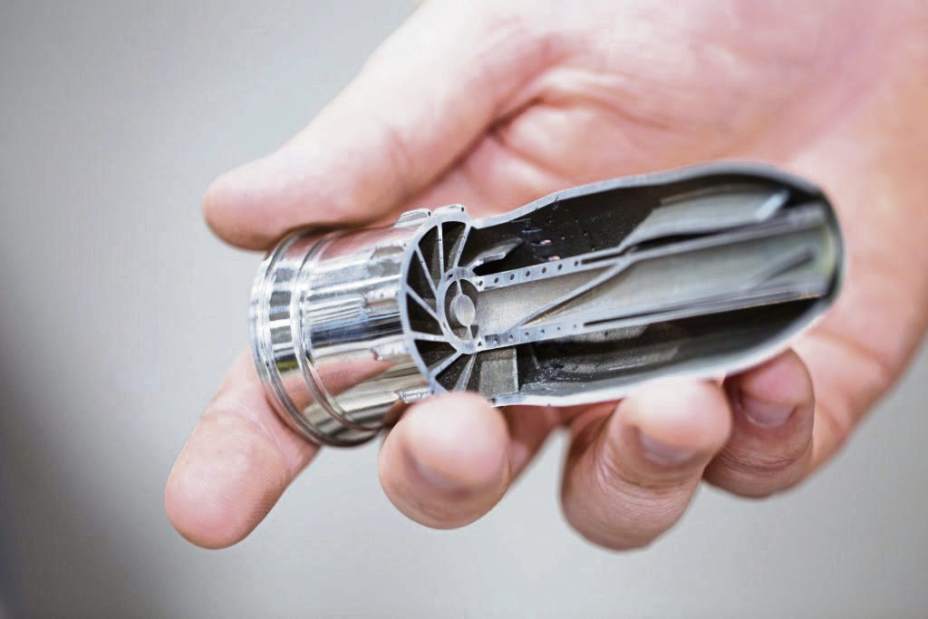
ATI and GE Aviation will team up on a research and development project to look at new titanium alloys that could be used to make jet engines lighter, stronger and easier to produce.
The two companies will build an R&D facility to develop meltless titanium alloy powder manufacturing technology that could be used to 3D print parts for engines.
Rich Harshman, chairman, president and CEO of ATI, said in statement that the partnership will create innovative, next-generation and transformative technology. David Joyce, vice chairman of GE and president and CEO of GE Aviation, said developing new materials is an important part of the future of GE Aviation.
ATI and GE Aviation said the location of the facility has not been decided. GE Aviation is based in Cincinnati. ATI's headquarters is at PPG Place in Downtown. The company has facilities across Western Pennsylvania and in 10 other states, according to its website.
“It's an R&D effort. It's not like you're going to have a product next year,” said Rick Kennedy, a spokesman for GE Aviation.
GE Aviation has been looking into meltless titanium for years.
Meltless titanium alloy powder is a metal that can be formed straight from a liquid of vapor and does not have to be melted. It allows the alloy to contain materials that become brittle or lose their strength when melted.
The joint effort will work on the process of making the powders, said Dan L. Greenfield, a spokesman for ATI. Greenfield said ATI is one of the few producers of titanium in the world and the leader in the production of titanium alloy powder for 3D printing.
“At this point, ATI is really focused on providing the raw materials, the powders,” Kennedy said. “The science of metallurgy is our core competency.”
Kennedy said the company hopes to announce more information about the partnership this month when it announces its second-quarter results.
GE Aviation expects to steadily increase the number of 3D-printed parts it uses in its jet engines. The company uses 3D-printed fuel nozzles in its new LEAP jet engine. In 2015, the Federal Aviation Administration for the first time cleared a 3D-printed part for use in commercial airliners. It was a fist-sized piece of metal that houses a temperature sensor.
Kennedy said GE Aviation expects to produce a turbo prop engine with a third of its parts coming from a 3D printer.
Aaron Aupperlee is a Tribune-Review staff writer. Reach him at aaupperlee@tribweb.com, 412-336-8448 or via Twitter @tinynotebook.
