About twice a month, an electric car pulls in to the Pennsylvania Turnpike charging station at the New Stanton service plaza.
Even less frequently, a driver plugs in at the charging station at the Oakmont-Plum turnpike plaza.
A mere 392 drivers charged their vehicles' batteries at the turnpike system's five stations last year, according to Pennsylvania Turnpike spokeswoman Roseanne Placey.
The King of Prussia service plaza station was the most heavily utilized in 2017 with 138 charges — less than three per week — followed by Peter J. Camiel station in Chester County at 129; Bowmansville in Lancaster County, 77; New Stanton, 25; and Oakmont-Plum, 23.
Despite the infrequent use of those and dozens of other electric car charging stations that stand at the ready at Western Pennsylvania gas stations, restaurants, malls and other public locations, those plugged into the industry are steadfastly bullish on EVs.
Venkat Viswantathan, a mechanical engineer at Carnegie Mellon University, maintains the chargers' time is coming ... and probably a lot sooner than later.
“That term, ‘Build it and they will come' ... definitely fits,” said Viswantathan, who has driven a battery-powered Tesla since he arrived at CMU in 2014.
“It took 20 years to sell the first million (electric cars),” he noted. He pointed to projections that a million EVs could be sold in less than eight months this year.
Global sales of electric and hybrid cars were 63 percent higher during the third quarter of 2017, and up 23 percent from the second quarter, according to a Bloomburg New Energy Finance report.
“Sales are exploding,” Viswantathan said.
And those vehicles need to be charged, whether it's at the owner's home, a turnpike service plaza or at dozens of stations companies have installed in partnership with existing businesses along roadways.
The five turnpike plazas, for example, are equipped with Blink Level II EV self-serve charging stations, which can charge an electric vehicle in about four hours. In addition, Bowmansville, Peter J. Camiel and the King of Prussia Service Plaza also have Level III charging stations, which can fully recharge in less than an hour.
The chargers were installed in 2014 by Miami-based Car Charging Group.
Few people use car charging stations when they first open, but business was expected to pick up as electric vehicles become more popular, president Andy Kinard told the Tribune-Review at the time.
“They start off slow, then boom, they take off,” Kinard said.
The turnpike commission, too, foresees more electric vehicles on Pennsylvania roadways.
“We are engaged in discussions with additional vendors to roll out the charging stations across our system,” Placey said.
EVs more common elsewhere
Viswantathan, who drove cross country in a Tesla Model S to Palo Alto, with his wife, Ramya, documented the journey in a blog, and noted it took just four days.
And when he arrived in California, he often had to wait 20 to 25 minutes to plug into a commercial charger because of high demand.
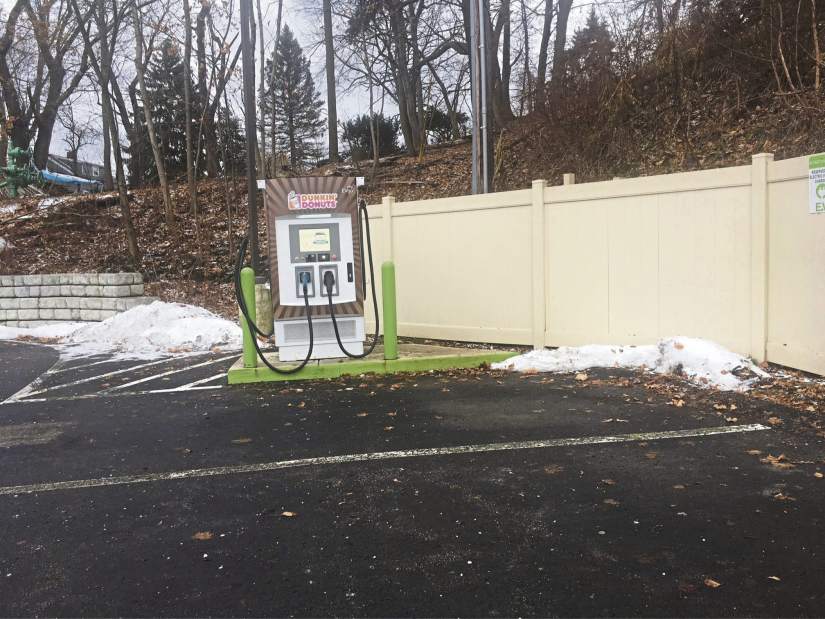
No vehicles were using a commercial electric charging station at Dunkin' Donuts along Route 30 in Hempfield on a cold January afternoon, but Matt Evanchak, a shift manager at the coffee shop, said EV owners do use it. Some come in to have a cup of coffee and doughnut while their battery recharges, he said.
The station is owned by EVgo, the nation's largest network of public electric vehicle fast-charging stations. Superchargers take about 20 minutes to charge a battery to 50 percent and 75 minutes to fully charge it.
The company reported its 1,000 chargers are positioned in 66 of the top-selling EV markets, covering the metropolitan areas where 90 percent of new electric cars are sold. Eight are in the Greater Pittsburgh region.
Now and then, a car that runs out of power along Toll Route 66 is towed to the station at Dunkin' Donuts to recharge, Evanchak said.
“Some of the owners really have how far they can go down to a science, but I've seen a few have to push their cars in here,” he said.
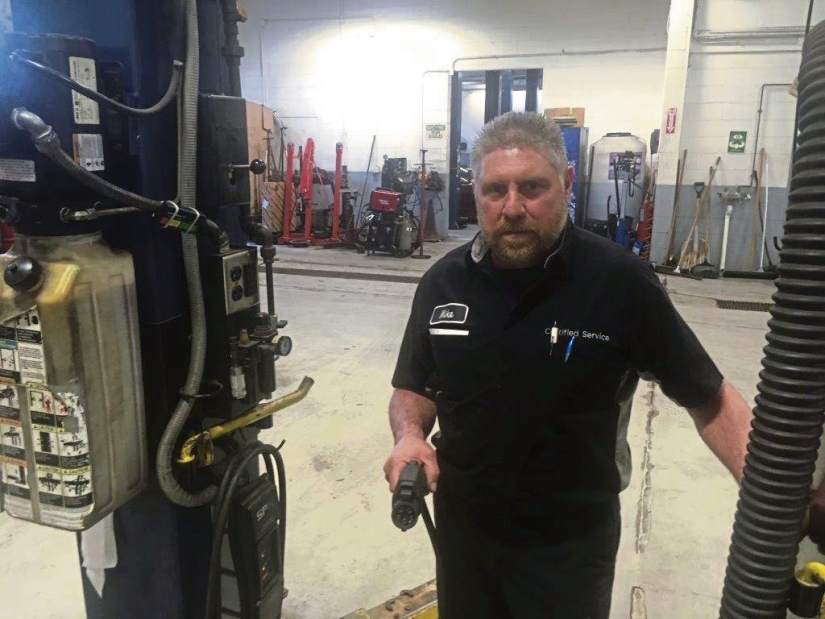
Mike Sherback sees growing confidence in electric car reliability.
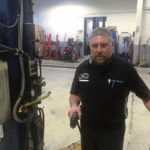
He's been a certified electrical vehicle technician for about seven years at Star Nissan-Chevrolet in Greensburg, which has a commercial charging station.
Sherback said the improved battery technology is lessening consumer fears over being stranded, making EVs more popular in view of the rising price of gasoline.
“They've definitely become a lot more reliable ... and the batteries are becoming a lot cheaper to make,” he said.
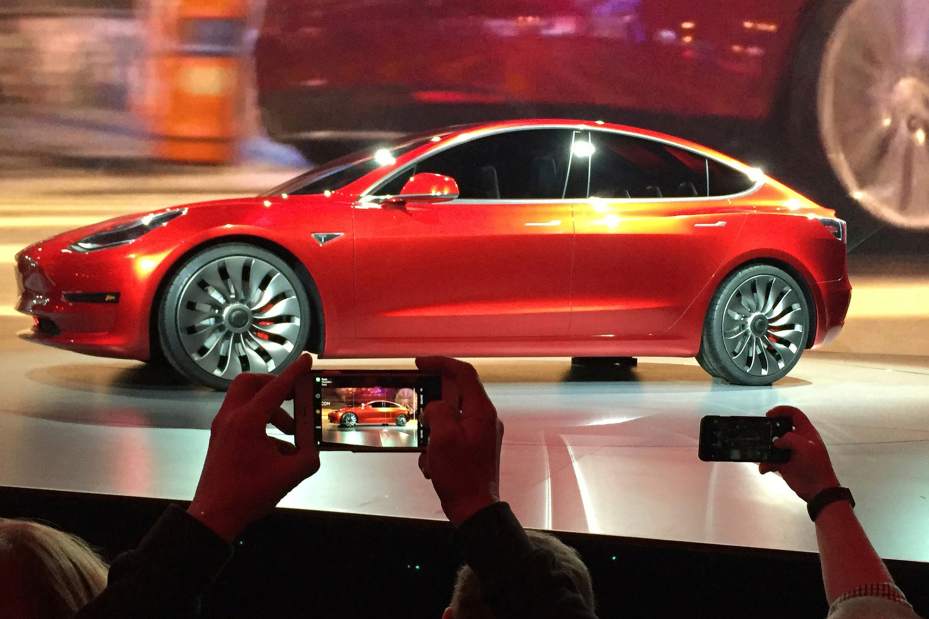
A 2017 Bolt EV, for example, has an EPA estimated 238-mile range on a single charge, according to GM. A Model 3 Tesla can travel 215 miles and go from zero to 60 in less than five seconds.
Ready for business
Sherback pointed out that automakers are rolling out many new, improved electric models.
In October, leaders at General Motors outlined a plan for at least 20 new all-electric vehicles by 2023 . Ford Motor also plans to increase its development of electric cars.
“General Motors believes in an all-electric future,” said Mark Reuss, General Motors executive vice president of Product Development, Purchasing and Supply Chain.
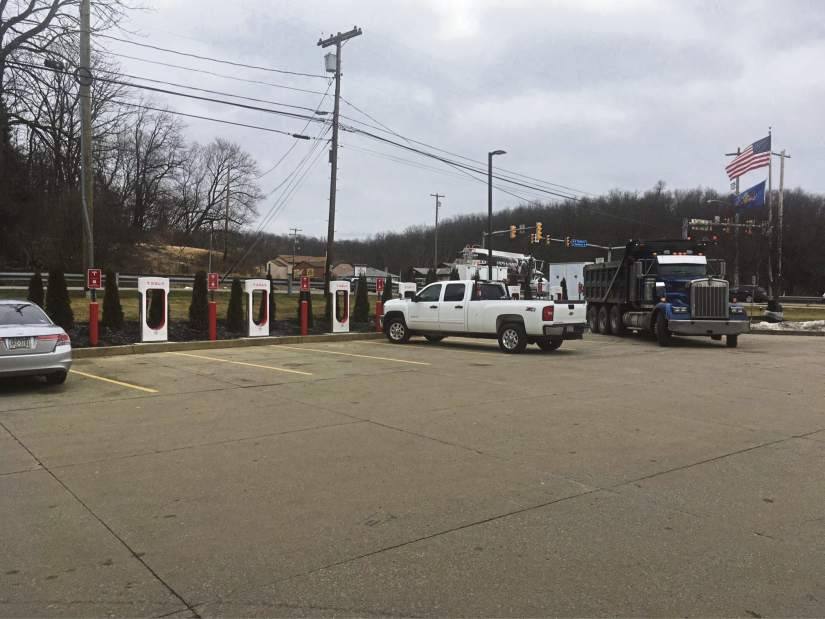
That faith in the future led to banks of EV chargers at Sheetz stores, though on a recent afternoon in North Huntingdon, eight Tesla Superchargers at the Sheetz at Route 30 and Thompson Lane had nary a user.
As part of a Sheetz-Tesla agreement at many locations on the East Coast, Sheetz began installing the Tesla Superchargers last year at several of its 540-plus locations in Central and Western Pennsylvania, Maryland, Virginia, West Virginia, Ohio and North Carolina.
Sherback said the recharger business at Star fluctuates week to week.
“It comes and goes in spurts. Sometimes we may not see a customer for a week, but then the next week we'll see three or four,” he said.
“Our (GM) brand provides EV owners with a home charger in their trunk ... although it takes longer,” Sherback said. “Most charge their cars at home.”
“The electric vehicles are pretty reliable cars today,” he said.
Paul Peirce is a Tribune-Review staff writer. Reach him at 724-850-2860, ppeirce@tribweb.com or via Twitter @ppeirce_trib.