
PNC hosts AI experts to explore its roles in banking

Banks deal with lots of numbers.
Dollars, cents, deposits, withdrawals, the rise and fall of the market, interest rates and many more.
Numbers equal data.
“And we collect a lot of data,” said Dan Pavlick, executive vice president of strategic services and enterprise architecture at PNC.
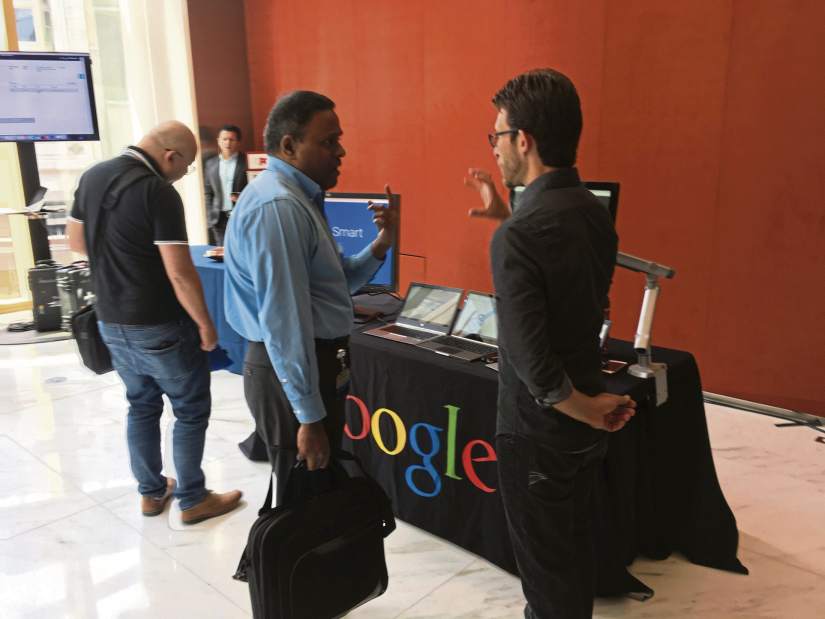
That's why PNC invited companies on the cutting edge of artificial intelligence and machine learning to its Pittsburgh headquarters Tuesday. Anyone in the company was invited to the Tower at PNC plaza to hear from IBM, Microsoft, Uber, Google and others about artificial intelligence.
“It doesn't necessary have to look like what we do but it can be helpful,” said Laura Ritz, a senior vice president of enterprise innovation, adding she hopes the presentations inspire ideas among employees. “That spark, that idea, that thought to say, “I can see how that could apply to the job that I do here.”
PNC is at the early stages of incorporating artificial intelligence and machine learning into its services, Pavlick said. In June, PNC started a pair of pilot programs with outside companies to see how artificial intelligence could help the company handle tasks like reconciling a ledger book or imputing data from invoices for accounts payable. PNC just started looking at giant data sets to try to pull out information that could help it better serve its customers, Pavlick said.
“We're talking about analytics,” said Boxley Llewellyn, a vice president of banking analytics solutions with IBM.
Llewellyn was at PNC talking about Watson, the company's artificial intelligence platform. Carnegie Mellon University helped IBM develop Watson. It garnered national attention in 2011 when the AI beat Jeopardy champions Ken Jennings and Brad Rutter.
Llewellyn said Watson can offer banks assistance in dealing with customers, handling fraud and staying compliant with regulations.
“At the end of the day, we're making machines smarter, not replacing humans,” Llewellyn said.
Pavlick and Ritz also stressed PNC wasn't looking to replace employees with artificial intelligence but rather make employees better.
“It's the power of what happens when humans and machines come together,” Ritz said. “It enables our employees to do a better job serving customers than they ever could do.”
Aaron Aupperlee is a Tribune-Review staff writer. Reach him at aaupperlee@tribweb.com, 412-336-8448 or via Twitter @tinynotebook.
