
Turn walls into a giant touch screen with this paint developed by CMU and Disney

The walls have been forgotten.
In an era of smart home technology, where everything from your refrigerator to your thermostat, your front door lock to your shower, can be connected, interactive and controlled by artificial intelligence, the walls of your home have remained static, dumb, silently holding a roof over your head.
Until now.
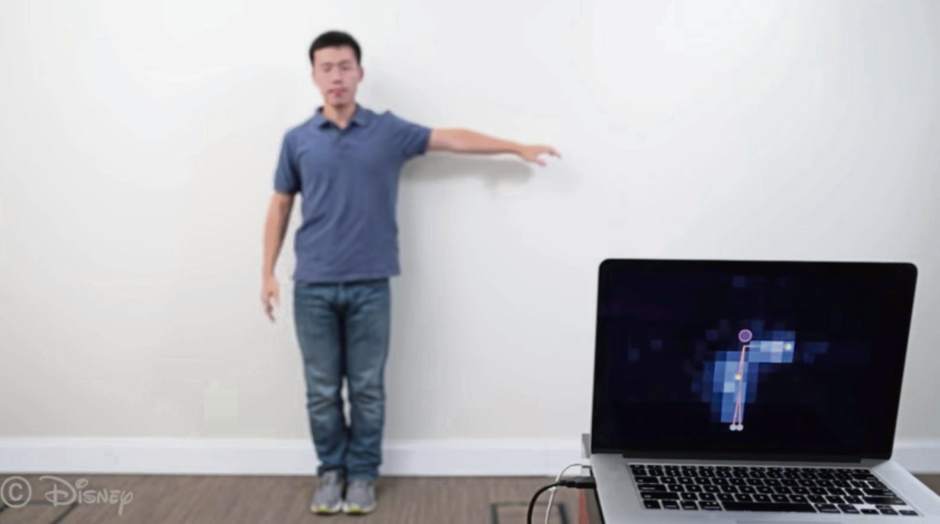
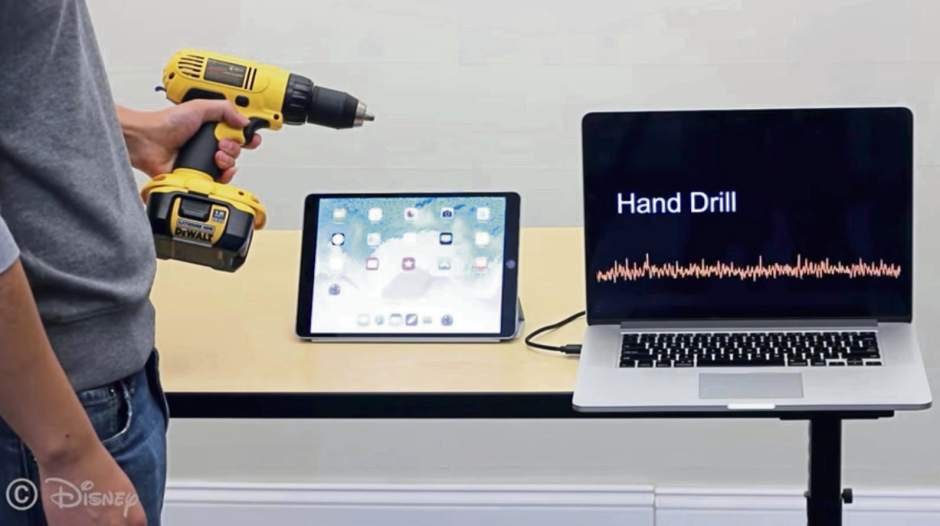
A team of researchers in Carnegie Mellon University's Human-Computer Interaction Institute teamed up with Disney to develop a paint that can transform walls into giant trackpads, touch screens and sensors that can track movements, respond to gestures and detect when appliances and devices are in use. The technology, called Wall++, could allow you to move a light switch anywhere on a wall, control a video game projected on the wall by moving your hand or arm or set up your home to automatically adjust lights when a TV turns on or flicker the lights when your laundry is done.
"It's rethinking walls, and it's liberating the wall," said Yang Zhang, a researcher in the lab. "The thinking about the technology is it can be easily painted on any wall.
"Every house built could have out Wall++ technology."
The coating and underlying technology costs about $20 a square meter. That's about 20 times the cost to paint a wall with a mid-ranged coat of regular paint, but the team prides itself on developing a low-cost material.
An grid of sensors is placed under the conductive paint. The sensors pick up on electromagnetic signals from the body, devices or appliances.
The grid of sensors is not visible once the top coat of paint is applied, Zhang said.
The research was conducted at Disney Research. Disney closed that lab in February.
Zhang presented a paper on the Wall++ technology at Conference on Human Factors in Computing Systems this week in Montreal. It's been a week of show-stopping presentations from CMU researchers. Zhang also contributed to work on a disposable sheet of paper that costs about 30 cents that can track and reproduce writing and drawing on a computer.
Lining Yao, director of the Morphing Matter Lab inside the Human-Computer Interaction Institute, shared research on self-folding origami made using an inexpensive 3-D printer.
Aaron Aupperlee is a Tribune-Review staff writer. Reach him at aaupperlee@tribweb.com, 412-336-8448 or via Twitter @tinynotebook.
