




What makes that breakfast brioche or croissant at your Paris boutique hotel so memorable?
Of course, the pastry may be special, possibly freshly baked. But it's the nutty, tangy richness of the butter that excites the palate.
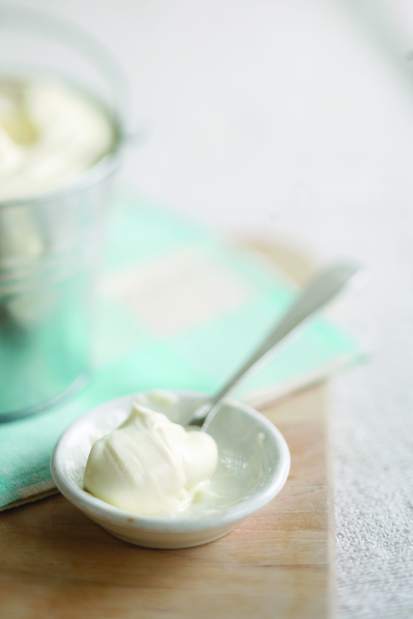
The creamy complexity of European-style cultured butter startles in contrast to the meek flavor profile of common U.S. sweet-cream butter. Cultured butter tastes better, more nuanced and a bit funky. No way can an ordinary supermarket stick of fat compare.
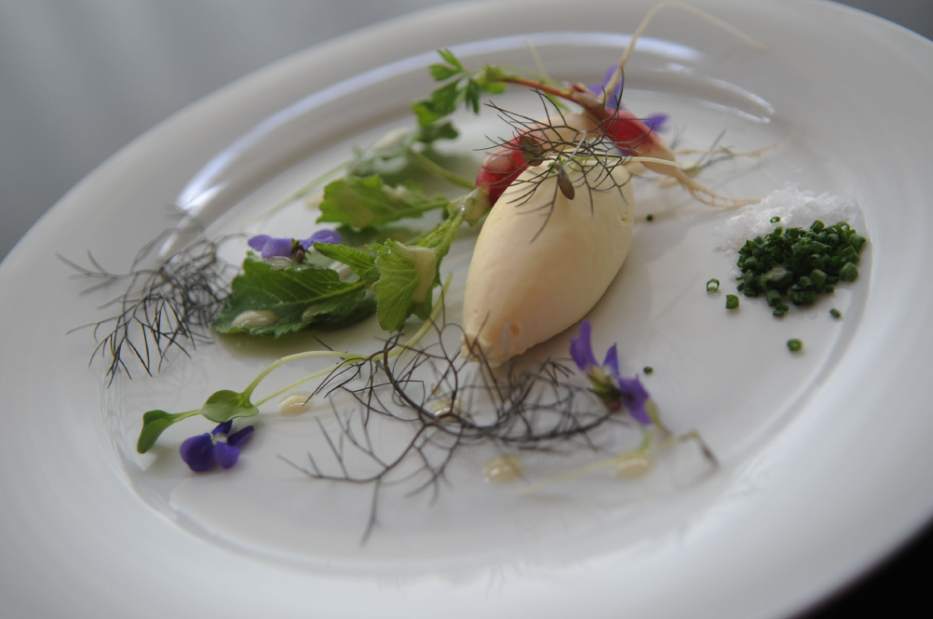
Cultured butter's superior taste makes it a coveted ingredient for spreading on bread, finishing fish, making sauces, garnishing all manner of vegetables, mashing potatoes, adding sizzle to steak and enhancing an omelet. High butterfat combined with low water content enlivens baked goods, creating fluffier biscuits and flakier pie dough. And, try crisp fresh radishes dabbed with a curl of salted, cultured butter: It's a spring sensation.
But, cultured butter is more expensive to buy and labor-intensive to make. Some chefs are purists: Manresa's David Kinch, in Los Gatos, Calif., believes butter should be excellent, but not fooled with, let alone cultured. Others, like Derek Stevens of Eleven in the Strip District, have been stymied by tepid diner reception. Stevens says he tried making and serving cultured butter years ago, but stopped: “No one seemed to care.”
But, times change, and today's dining public, influenced by European travel and the wider availability of cultured butters at home, seek more interesting dairy options. So, expect progress on the butter front as chefs across the country lead the charge for a butter revolution.
The basics
Way, way back in the day, many houses had a cow or two, even in urban areas. The cows were milked, the milk set aside for the cream to separate and rise, and several days' milkings, endowed with naturally occurring bacteria, were pooled and let to rest. The inherent microorganisms, plus other ambient airborne ones, grew and fermented, turning the milk sugars into lactic acid — in effect, slightly souring the milk. Laborious hand-churning followed — promoting the consolidation of fat globules into a mass of butter. The remaining released liquid was buttermilk.
That was the pre-industrial scenario — before refrigeration, mechanical cream separators and mandatory pasteurization. The latter, a process adopted to protect public health from pathogens such as tuberculosis, does just that. But it also wipes out all the good bacteria. To facilitate fermentation, bacterial cultures need to be reintroduced.
The most basic way to do this is to inoculate pasteurized cream with certain lacto bacteria, store for about 18 hours at cool room temperature, then churn. A more efficient technique: Churn sweet cream into butter, then add established lactic acid and other culture components before cold-storing to age and develop flavor. Artificially flavoring finished butter with preformed lactic acid is a cheat and doesn't qualify as culturing.
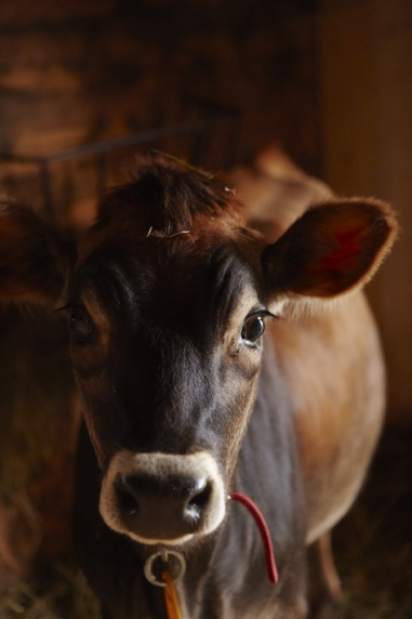
Take note: The butter produced will be only as good as the quality of cream employed. That should be as fresh as possible, have a high fat content and come, preferably, from grass-grazed cows that are good milk producers. Flavors vary, reflecting the cows' diet, the terroir and the seasons. So does the butter's color. Read labels carefully to determine the production process and whether preservatives and coloring agents have been added.
How to acquire
Access to European-style cultured butter is getting easier.
For years, gourmet cognoscenti sought the iconic Buerre d'Isigny, a golden treasure from Normandy, France, with protected designation and all natural culturing — no starter added.
Recently, Amazon listed it for $9.61 for 4.4 ounces, plus $28 shipping! (An irresistible aside: d'Isigny translates to the English name Disney.)
In the United States, Allison Hooper's Vermont Creamery sells what many believe to be the gold standard of American cultured butter. It's made with high-quality cream from a 500-family co-op in Northeast Vermont. Churned in small batches, it boasts an 86 percent butterfat content. Vermont Creamery also offers the creamy butter with a crunch of Celtic sea salt crystals, plus a new version blending the salted product with Pure Vermont maple syrup. The basic butters sell in $9.99 logs.
Diane St. Claire of Animal Farm sells her exquisite farmstead dairy products almost exclusively to chef Thomas Keller, of the famed French Laundry and Per Se restaurants, and to chef Barbara Lynch in Boston. In the rare occasions of availability, Saxelby Cheesemongers offers 2 pounds of the butter for $65.
But, check your local farms: With increased demand in markets and other outlets, more farmers are opting to make small-batch cultured products, a most welcome extension of the locavore food movement.
And, of course, you can also DIY in your home kitchen.
Local chefs
Not many Pittsburgh chefs — yet — focus on cultured butter, although many play with other fermented dairy products, such as buttermilk and creme fraiche. Of the ones who do:
• Chad Townsend, Salt of the Earth executive chef, works with Cavan Patterson of Wild Purveyors to access local artisanal dairy.
“I wanted a nice butter and bread service,” says Townsend, “Not just a lubricant for ordinary bread.”
He chose Allegro Hearth brioche and pairs it with a locally sourced cultured butter, such as Minerva, an 82 percent butterfat Amish roll that he describes as flavorful, salty, a bit cheesy and consistent. He serves it as a complementary accompaniment to the first dinner course. “It's been well-received,” he says. “I'm glad people are noticing.”
Wild Purveyors started out as a wholesale business catering to chefs, restaurants and markets, but has since added a retail store. Among a treasure trove of amazing products, cultured butter appears from time to time. Patterson says, although, if buyers show a regular demand, he'll happily keep it in stock.
• Dave Racicot and his East Liberty restaurant, Notion in East Liberty, are studies in the perfection of details. That he makes his own cultured butter should not surprise. He uses the best Valewood Farms cream, he says, adding buttermilk as a starter and following standard butter-making procedures (see recipe). Sometimes, he adds a small amount of Shio Koji, fermented salt, for extra umami. But he keeps it simple so the butter flavors don't compete with the rest of the meal. The complementary butter comes in a shallow dish along with sourdough bread arranged in a wooden cigar box.
What's next?
There's a distinction between flavored or compound butters and cultured butters. Not all compound butters are cultured, but cultured butters can, and increasingly are, flavor-enhanced — with everything from herbs and spices to seaweed, fruit and lobster. In fact, culinary schools frequently teach chefs-to-be about compounding butter.
But there's a lot more experimenting going on. Chefs nationally are toying with infusions, wraps, added seeds, ash, whisky-brushing — and aging, much like cheese. Call it next-level butter. It's the hot current trend to note.
A wave of news headlines, online articles, even book titles declare: Butter is back. And it certainly is!
Ann Haigh is co-host, with husband Peter, of www.onthemenuradio.com .
Garfield Farm Radish With Cultured Butter, Buttermilk Vinaigrette and Chive Oil
From Chad Townsend of Salt of the Earth
16 fresh radishes, with tops intact
1 pound Vermont Creamery cultured creme fraiche
2 ounces honey (preferably local Bee Boy)
1 ounce Malden sea salt
3 ounces grape-seed oil
4 ounces chives
Freshly ground black pepper, to taste
Thoroughly rinse the radishes, including the tops.
Place the creme fraiche in a mixer and paddle until it breaks.
Reserve the resulting butter and buttermilk separately.
Place the reserved buttermilk into a clean bowl and whisk in the honey and a pinch of salt. Start slowly whisking in the oil until it is emulsified.
In a blender, thoroughly puree the chives and oil. Pass the mixture through a coffee filter.
Spoon a mound of butter onto a plate. Sprinkle with sea salt. Separate the radishes from their tops. Arrange the radishes on the plate.
Toss the greens with the buttermilk vinaigrette, and place this salad around the radishes.
Drizzle on the chive oil, season with black pepper and serve.
Eat dabs of butter with bites of radish.
Makes 4 servings.
Cultured Butter
From Dave Racicot, Notion
1 cup Valewood Farms heavy cream
1/4 cup cultured buttermilk
Ice water
Pinch Shio Koji (fermented salt)
In a clean bowl, whisk together the cream and buttermilk. Cover and set aside at room temperature for 2 to 3 days to thicken and ripen. Taste. It should be slightly tangy.
Scrape the cultured cream into the bowl of a stand mixer, cover with plastic wrap and refrigerate until well chilled.
Remove the cream from the refrigerator and whip until the mixture starts to break and a butterfat ball starts to form (1/2 hour to 45 minutes. Check at about 25 minutes to control splattering.)
Drain the butter solids in a fine sieve set over a bowl, and reserve the buttermilk for another use.
Rinse the butter solids with ice water and knead to extract any remaining buttermilk. Repeat until most of the buttermilk is expelled, and the water runs nearly clear. Continue kneading until the butter no longer expels liquid.
Knead in the salt.
Remove to a clean cutting board. Shape into a cylinder and pat dry again with a clean dish towel.
Wrap tightly in plastic wrap. Refrigerate for two weeks or freeze.
Buttermilk Biscuits
From Ann Haigh
Butter for greasing baking sheet
2 1/4 cups all-purpose flour, more for rolling the dough
1 1/2 teaspoons baking powder
1/2 teaspoon baking soda
1/2 teaspoon salt
2 teaspoons fresh rosemary leaves, chopped
1/2 cup cold, unsalted cultured butter
1 1/4 cups cultured buttermilk
2 tablespoons unsalted cultured butter, melted
Heat the oven to 450 degrees. Lightly grease a baking sheet.
In a large bowl, stir together the flour, baking powder, baking soda, salt and rosemary.
Cut the butter into small pieces, add to the bowl, and use a fork or pastry blender to cut in the flour mixture until a coarse crumb texture is achieved. Or, use a food processor.
Pour in the buttermilk. Stir to combine.
Flour a clean work surface and remove the dough onto it. Knead, turning the dough to form a cohesive mass. Pat the dough into a 3/4-inch-thick rectangle, and use a 2 1/2-inch biscuit cutter to punch out the biscuits.
Set the biscuits onto the baking sheet. Set the sheet into the oven. Bake for 13 to 15 minutes or until the biscuits are golden brown. Remove them from the oven. Brush with melted butter and serve hot.
Makes 12 biscuits.
