

Manna from heaven is one of the miracles told in the Bible, but growing food ourselves has always been hard work.
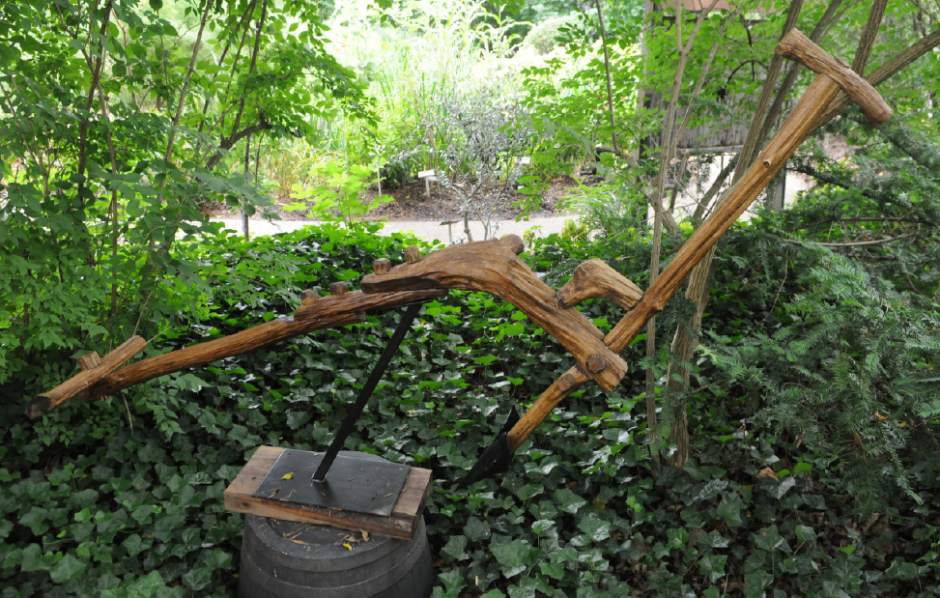
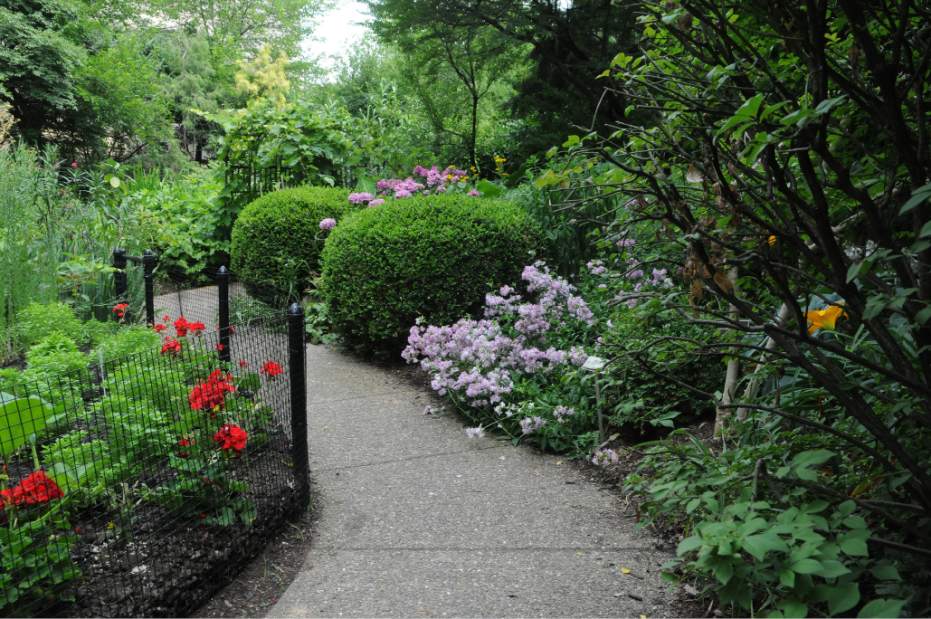
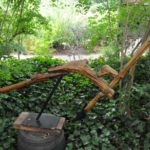
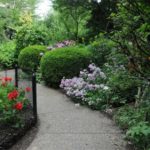
The Biblical Botanical Garden at Rodef Shalom Temple in Oakland has been filled for the past 25 summers with plants and trees mentioned in the Bible. This year, it has added a rare inanimate object: a replica of a 3,000-year-old plow, made in Pittsburgh with materials that would have been used in ancient Israel.
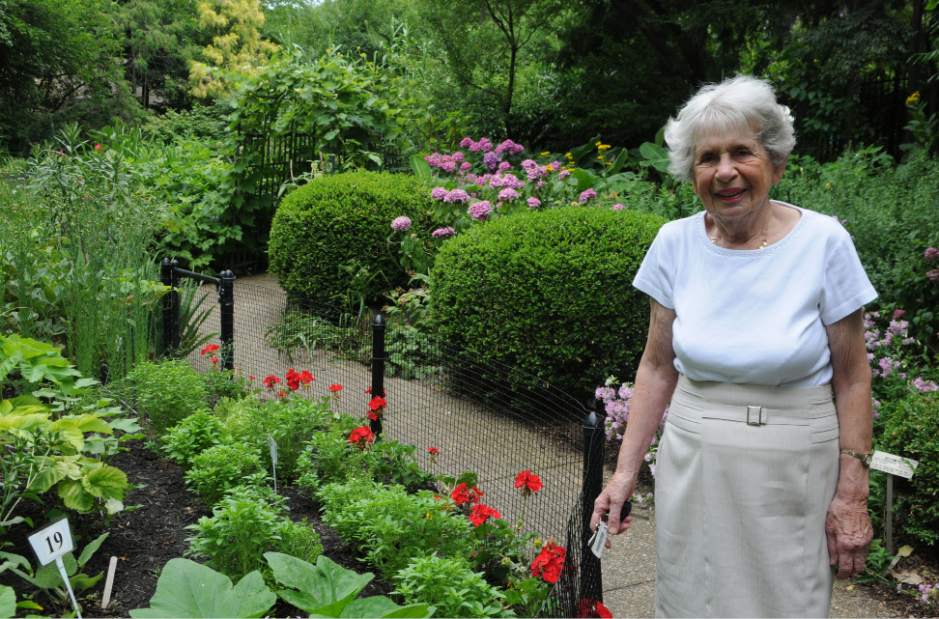
“We're always on the lookout for something that will bring additional life and interest to the garden,” says Walter Jacob, the congregation's rabbi emeritus and senior scholar. He and his wife, Irene, founded it 26 years ago.
Jacob's interest in acquiring a biblical-era plow was launched by seeing a small model of one, small enough to fit on a bookshelf, 15 years ago while visiting an agricultural museum in Budapest.
“The plow really links the plants to the people who grew them and makes it more real than seeing a drawing in a book,” he says.
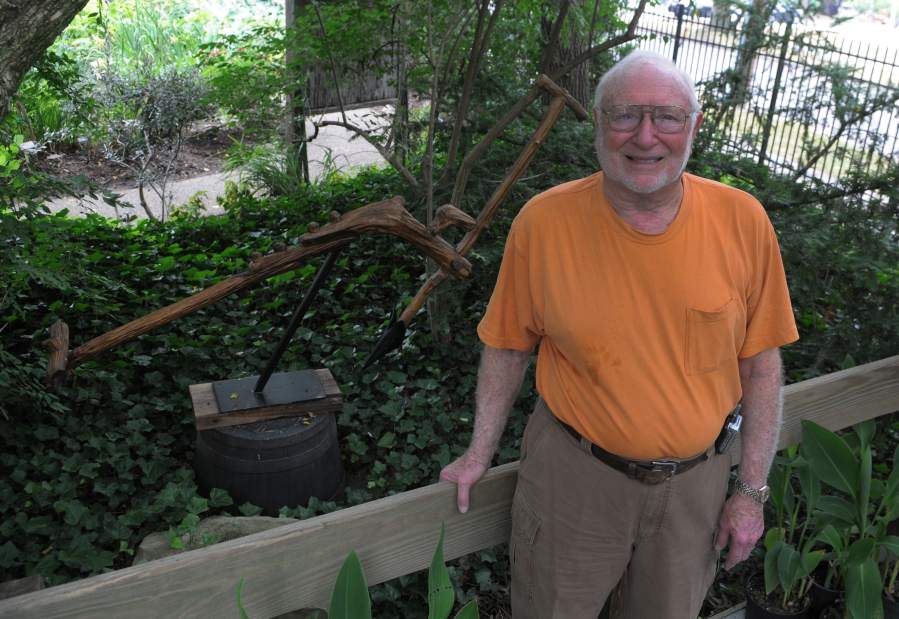
Jacob had tried to interest various people in building a replica of a biblical-era plow, but had no success until he brought it up with Bernie Latterman in 2011.
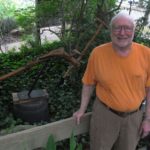
Latterman, 85, was owner and president of Northern Light Co. on the North Side until he retired in 2002. He enjoys woodworking and has a workshop in the Ice House Studios in Lawrenceville.
He says it took him 30 to 40 hours to complete the project, working from detailed drawings of plows that Jacob gave him and one that had came from booklets published by museums in Israel.
Latterman decided to use ironwood, which was present in ancient Israel according to Irene Jacob, for the plow frame.
“Ironwood is a very heavy wood, weight-wise and in density,” Latterman says. “It's not a very tall tree, at least in Pennsylvania, where it grows to perhaps 3 feet high and 6 inches around. When I darkened it with some walnut oil, its wrinkling under the bark looked almost identical to the drawings.”
Blacksmith Bob Rupert made the hand-forged iron blade, or stake, of the plow.
“The plow would have been pulled by a couple of men or a beast of burden, with another man behind the plow. He would keep it from digging to deeply to make a clean depth for planting by pulling up or down on the handle,” Latterman says.
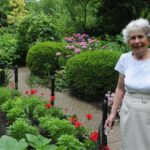
“It shows how the farmer worked the land in ancient times,” says Irene Jacob. “You have to prepare the soil. It's the most important thing. Without good soil, you can't grow anything.”
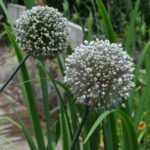
The Biblical Botanical Garden includes some trees and plants every year, supplemented by a changing roster for special projects. This year the garden is focusing on oil plants such as sunflower and geranium.
For a change, Irene Jacob didn't limit herself to plants indigenous to the Middle East. The stalks of corn must be 10 feet high.
Mark Kanny is a staff writer for Trib Total Media. He can be reached at 412-320-7877.
