
Eliminating scale infestation on houseplants takes time and patience

Question: I have an enormous schefflera plant that is perhaps 27 years old. I struggle with scale insects on it. It is too large and heavy to take outside and hope for the rain to help. I have used powder insecticides in the past, but that is only a temporary fix. For the past several years, I have been wiping off the leaves and stems with alcohol. This is very time consuming. I love my plant, so I am wondering if you might have a different suggestion.
Answer: Scale is a notorious pest of numerous houseplants, including schefflera, citrus, gardenias, ficus, spider plants and palms. Though this obnoxious little pest is difficult to control, it isn't impossible.
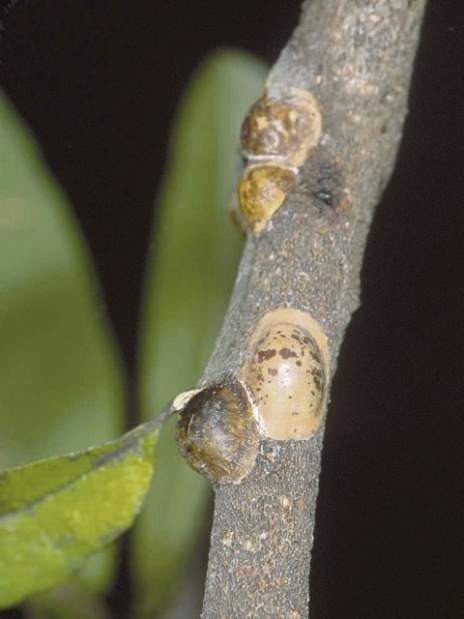
Houseplant scale appears as very small, immobile, oval-shaped bumps along the plant stems, on leaf undersides and/or in the leaf nodes. Scale is notoriously difficult to diagnose because the insects look like part of the plant. One clear sign of a scale infestation is the presence of a sticky, saplike substance on the floors and furniture around and under the plant. As the insects suck out plant juices, they produce a sticky excrement called honeydew that quickly collects on any surfaces where it falls.
There are more than 8,000 species of scale, but only a handful of them are considered to be houseplant pests. Most mature scales are covered by a hard shell, except for a few weeks a year when they're in their “crawler” stage. Females lay eggs under their shells, and upon hatching, these immature scale insects move around the plant to find a suitable place to attach and feed. Soon after they latch onto the plant tissue, they generate their own hard, protective shell. Most species will stay in a single spot for most of their lives, sucking out the plant juices and excreting honeydew.
Scale can easily hitch a ride into your house on newly purchased plants or on plants that spend the summer outdoors. If you notice scale on your houseplants, it's always better to try to control it early in the game. If you wait too long, the infestation can become quite severe and much more difficult to control.
Their thick, shell-like covering makes scale a difficult pest to control. Because the plant is inside, in your living space, I'm sure you'll want to avoid synthetic chemical pesticides. The best method is the one you've been doing — manual removal.
Crushing the insects with a cotton ball soaked in isopropyl alcohol is truly the best method of control, though it is time consuming and must be done every few weeks until the infestation is eliminated. If you do it only once in a while, the insects rapidly rebound, and it's much more difficult to get them under control.
Other possible controls include commercial preparations of insecticidal soap or horticultural oil, though you'll need to read the label to make sure the specific brand you choose has been approved for use on a schefflera plant. Follow all label instructions carefully, and use a sprayer to apply it to upper and lower leaf surfaces and all stem surfaces every 10 days for two months.
Because these products are most effective on the crawler stage of this pest, you'll need to make several, properly timed applications to get the insects under control. Protect furniture and floors by covering them with plastic tarp before spraying, or move the plant into the bathtub.
Until the scale is gone, you'll want to keep your infested plant away from healthy ones.
Horticulturist Jessica Walliser co-hosts “The Organic Gardeners” at 7 a.m. Sundays with Doug Oster, the Trib's garden editor, on KDKA Radio. She is the author of several gardening books, including “Attracting Beneficial Bugs to Your Garden: A Natural Approach to Pest Control” and “Good Bug, Bad Bug.” Her website is jessicawalliser.com.
Send your gardening or landscaping questions to tribliving@tribweb.com or The Good Earth, 503 Martindale St., Third Floor, D.L. Clark Building, Pittsburgh, PA 15212.
