
Paramedics learn how to respond in new CCAC Boyce lab

When Mark Place started working as an emergency responder, instructors used pieces of tape to simulate injuries like compound fractures — a regimen he described as inadequate to prepare for real-life 911 calls.
“You were looking for a piece of tape,” Place said. “When there's a bone sticking out, it's like, ‘Oh, my God.' ”
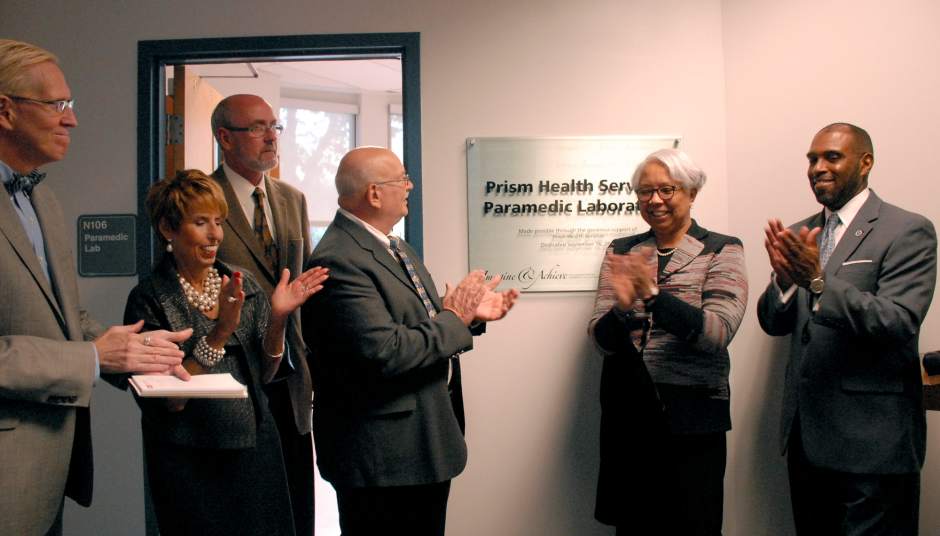
Things have changed since Place, a member of the board of the now-defunct Prism Health Services, started as a Pleasant Hills EMT in the 1980s. Those changes are evident in the emergency lab that students training to become paramedics at the Community College of Allegheny County now use.
The CCAC paramedic program is one of only three that train paramedics in Western Pennsylvania — the others are at the University of Pittsburgh and Pennsylvania State University, Uniontown — and it attracts students from as far as Luzerne County.
Program director Neil Jones said the 31 students in the CCAC program will help to fill a nationwide shortage of trained paramedics when they graduate. Associate degree and certificate programs are offered.
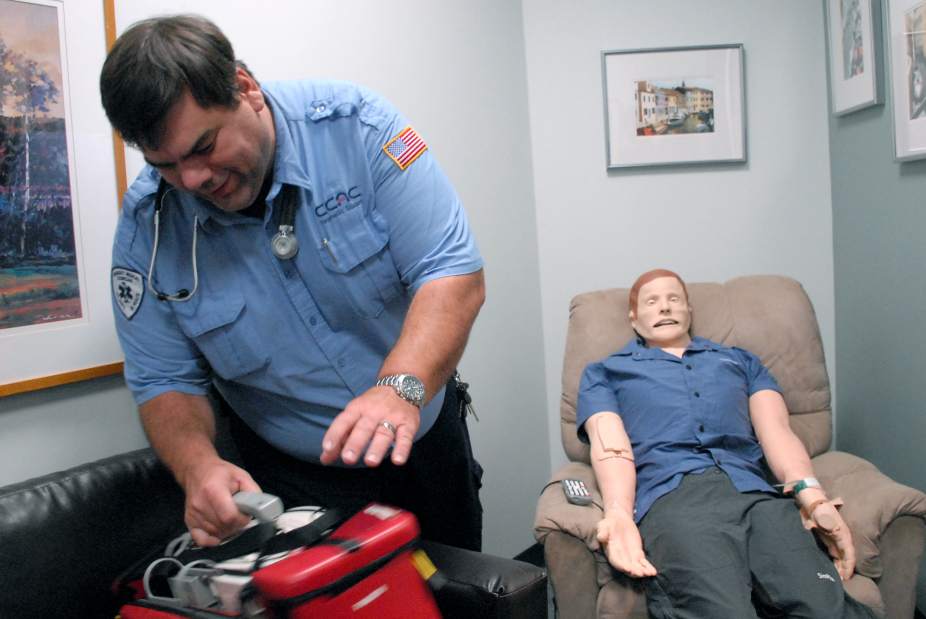
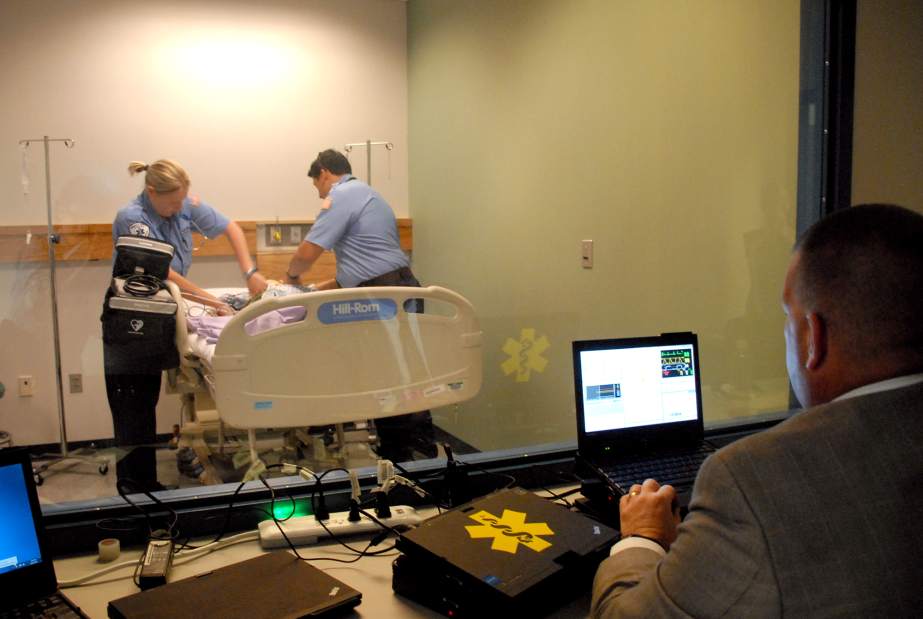
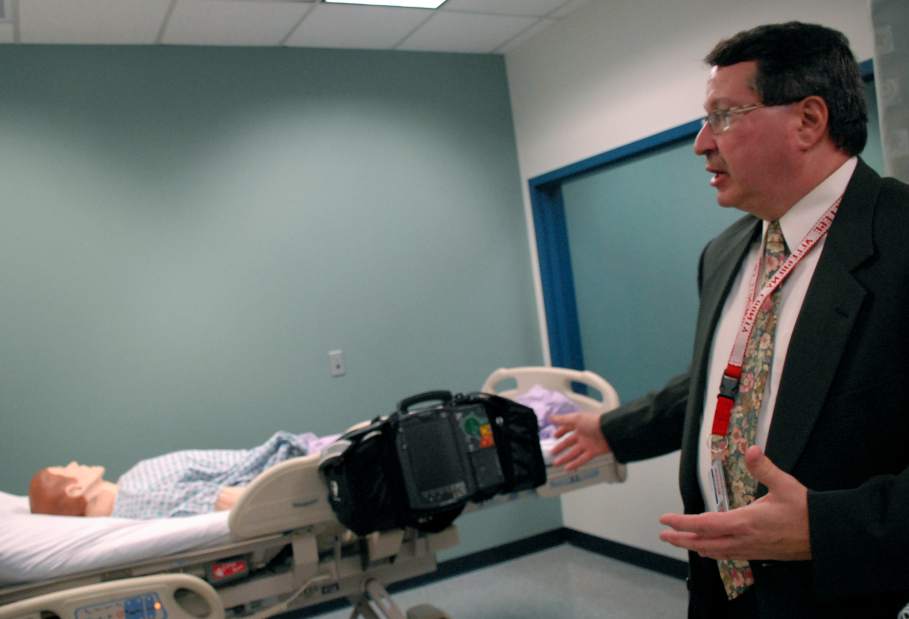
Housed in a basement of CCAC Boyce Campus, the lab — part of roughly $2 million in upgrades to health training facilities CCAC undertook last year — features an emergency room and a claustrophobic apartment with a small living room and bathroom.
“It's not much of a challenge to get somebody off the kitchen floor,” said Rick Allison, dean of academic affairs at Boyce. “But a common place for a patient to experience problems is their bathroom.”
Occupants of the laboratory give it an extra dimension of realism. From behind one-way mirrors in the ER and apartment, instructors control their “patients” with remote controls.
Manufactured by Laerdal, a Norwegian medical supply company, the four adult “manikins” — as Laerdal calls the dummies in its marketing literature — in the emergency lab each cost $7,000 to $9,000, according to CCAC spokeswoman Elizabeth Johnston.
The two babies at the lab cost $6,000 each. The manikins can simulate a patient's vital signs, teaching students to read cues like a patient's pulse rate or the sound of a patient's breathing to decide how to respond.
Kevin Kuczma, 40, an EMT with an Indiana County-based emergency service, is working toward an associate's degree from CCAC while he trains as a paramedic.
He said when he treats one of the manikins for a respiratory condition, he has to listen to its breathing for symptoms like wheezing or fluid in the lungs.
Place described the range of symptoms instructors can induce in the dummies as “a way to crank up the stress. They can make the patients make you cry,” he said. “They can do all the stuff you can go through in the back of an ambulance.”
Kuczma, who started working as an EMT in 1993, said even high-tech classroom aides can't prepare students for the shock of working with real trauma victims.
“If you can't deal with the auto accidents, or the bleeding or the crying, you should really go into something else,” Kuczma said.
Gideon Bradshaw is a staff writer for Trib Total Media. He can be reached at 412-871-2369 or gbradshaw@tribweb.com.
