

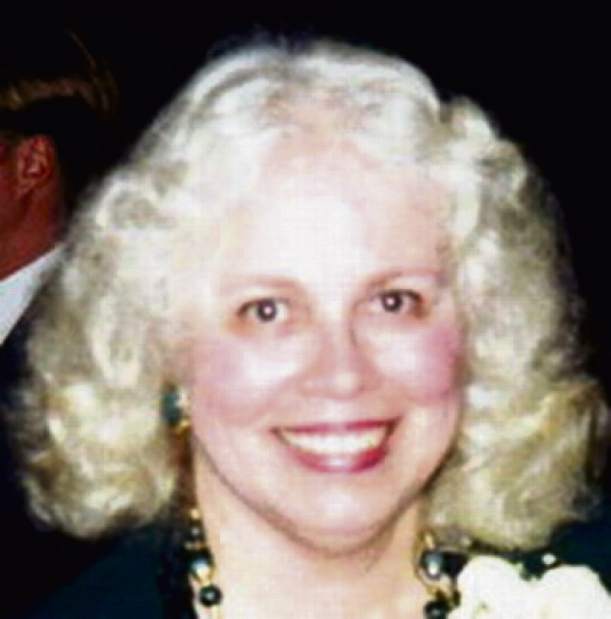
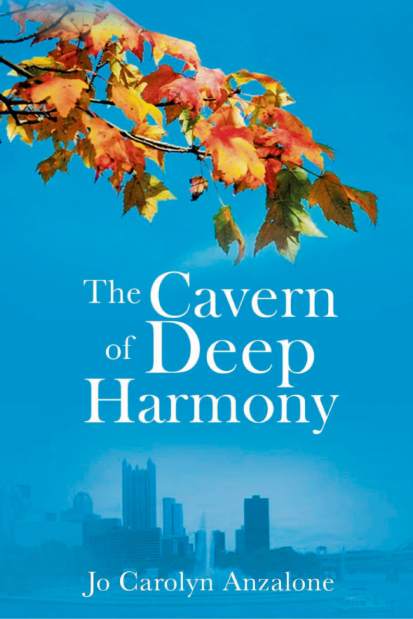
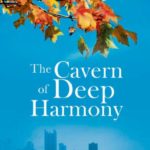
A line from Victor Hugo's 1869 novel “The Man Who Laughs” inspired the title for Jo Anzalone's first published novel.
“The Cavern of Deep Harmony” tells the story of a blind professor who falls in love with a sighted woman. The novel explores their relationship and each person's desire to understand how the other “sees” the world.
“According to Hugo, ‘Blindness is a cavern to which reaches the deep harmony of the eternal,'” said Anzalone, who lives in Washington Township. “Marshall Sinclair, my guy, is not fond of this and thinks that what's really being said is that in the very blindness itself, there's some magic present so whatever might be accomplished comes from it alone, and has nothing to do with one's own ability.”
Anzalone spoke with the Star about her first novel, her writing process and how she came to a place where she felt confident writing for a blind character. The interview has been edited for length:
Q: In the book, Professor Sinclair is also working on a novel, utilizing an interesting conceit: the story within a story. Did that present an extra challenge in the sense that you were kind of writing two books at once?
A: Well, yes, I was writing two books at once but I didn't really find it all that much of an extra challenge. The main book is set in modern times in Western Pennsylvania and the book within the book is set in Williamsburg in the beginning years of the Revolutionary War.
But both books deal with a character who has been born blind, what life is like for them and what is involved in their falling in love with a sighted person whose world they can never fully understand and who can never fully enter into their own experience of the world. Being very familiar personally with Western Pa. and also with Williamsburg — I had many ancestors who lived in the Jamestown settlement and then in Colonial Williamsburg — made everything come together more easily for me.
Q: How would you characterize your writing process?
A: I think I probably break all the traditional rules when it comes to how a novel should properly be written in that I never make an outline or plan too far in advance. For me, the story either exists or it does not exist and my job in writing is to sit at my computer and let the story slide out and take its shape. If I've done my research and have everything stuffed inside me that I'll need, the writing itself just sort of ... flows.
I've already got six sequels to “Cavern” written in the last three or four years, along with a novel set during the great Johnstown flood of 1889, one about the paper streets of Pittsburgh, two-and-a-half set during the Civil War, among many other things. I have so much written, I thought it might be time actually to get some of it in book form!
Q: What do you hope readers will take away from the story?
A: My hope is that readers will stop and think more deeply about the world of the blind, possibly care more about it, be more interested in it. And in this world today when so much is taken before it is given; where there is so much abuse of things which should be gentle and kind and good; when leavings happen more often than comings, that there is room for a story in which the characters behave with honor and steadfastness, with courage and selflessness.
Patrick Varine is a Tribune-Review staff writer. Reach him at 724-850-2862.
