

After the Soviet Union launched Sputnik more than 50 years ago, Pennsylvania schools went on a building boom that surpassed every other state in giving students a view of the night sky.
By 1971, there were 171 school planetariums in Pennsylvania.
As space mania waned, so did interest in astronomy and school planetariums nationwide. In Allegheny County, though, some school planetariums and observatories are making a comeback.
The Gateway School District is refurbishing its planetarium for the second semester, and the Woodland Hills School District will refurbish its observatory. In other school districts, such as North Hills, planetariums have been as constant as the rising sun.
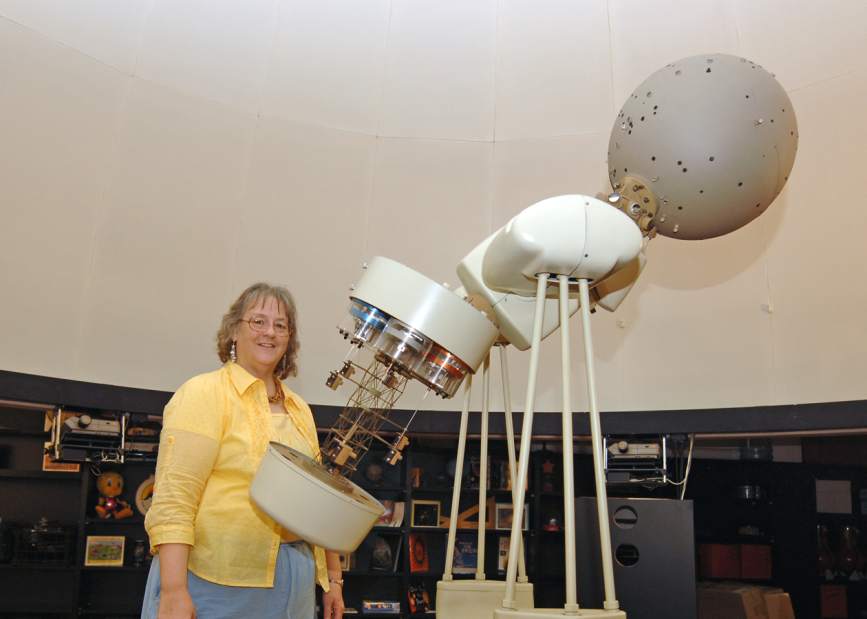
“Young students are always interested in two things — dinosaurs and stars. Whether we maintain that interest through their whole lives is the question,” said Sue Batson, a science teacher and planetarium director at North Hills High School.
Its planetarium opened in 1971, with a renovation 1999 at a cost of about $100,000. North Hills offers free public shows and will have a special viewing of a partial solar eclipse Oct. 23 near the high school.
Abby Lang, 17, a senior from West View, is vice president of the North Hills Astronomy Club.
“It's very engaging for students to be in that dark room and be able to look at all the stars,” she said.
Rob Webb, planetarium director at Pequea Valley High School in Lancaster County, co-wrote a 2011 article in Planetarian magazine on the status of school planetariums in Pennsylvania.
At one time, Pennsylvania required school districts building a new school or remodeling an old one to include a planetarium or an observatory. Federal money helped reduce the cost, but that requirement long since has passed.
“We beat the Russians, and within a couple years, we stopped sending Apollo missions to the moon, and the momentum behind the space race movement just died,” Webb said.
“The current trend is STEM (science, technology, engineering and mathematics) education,” he said. “If we think of that as our goal — to produce students who are scientifically and technologically literate — then astronomy can be a big part of that.”
His article indicated there were 187 school planetariums in the database, but he and co-author Kathleen A. Fadigan, a researcher at Penn State University in Abington, found that 62 were not in use or no longer in existence at that time. At least 26 were operating. There was no response from the remaining 99.
Mt. Lebanon no longer will have a planetarium in its remodeled and expanded high school because moving and updating it would cost too much, district spokeswoman Cissy Bowman said.
The astronomy classes will study the subject with the aid of digital technology instead.
Keystone Oaks also no longer uses its planetarium.
The observatory at Woodland Hills was not in use, either. Then, The Pittsburgh Foundation made a grant of about $8,000 to repair the dome and equipment.
Norm Catalano, director of curriculum at Woodland Hills, hopes the refurbished conservatory will encourage more students to take astronomy.
“Fundamentally, we're looking at the STEM area being very important for our students,” he said.
“If you take a look at the jobs of the future, that's where the United States is lacking.”
Districts such as Steel Valley, Highlands and Pine-Richland still use their facilities.
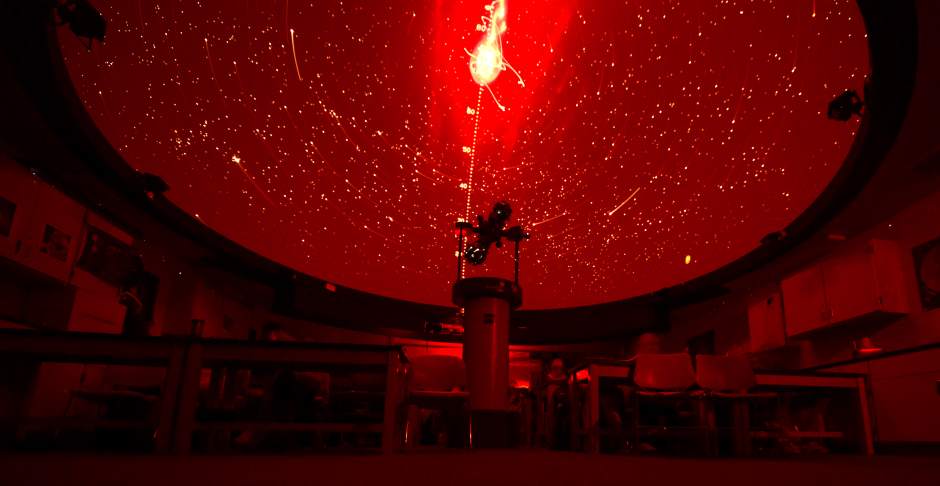
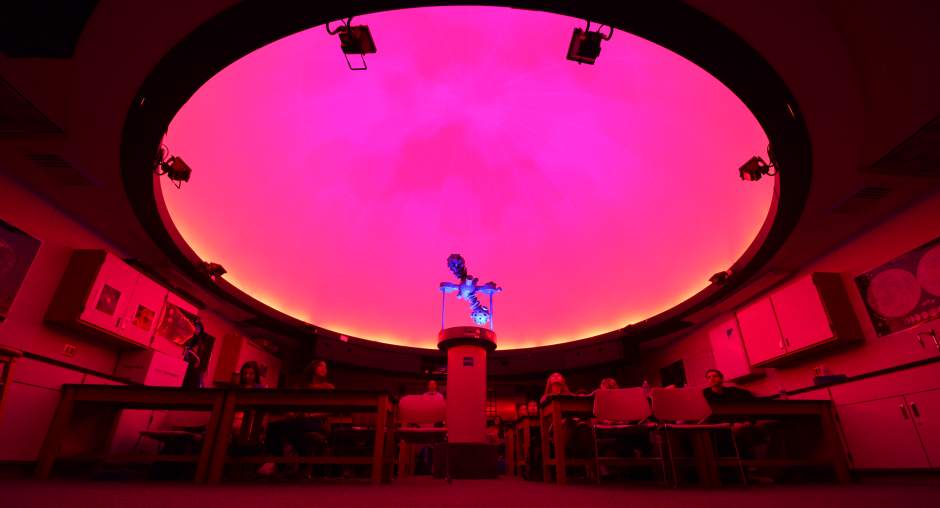
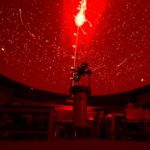
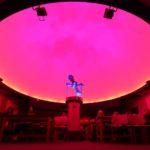
Recently, the planetarium darkened, and dots of light appeared as stars on the 24-foot dome at Pine-Richland High School. Students craned their necks back, and astronomy teacher Andy Dugger pointed out the constellations with his red-tipped laser.
Afterward, Sabrina Pellegrini, 17, a senior from Gibsonia, said, “It's almost like a break from the other classes. It's like you're out of this world — literally. It shows that the world is such a small part of what's out there.”
Bill Zlatos is a staff writer for Trib Total Media. He can be reached at 724-772-6353 or bzlatos@tribweb.com.
