
Family says rediscovered NASA computers belonged to Reserve collector

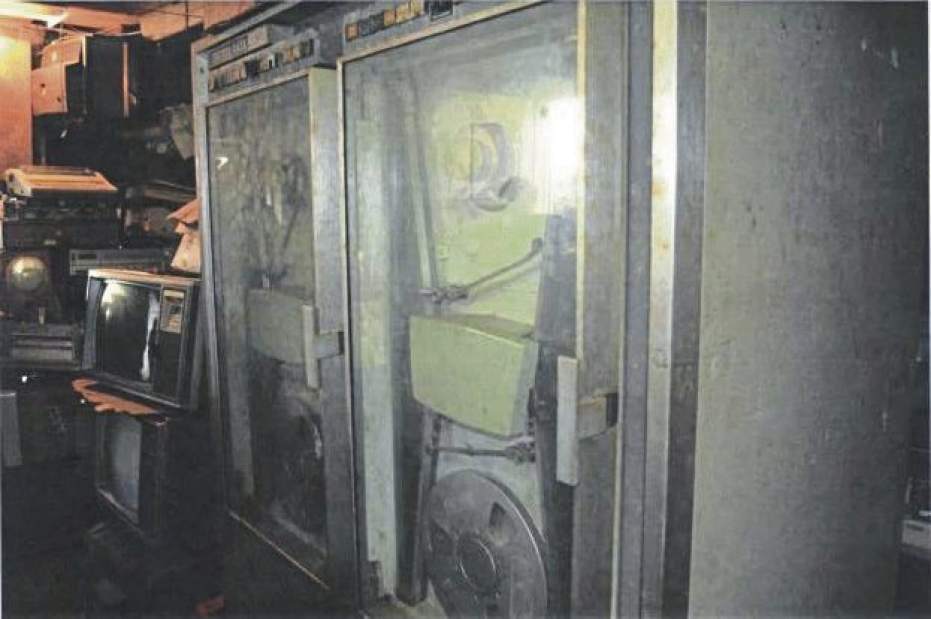
A volunteer firefighter who kept a pair of NASA computers and hundreds of data tapes dating back to the moon landing and early explorations of the solar system never knew exactly what he had before he died, his daughter said.
NASA released a collection of emails and memos last week detailing a months-long investigation into whether two fridge-sized computers and 325 reels of magnetic data tapes contained any valuable information that had otherwise been lost to history in an time when expensive tapes were often erased and re-used without their contents being archived.
All the names and addresses were redacted from the information NASA released, but Jean Clady contacted the Tribune-Review to report that her father, Dennis Clady of Reserve, is the man who scooped up the equipment 40 years ago and kept it in his Reserve basement, just outside Pittsburgh.
Clady was a Mt. Troy volunteer firefighter and lifelong tinkerer who collected, disassembled and repaired electronics, radios and televisions, said Jean Clady, 51, of Ambridge, his only daughter.
“Before he fell ill, he was working on various TV sets... it was his desire to donate them through the VA,” Clady said. “He had sets with pictures and no sound he thought deaf veterans may be able to use. He had sets with sound but no picture he thought blind veterans could use.”
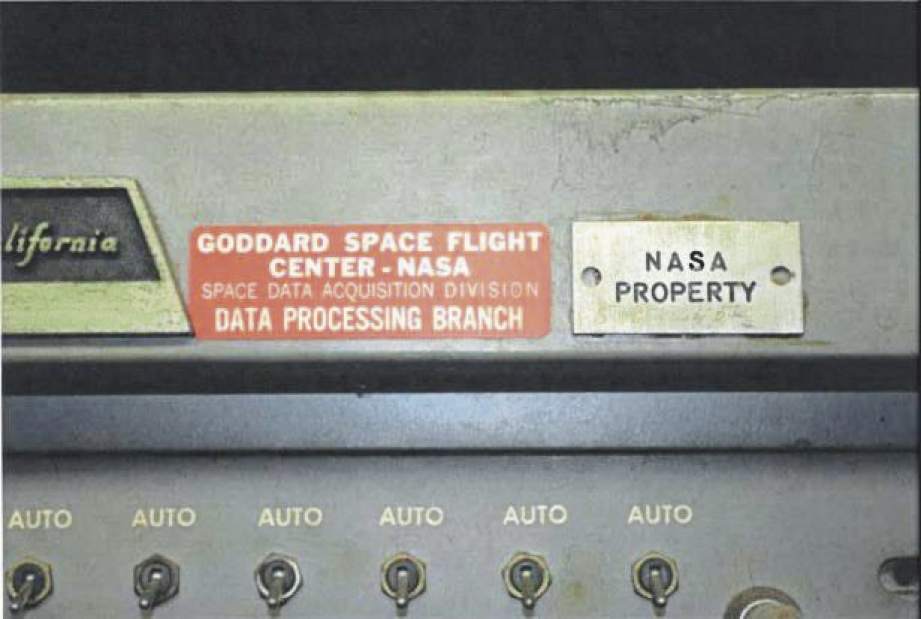
In the late 1970s, Clady acquired the computers from NASA's Goddard Space Flight Center in Greenbelt, Md., by way of his former employer, IBM, which had its regional office at Allegheny Center.
Jean Clady said her father believed the computers were flight data recorders, and while most of the tapes were unlabeled or had no mission information on their labels, some were labeled with NASA's Pioneer and Helios missions, which explored Jupiter, Saturn and the sun.
“He knew what the flight data recorders were and had some knowledge of what was on the reels, judging by the labels,” Clady said. “However (he) never realized exactly what.
“After all, why would IBM or NASA dispose of anything of importance? Of course now we know better,” she said, noting that the agency had admitted in 2009 that it had lost or overwritten the tapes containing its original recordings of the Apollo 11 moon landing.
After Clady died in 2015 — not 2011 as the NASA memos said — Jean Clady gave scrap dealer Bob McNatt of Bradford Woods permission to clean out her father's collection. When McNatt saw the Goddard labels on the computers, he contacted the agency to make sure NASA didn't want them — and to assure the government they hadn't been stolen.
“These weren't the kind of thing you can shoplift. ... I moved a bunch of TVs and I see these things the size of armoires,” said McNatt, who salvaged and scraps metal as a hobby between shifts as a police officer. “They were taller than me and twice as wide.”
Unfortunately, the NASA archivists who researched the trove over several months in 2016 couldn't find any old contracts to indicate which missions the computers had been used on, and the tapes they took back to Goddard to evaluate appeared too old, too difficult to read and too damaged by mold from the damp basement to risk the time and expense to try restoring them.
“Pioneer was discussed in detail as part of that inspection. NASA determined that the magnetic tapes were in all likelihood erased prior to their original disposition,” Goddard spokesman Ed Campion said in a statement. “Weighing these factors, the agency determined the magnetic tapes were of no intrinsic or informational value to the agency.”
NASA gave McNatt free rein to scrap the computer equipment, and a contractor destroyed the tapes in September, Campion said.
McNatt said he wasn't disappointed that NASA found no historical value in the tapes, he just wanted to make sure he wasn't disassembling and recycling something that belonged in a museum.
“I said, if this is something historical and I just threw it in the hopper, I'd feel bad,'” he said. “I usually just get old swing sets; I don't think I'll ever see something like this again.”
Matthew Santoni is a Tribune-Review staff writer. Reach him at 724 836 6660, msantoni@tribweb.com or on Twitter @msantoni.
