



State law doesn't require adult bicyclists to wear a helmet. Neither will Healthy Ride, Pittsburgh's bike share program set to begin in May.
It's up to prospective riders to tote their own — just as it is for many bike-share programs across the country.
“The vast majority don't provide a helmet,” said Elizabeth Murphy, communications director with D.C.-based nonprofit advocacy group League of American Bicyclists. “It becomes a question of ‘How do we do that?' and do it in a way that is hygienic, and also so that people aren't taking them.”
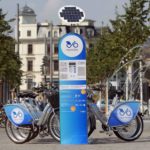
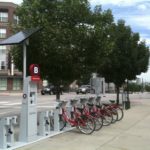
From New York to San Francisco, major cities have started bike rental systems with aims to increase cycling rates and lessen traffic congestion. Pittsburgh's Healthy Ride, sponsored by Highmark Blue Cross and Blue Shield and the Allegheny Health Network, will begin with 500 bicycles at 50 stations citywide.
A 2014 Reuters analysis found no fatalities linked to the nation's 36 bike sharing programs, but cyclist fatalities are on the rise. According to the Department of Transportation, there were 726 cyclist deaths in 2012 compared with 682 the year before and 623 in 2010.
David White, executive director of Pittsburgh Bike Share, said the program encourages helmet use and will provide rules-of-the-road information at station kiosks, but logistical concerns remain with providing helmets through the program itself.
“You'd have to have a staff of people individually inspecting every helmet every single ride and also physically fitting the helmet of every rider,” he said. “We're encouraging people strongly to use their own helmets.”
The bicycles themselves are designed with safety in mind. Healthy Ride bikes will have heavy, puncture-proof tires, automatic pedal-powered lights and encased gears to prevent clothing snags. White said Pittsburgh's bikes are the first in the nation to have a seven-speed design, allowing riders to better navigate the city's hills.
“It's a pretty safe, utilitarian bicycle that's designed to take you where you really want to go,” White said. “By entering into the bike share market at this time, we as a city, are really poised to take advantage of the latest developments and advances in bike share.”
Pittsburgh's bike share will cost $2 per half hour. Monthly memberships cost $12 or $20 for unlimited 30- or 60-minute rides.
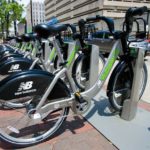
Elsewhere, bike share programs have varying helmet options. In Seattle, county law requires cyclists to wear a helmet. Bike-sharing system Pronto offers free adjustable helmets at each station that can be returned. Boston's Hubway is debuting a helmet vending machine, said Kim Foltz, program manager for Boston Bikes.
There, riders who qualify for subsidized memberships receive a free helmet when they sign up. The program has a partnership to sell helmets for less than $12 at stores close to stations, Holtz said.
The Boston system's bikes were connected to 18 crashes last year, spread over 1.2 million trips, according to city data. Citywide in 2014, 76 percent of all riders wore helmets, compared to 43 percent of Hubway riders. Last year, Boston counted an estimated daily 79,000 bike trips, a 98 percent increase from 2007.
Bike Pittsburgh, a cyclist advocacy nonprofit, anticipates increased ridership. Spokeswoman Ngani Ndimbie said the group expects the bike share program will be used for short trips from Downtown to the Strip District during lunch, or for commuting from a light-rail stop to work. “It's going to make biking a more viable option for far more people,” she said.
Melissa Daniels is a staff writer for Trib Total Media. She can be reached at 412-380-8511 or mdaniels@tribweb.com.
