Losses from Wilkins-Churchill, Mon Valley to be recognized at National EMS Memorial Service

Area ambulance driver honored
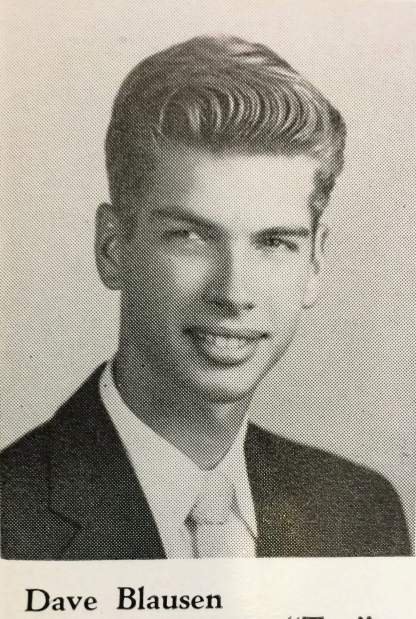
David Blausen, a driver for the Wilkins-Churchill Rescue One ambulance who died in an ambulance fire in July 1971, will be honored at the National EMS Memorial Service near Washington, D. C., on May 19, 2018.
Nearly 50 years after suffering fatal burns in an ambulance fire while en route to a Pittsburgh hospital, a former Wilkins-Churchill Rescue One volunteer emergency medical worker will be honored for his sacrifice in the line of duty.
David Blausen will be among 36 first responders recognized Saturday at the National EMS Memorial Service, which will be held in Oxon Hill, Md. The memorial service is sponsored by the National EMS Memorial Foundation of Boston.
The ceremony is held in conjunction with National EMS Week, which runs May 20-26. Since the first service in 1992, the event has honored 727 EMS personnel who died in the line of duty, said Tammy Chatman, a spokeswoman for the EMS Memorial Foundation.
Also to be recognized this year will be Robert Vetter, who died June 27, 2017, of a medical event while on duty with Mon Valley EMS in Monessen. William Hess, chief of the Mon Valley EMS, declined to release details of the death, citing a request for privacy from Vetter's family.
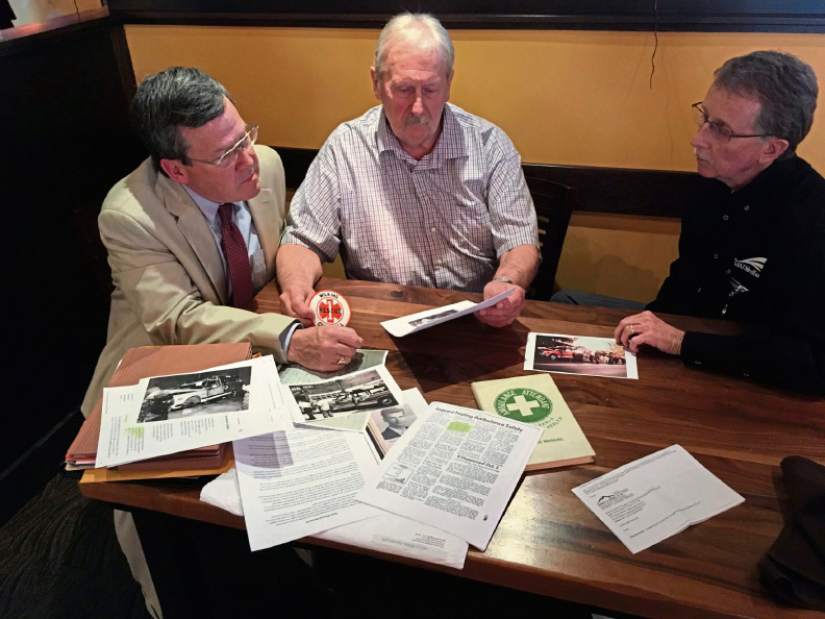
A group of local people pushed for Blausen to be included, including Andrew Blenko, North Huntingdon's planning director and a Wilkinsburg native who joined Wilkins-Churchill Rescue One in 1972.
“My goal is that Dave Blausen's name not be forgotten,” said Blenko, who plans to attend the memorial service after conducting extensive research on Blausen's life and the circumstances surrounding his death.
Douglas Garretson, president of the Center for Emergency Medicine of Western Pennsylvania Inc. and senior director of operations for the Allegheny County EMS Council, said he has spoken at the National EMS Memorial Service in the past and was humbled by the experience. He nominated Blausen to be included in this year's service.
“I said I would get Dave recognized,” said Garretson, 64, of Pittsburgh, who became a member of the Wilkins-Churchill ambulance group the year after Blausen's death.
Fateful trip
Brian Hill, 73, of Turtle Creek rode in the back of the Wilkins-Churchill Rescue One ambulance on July 5, 1971, as it was driven by Blausen, an IBM field engineer.
“Our driver, a very good friend and colleague of mine, gave his life serving his community,” said Hill, who was an attendant sitting next to Angelo Caloyer, a cardiac patient being transported to Shadyside Hospital.
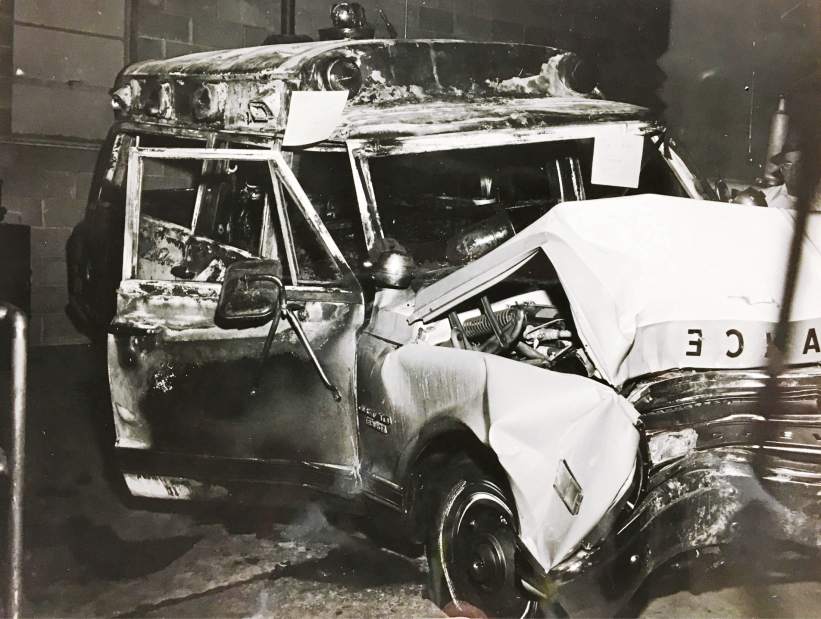
The routine ambulance run turned tragic within seconds of him opening an oxygen tank valve for the patient, igniting a flash fire, Hill said.
“All hell broke loose. It was a maelstrom — fire, smoke, heat,” he said. “I saw elongated sparks like meteors flying up from the floor of the vehicle.”
He said he saw the head of shotgun driver, Bill Barnes, on fire.
Hill said he grabbed Caloyer's wife and jumped from the moving ambulance onto Penn Avenue.
Blausen hung out the driver's side window, his body on fire. He escaped after a nylon mesh seat belt melted.
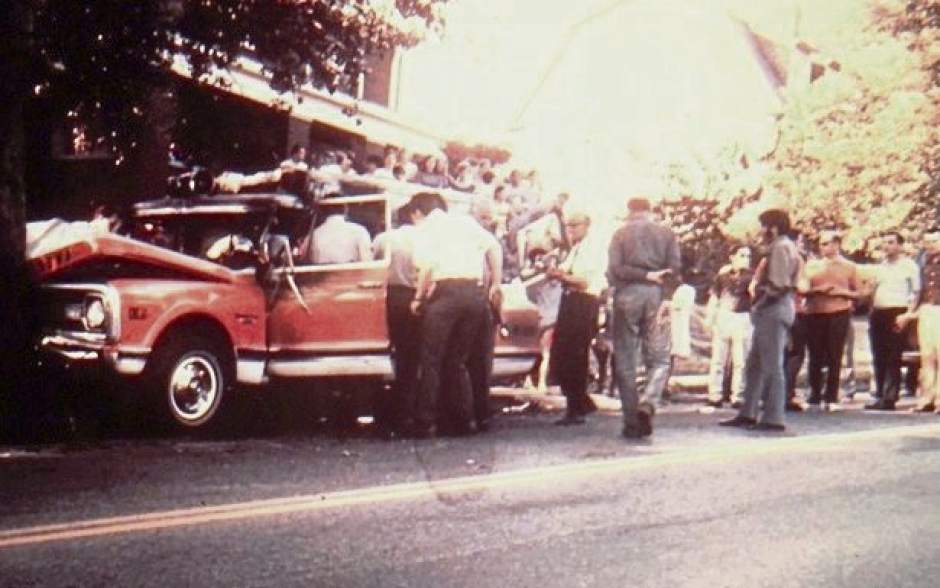
The ambulance went off the road and hit a tree.
“Fifteen 15 seconds (later), it was all over with,” Hill said.
Even as others attempted to extinguish the flames burning his body, Blausen continued to worry about their patient, Hill recalled.
Caloyer, 52, who was strapped to a gurney, died in the blaze.
Blausen, 33, suffered burns on more than 90 percent of his body. He died about a month later.
Hill, a retired Woodland Hills school teacher, is convinced he could have saved Blausen and Caloyer if he only had a little more time.
“I just wanted two more seconds to unstrap him,” Hill said. “The heat alone knocked you down.”
Investigators determined that a hole — which Hill described as the size of a nickel — had developed in a wire mesh oxygen line between the regulator and the patient. It pumped pure oxygen into the compartment.
Garretson speculated that the heated oxygen may have ignited particles in the air, which in turn created the fire in the oxygen-rich environment.
Improved standards
Forensic pathologist Cyril Wecht, then Allegheny County coroner, conducted a public inquest into Blausen's death.
Wecht this week recalled that the importance of the case went beyond the accident itself. As a result of the tragedy, Wecht called for new laws to improve ambulance safety, create training requirements for drivers and attendants and set standards for the oxygen tanks and hoses.
“The whole business of community ambulances was just starting, but the procedures were not fully in place,” Wecht said. “It was operated by a core of people who meant well. There was a need for more regulated (safety) procedures.”
In 1972, the U.S. Department of Transportation determined there were not any standards for ambulance design, prompting the General Services Administration to set requirements for federally purchased ambulances.
“Our ambulance fire figured heavily into those specifications,” Blenko said. “Maybe that got the ball rolling in setting the (safety) standards that are still in effect today.”
Joe Napsha is a Tribune-Review staff writer. Reach him at 724-836-5252 or jnapsha@tribweb.com.