
On eve of national championship, chess grandmaster from Squirrel Hill ponders next move

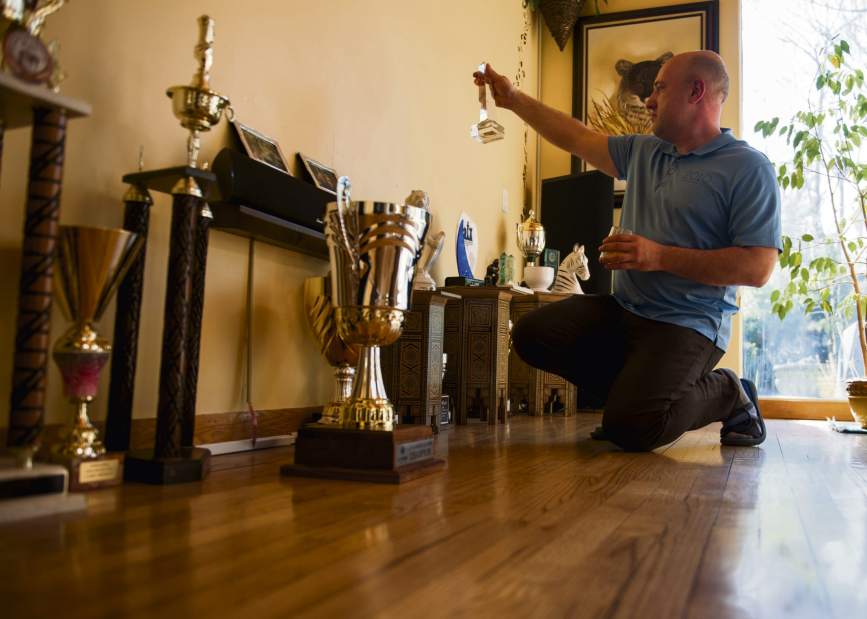
Alex Shabalov is 49, which doesn't seem too old to play chess.
Yet as he has spent the past seven months preparing for the U.S. Chess Championship that begins Tuesday, he has wondered whether he should retire from elite competition.
In the 20 or so years since computers have changed the way players learn and train, he said, it has become a young person's game.
"I'm the last man standing," Shabalov said. "Everybody I played with, the same age, everybody else quit a long time ago."
This week, the grandmaster and four-time national champion from Squirrel Hill will have a chance at a fifth title. He'll be the oldest — by seven years — of the 12 competitors at the Chess Club and Scholastic Center of Saint Louis. Only five are older than 29. The youngest is 16.
"The game became incredibly young," he said. "Right now, in the world, if you're not a grandmaster by 13, then it's probably not your thing."
Shabalov grew up in Latvia and started playing chess at age 7. When he was 11, he won the Latvian junior national championship and caught the eye of fellow Soviet Latvian and chess world champion Mikhail Tal, who became a mentor.
Shabalov rose to international master in 1989 and grandmaster in 1991.
In 1992, not long after the collapse of the Soviet Union and a week before his 25th birthday, he emigrated to the United States with his wife and first of two daughters. They chose Pittsburgh because his wife's sister was working at the University of Pittsburgh.
Shabalov won his first U.S. national championship in 1993 and later captured three more titles (2000, 2003, 2007). He qualified for this year's championship by winning the U.S. Open title in August.
"Now it's a few months before (I turn) 50, and I don't know if I should stop and concentrate on teaching or continue to play," he said. "This U.S. championship ... to qualify for the thing, it's really hard. There are people who are much stronger than I am who didn't make it."
According to the most recent World Chess Federation rankings, there are 1,518 grandmasters worldwide, 90 of whom are U.S. citizens. Pennsylvania State Chess Federation President Tom Martinak, who is based in Pittsburgh, said he believes Shabalov is one of just two grandmasters active in the state. He understands when Shabalov calls it a young person's game.
"Children can improve so much faster now than they could in the past simply because it used to take so much time to get access to information," he said.
The younger the player, he said, the easier it is to withstand chess' physical demands.
"People think chess is something where you're just sitting down and not doing much of anything," he said. "But it's very stressful and a very pressure-packed game, actually, with the clock ticking down. It's hard for a non-chess player to imagine."
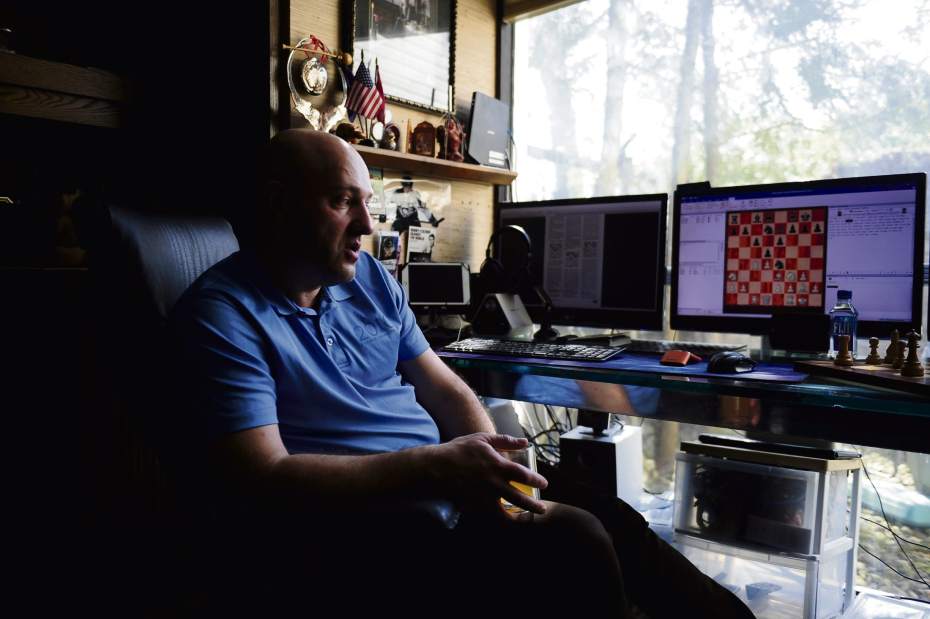
Most of Shabalov's training occurs in a home office dominated by workout equipment, for the reasons Martinak said.
Shabalov's desk sits against a window overlooking a private backyard. Facing him are four large computer screens. On the first is a typical homepage and on the last a sampling of his extensive music collection. He prefers progressive rock — instrumentals, mostly — while he works.
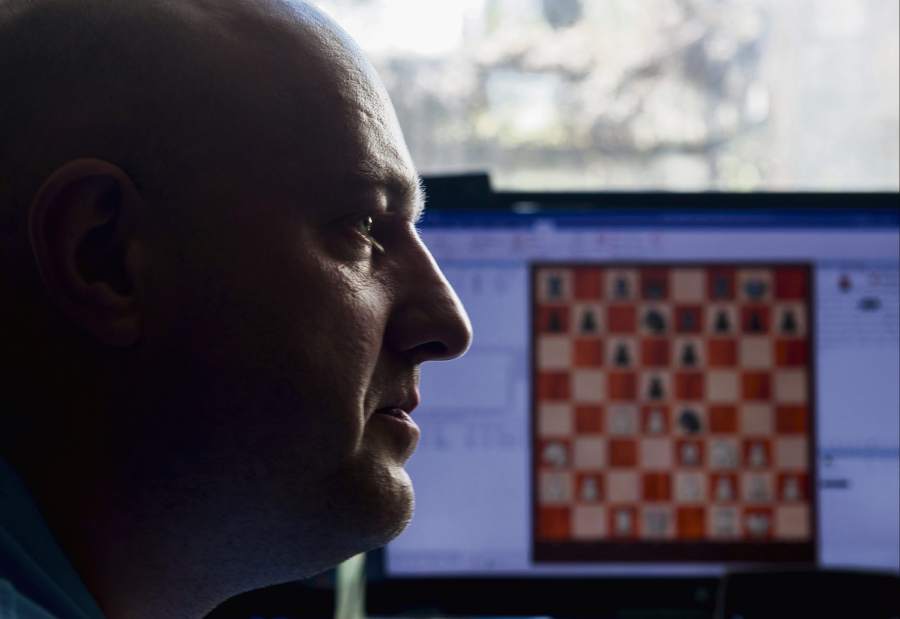
One of the two middle screens displays a website where Shabalov can look in live on any chess tournament happening anywhere in the world. He can watch how the game unfolds, deciding what moves he would make. The other screen displays a database containing more than 7 million games called ChessBase. He uses that to study, up to eight hours a day.
"I know everything my opponents have played for the last 10 years," he said. "Every single game. So I carefully go through it, and with the help of the computer, I simply see where I can play different or better."
Shabalov always was known for an aggressive style, but he said that has changed.
"Before computers, the culture of defense was not there," he said. "It was always cool to attack, sacrifice pieces, burn bridges, risk everything. Right now? ... Simple defense kills. That's much easier to learn than to attack."
Three of the top six players in the world are from the United States and will compete at nationals. That includes reigning champion and No. 3-ranked player in the world Fabiano Caruana, 24, who at 10 became the youngest American to beat a grandmaster in a sanctioned event.
Ten of the 12 players competing this week also took part in the championship last year, including Shabalov. He thought he had prepared perfectly.
"I didn't know what else I could possibly do for a good performance, and I (finished) 11th out of 12," he said. "So this time I decided to change (my preparations) radically, and I simply set a new goal that I will try to just do my best, and that's all.
"I'm competing against guys twice younger than I am. I will simply try to rely on my experience — that's something I do have and they don't — and try to be smart about it. If all of a sudden I'm doing great, I'll take it as a gift."
Karen Price is a Tribune-Review contributing writer.
