
Overhaul of Union Trust Building pairs modern amenities, historical charm


Fearing World War I's potential to decimate Europe's finest buildings, industrialist-turned-real estate titan Henry Clay Frick sent Pittsburgh architect Frederick Osterling to Belgium to study late Flemish Gothic-style designs.
The 1914 trip helped inspire a local architectural legend: the Union Trust Building, whose cream terra cotta cresting-topped, acre-sized footprint takes up a city block on Grant Street, Downtown. The property on the former St. Paul Cathedral site initially opened in 1917 as a 240-shop arcade and 700-plus office tower, its signature twin steeple-like towers anchoring a rooftop promenade laced with medieval intricacies.
Almost a century later, a Boston developer has unveiled a nearly finished $100 million transformation of the 11-story landmark as part of Downtown's latest remix of Class A high-rise office space with lower-level eateries and retail.
Jonathan G. Davis, founder and CEO of The Davis Companies, said the aim was to “see a jewel like this polished” while also “brought into the 21st century.”
“We live in a very fast-moving world, and to be in a place that has so much connection to Pittsburgh's history gives you a sense of rootedness,” said Davis, a former Pittsburgher who attended Taylor Allderdice High School in Squirrel Hill.
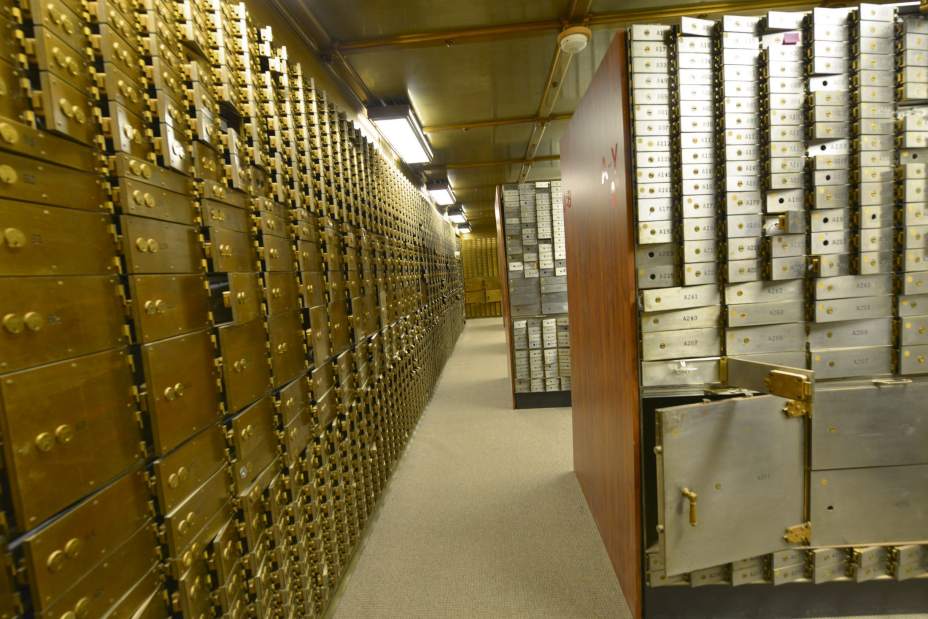
A few years ago, after decades of owner turnover, the Union Trust Building's fate was uncertain and bleak. The interior had become increasingly dilapidated and lifeless, aging infrastructure needed to be replaced, tenant spaces needed to be gutted and tunnel-fed ventilation systems still relied on nearby buildings for cooling and heat.
“The biggest challenge was that it suffered from a whole lot of neglect,” said Davis, whose firm purchased the property for $14 million at a sheriff's sale in March 2014 and leveraged tax credits to enhance its restoration. The developer pumped $58 million into physical work and paid $28 million in “soft” costs such as architecture, engineering and brokerage fees, said Christopher Lasky, the Boston firm's vice president of development.
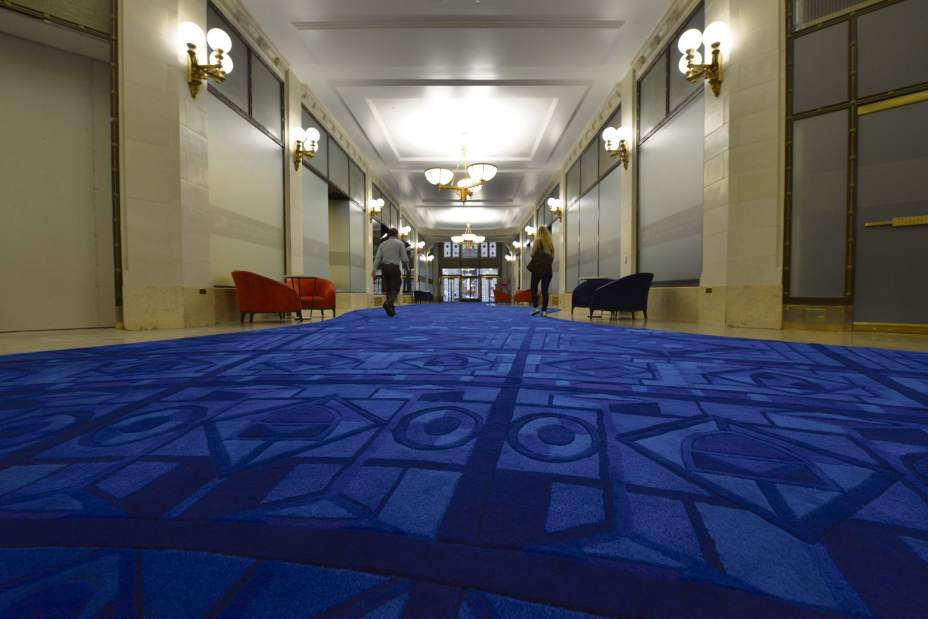
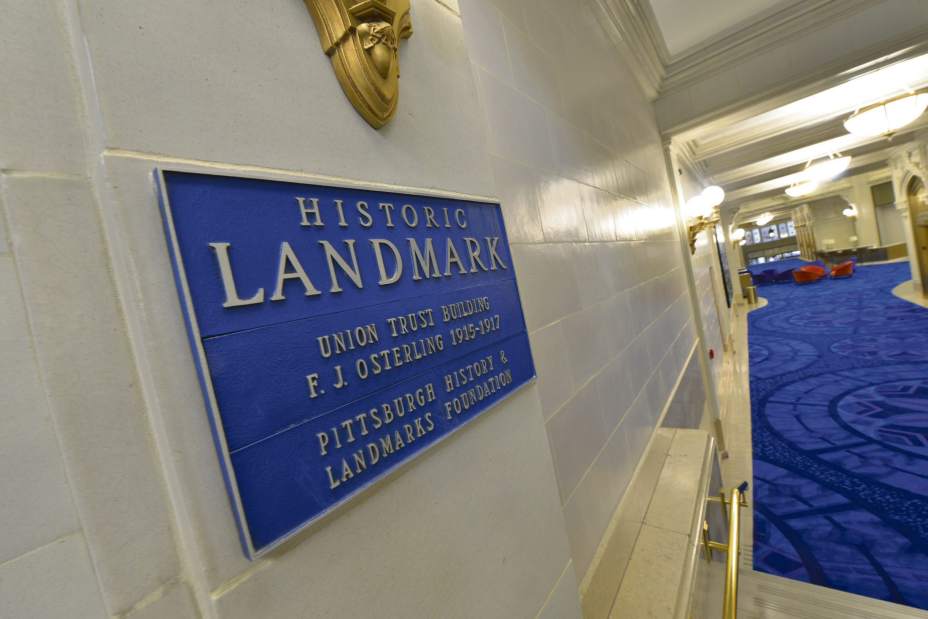
Upon a few steps through the building's gold-trimmed revolving glass doors, the first striking feature lies beneath one's feet. Thick, hand-tufted New Zealand wool carpet pops in shades of deep blues and purples across a 19,000-square-foot indoor crossway that links Fifth and Sixth avenues to Grant Street and William Penn Place.
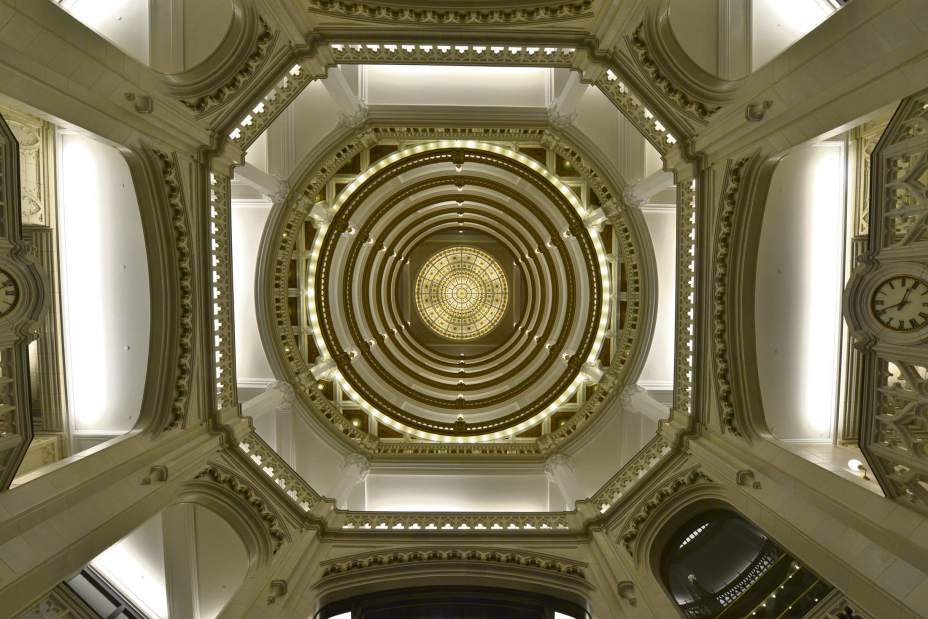
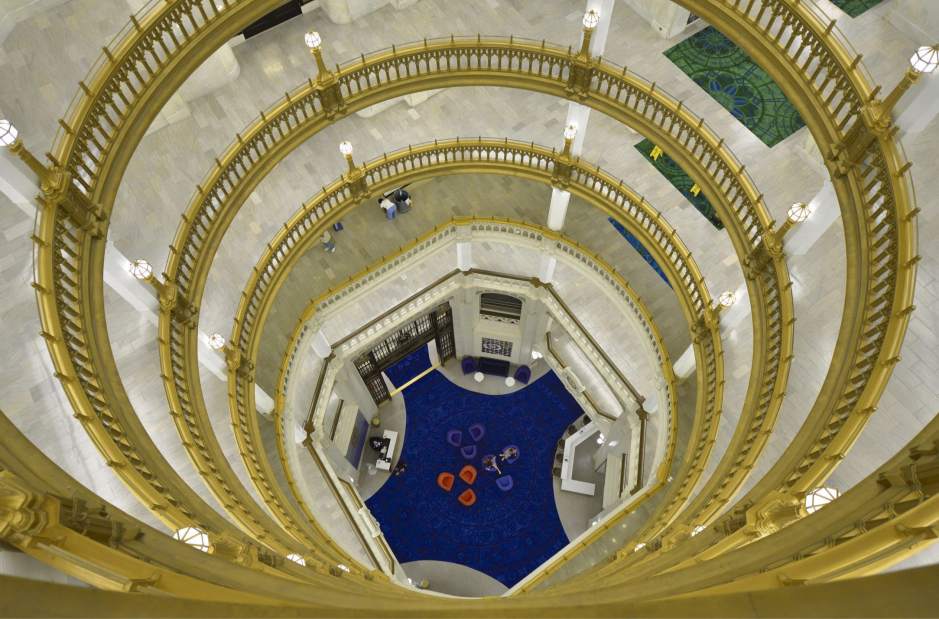
In the main floor's central rotunda, a glance upward reveals that those rose-like swirls decorating the new flooring mimic the freshly cleaned circular stained-glass skylight 150 feet above. Shades get lighter as floors progress toward the gleaming dome, switching to teals and greens before bright amber-gold.
“The idea was to move toward light and lightness as we went through the building,” Davis said. “We didn't want the building to feel stolid.”
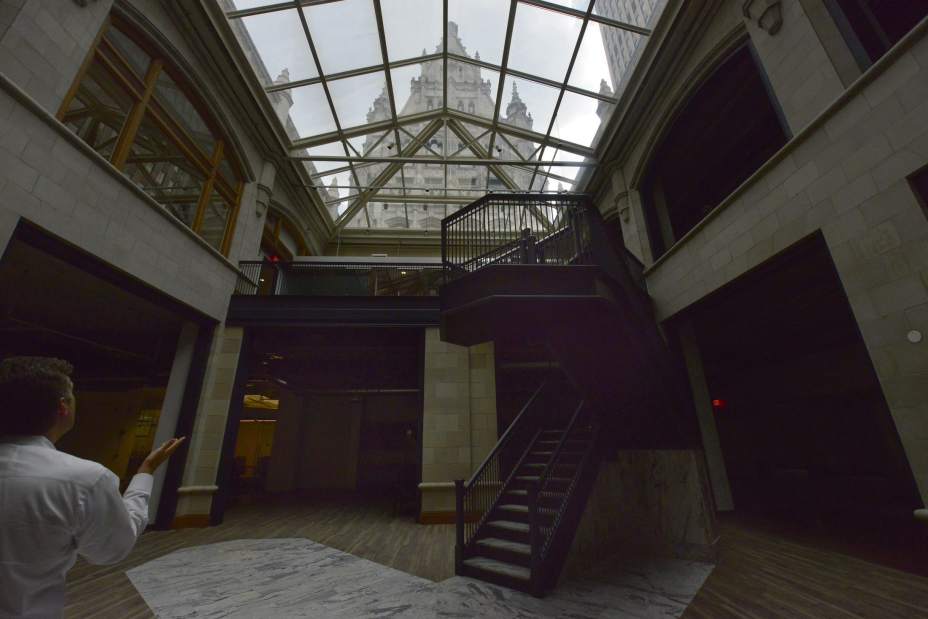
Crews heightened ceilings, knocked out unnecessary columns, reinforced railings, stripped away asbestos and reduced pillar sizes from nine to three square feet. Boston-based Elkus Manfredi Architects and North Side-based Mascaro Construction, which managed the project, paid attention to historical authenticity when they could, such as by using original terra cotta molds from the early 1900s that were found in the basement.
The building is about 60 percent leased, Lasky said.
The developer sweetened the deal for prospective tenants with several perks.
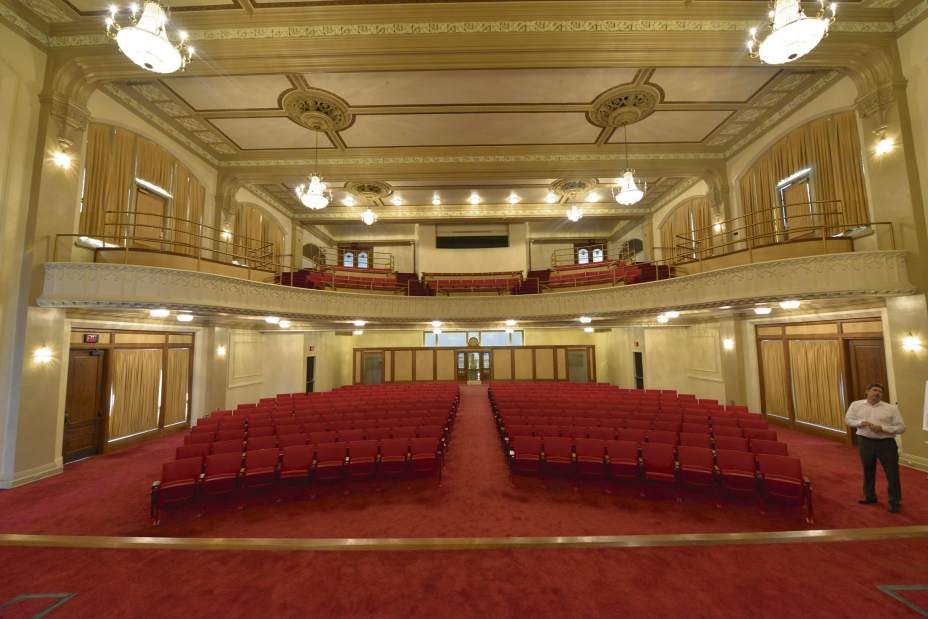
Tenants get free access to a 5,000-square-foot fitness center, including locker rooms and towel service; a 70-seat media facility; a first-floor reception room for cocktail parties or seating for about 100 people; and a 190-space underground parking garage.
Davis said the goal is to woo all types of professionals by pairing modern amenities with historical charm.
Franklin Toker, a University of Pittsburgh art history professor, praised the restoration effort but questioned whether the property can overcome inherent disadvantages, such as the every-executive-gets-a-window concept and modern demands for large slabs of glass that maximize natural light.
Since Union Trust “is one huge block, everyone can't get windows, and access to center well lighting is not a satisfactory substitute,” Toker said. “While I wish Union Trust huge success and applaud their work, can a century-old block like this be truly renewed for today? That's the drama of preservation. Not everything can be repurposed,” Toker said.
Lasky noted that “while we don't have floor-to-ceiling windows, we still have a lot of light,” with windows measuring about 7 1⁄2 feet by 4 1⁄2 feet.
Municipal leaders expressed optimism about the project.
Pittsburgh Mayor Bill Peduto said the restoration is “a symbol of the city's resurgence and flourishing character.” Allegheny County Executive Rich Fitzgerald said the investment marks “an important piece of the economic growth of our region.”
Preservationists began clamoring for restorative work on the building at least 50 years ago, when the Pittsburgh History & Landmark Foundation published James D. Van Trump's historical account “both as a tribute to the finest large office building in Pittsburgh and as a plea for its preservation.”
“The Union Trust Building is a legend, both ancient and modern,” Van Trump wrote in the 1966 publication, “pleasurable to the eye and ear of the Pittsburgher, or to anyone who will listen to its story.”
Natasha Lindstrom is a Tribune-Review staff writer. Reach her at 412-380-8514 or nlindstrom@tribweb.com.
