
Pittsburgh Zoo staff caring for African lion suffering from seizure condition

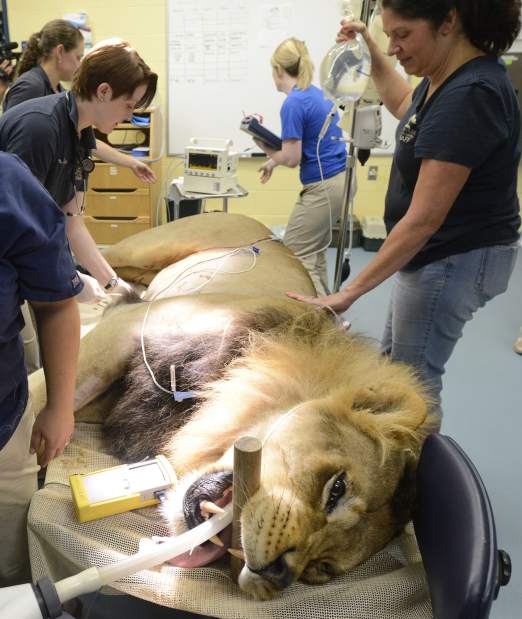
For two years, the Pittsburgh Zoo & PPG Aquarium staff has treated Razi, an African lion with epilepsy — the only lion in the United States known to have the affliction.
“There are not a lot of people to consult,” said Gina Sturgeon, the zoo's director of animal health.
Sturgeon keeps checking the lion, as she did Thursday when the 500-pound feline, who had been heavily sedated and placed on a breathing machine, underwent a physical exam.
Zoo staff checked his heart rate and blood pressure, took X-rays and performed an ultrasound to see whether the anti-seizure medication he's been given for the past month has damaged his liver. Sturgeon said everything looked fine.
“He can't talk back to us the way a person would. That makes treating him harder, more of a process of trial and error,” said Kathy Suthard, the zoo's lion keeper and the first to notice Razi's seizures in 2013.
Epilepsy has baffled doctors for centuries and propagated unfair lore about those with it — although modern medicine goes a long way in controlling or preventing seizures in people.
It baffles veterinarians even more because it is so rare in animals.
“It is very unusual. There are no other cases in the country that we know of,” said Ken Kaemmerer, curator of mammals at the zoo. At least 250 African lions live in captivity in U.S. zoos, according to the Minnesota-based International Species Information System.
Razi's condition became known to zoo staff two years ago, when Suthard was nearby during a seizure.
“I heard a commotion. I thought he was playing with one of his toys, but it was a seizure. Once he stopped shaking, Razi was very wobbly and dazed,” she said.
The biggest concern is that Razi could injure himself during a seizure, she said.
Until last month, zoo staff did not medicate Razi. But when seizures became more frequent, they started giving him twice daily doses of phenobarbital, a depressant that helps reduce seizures.
“Over time, phenobarbital can be toxic. That's why we're keeping an eye on the liver,” Sturgeon said.
In most people, epilepsy's causes aren't known. When identifiable, the causes usually result from some form of injury to the brain.
Yet, Sturgeon said, “It is very uncommon for young adult carnivores to develop neurological diseases.”
Razi was born at the Virginia Zoo in Norfolk and came to Pittsburgh at age 2. His brother and litter mate, Johnny, lives with him at the zoo and shows no signs of epilepsy.
Razi is the second Western Pennsylvania lion to gain fame this summer.
Last week, Prince, a 5-year-old white lion born at Nemacolin Woodlands Resort, died unexpectedly after undergoing surgery for an ear infection. Prince had a seizure and died a day after the procedure.
Rick Wills is a Trib Total Media staff writer. Reach him at 412-320-7944 or rwills@tribweb.com.
