
Project in Pittsburgh's Strip District to disrupt parking, traffic

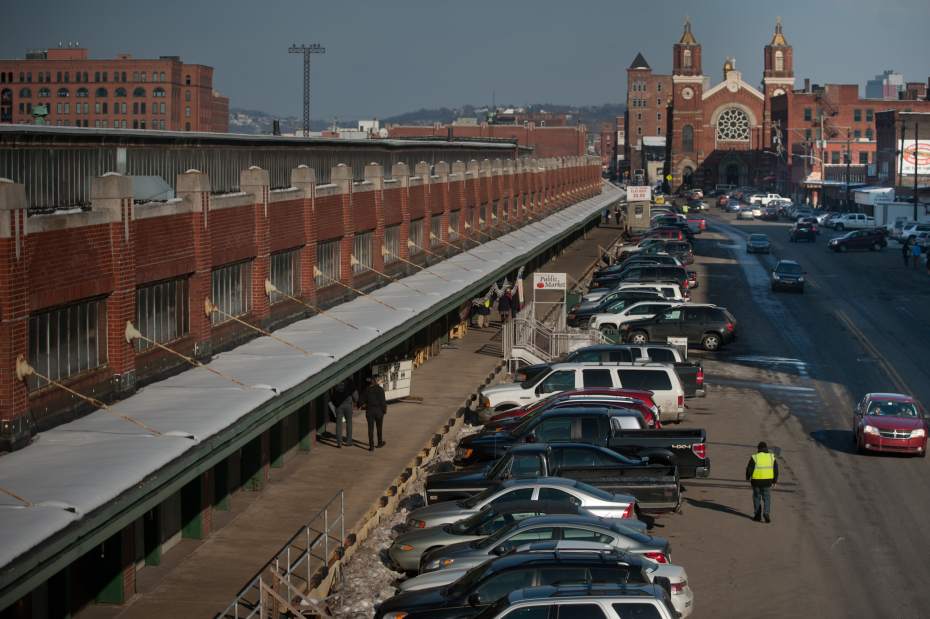
A project to reconstruct a six-block stretch of Smallman Street in Pittsburgh's Strip District and the landmark Produce Terminal is expected to start next month and disrupt parking and traffic in the area.
The Pittsburgh Water and Sewer Authority plans to start replacing water and sewer lines from 16th Street to 21st Street at the end of April. Work is expected to cost $9 million and be completed in December.
Parking will be prohibited in the area during the project and drivers should expect traffic disruptions, according to PWSA officials.
“We coordinated with the business owners to make sure they can load and unload and do those things, but those (parking) spots along Smallman are going to go away,” PWSA spokesman Will Pickering said.
Barry King, PWSA's interim director of engineering and construction, said the authority plans to replace about 3,650 feet of water lines, 2,200 feet of sanitary sewer lines and 1,800 feet of storm sewers under Smallman. It will eliminate a sewer line that runs under the Produce Terminal and split sanitary sewer lines from storm sewers that now run together through the same pipes.
The Pittsburgh Urban Redevelopment Authority board of directors earlier this month approved a lease agreement with Chicago-based McCaffery Interests for redevelopment of the 1,500-foot-long terminal. The URA owns the building.
McCaffery has proposed a $100 million redevelopment of the terminal and a former warehouse across the street at 1600 Smallman St.
McCaffery is planning a “food-centric” concept for the terminal with a large public market on the west end of the building and space throughout for offices and small local vendors specializing in foods and crafts.
Plans for 1600 Smallman include retail space on the ground floor and offices on upper floors.
Pittsburgh is planning an $18.5 million makeover of Smallman that includes paving and safety features for traffic, pedestrians and bicyclists. That work will begin after PWSA finishes its work.
The Pennsylvania Railroad built the terminal in 1929 as a loading dock for trains and trucks. The URA has owned it since 1981 and has been negotiating with would-be developers for more than a decade.
Bob Bauder is a Tribune-Review staff writer. Reach him at 412-765-2312, bbauder@tribweb.com or on Twitter @bobbauder.
