
State prison in Pittsburgh threatened but difficult to close


Pennsylvania Department of Corrections plans to close two prisons this year to save money; SCI Pittsburgh, in the city's Marshall-Shadeland section, is one of five prisons on the list of potential closures.
The 10 housing units inside the 14-acre perimeter on the banks of the Ohio River contain 1,864 inmates. The average age of an inmate is 38 years old.

An inmate walks around one of the recreation areas at SCI Pittsburgh, Tuesday, Jan. 24, 2017. Due to budget concerns, the state may close SCI Pittsburgh later this year.
SCI Pittsburgh is the oldest prison under consideration for closure. It was built in 1882. Inmates are still housed in portions of that original cell block. It is the most expensive of the listed prisons to run (over $100 million projected this year) and also the most expensive of the five to close ($2,089,188 estimated mothballing cost).

Superintendent of SCI Pittsburgh, Mark Capozza talks about the oldest section of SCI Pittsburgh which was built in 1882, Tuesday, Jan. 24, 2017. The prison was closed in 2005 but sections, not including this block, were reopened in 2007.
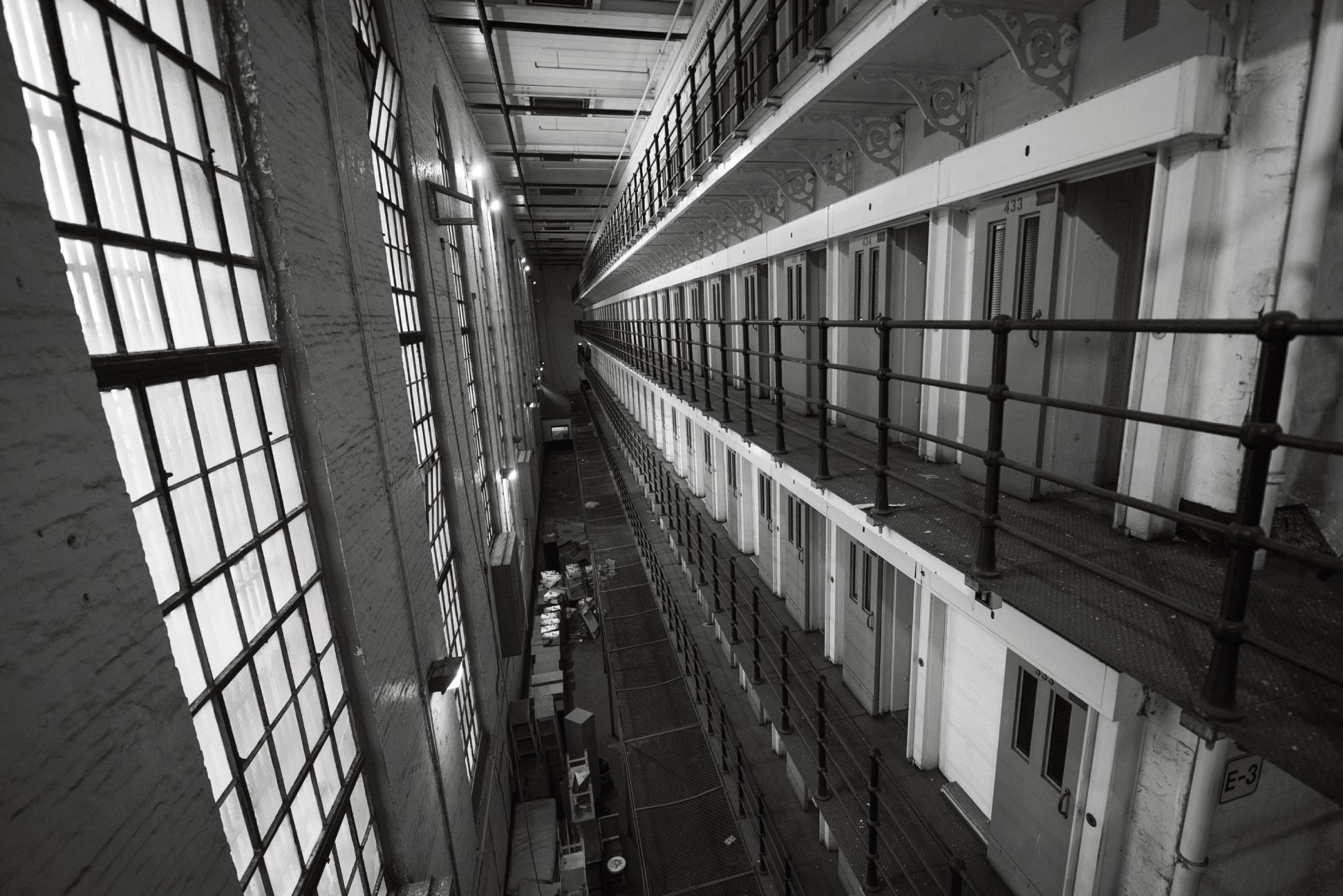
The oldest section of SCI Pittsburgh which was built in 1882, shown Tuesday, Jan. 24, 2017, was closed in 2005 but sections, not including this block, were reopened in 2007.
The prison employs 555 people, including 354 corrections officers, but that staffing is low. Overtime costs at SCI Pittsburgh - more than $10 million a year - are the highest of the five prisons under consideration for closure. Corrections Secretary John Wetzel has said none of the savings from prison closures would come from staffing cuts: every employee would be offered a position elsewhere. Three prisons are within 65 miles of Pittsburgh: in Fayette, Greene and Mercer Counties. Mercer is also under consideration for closure.
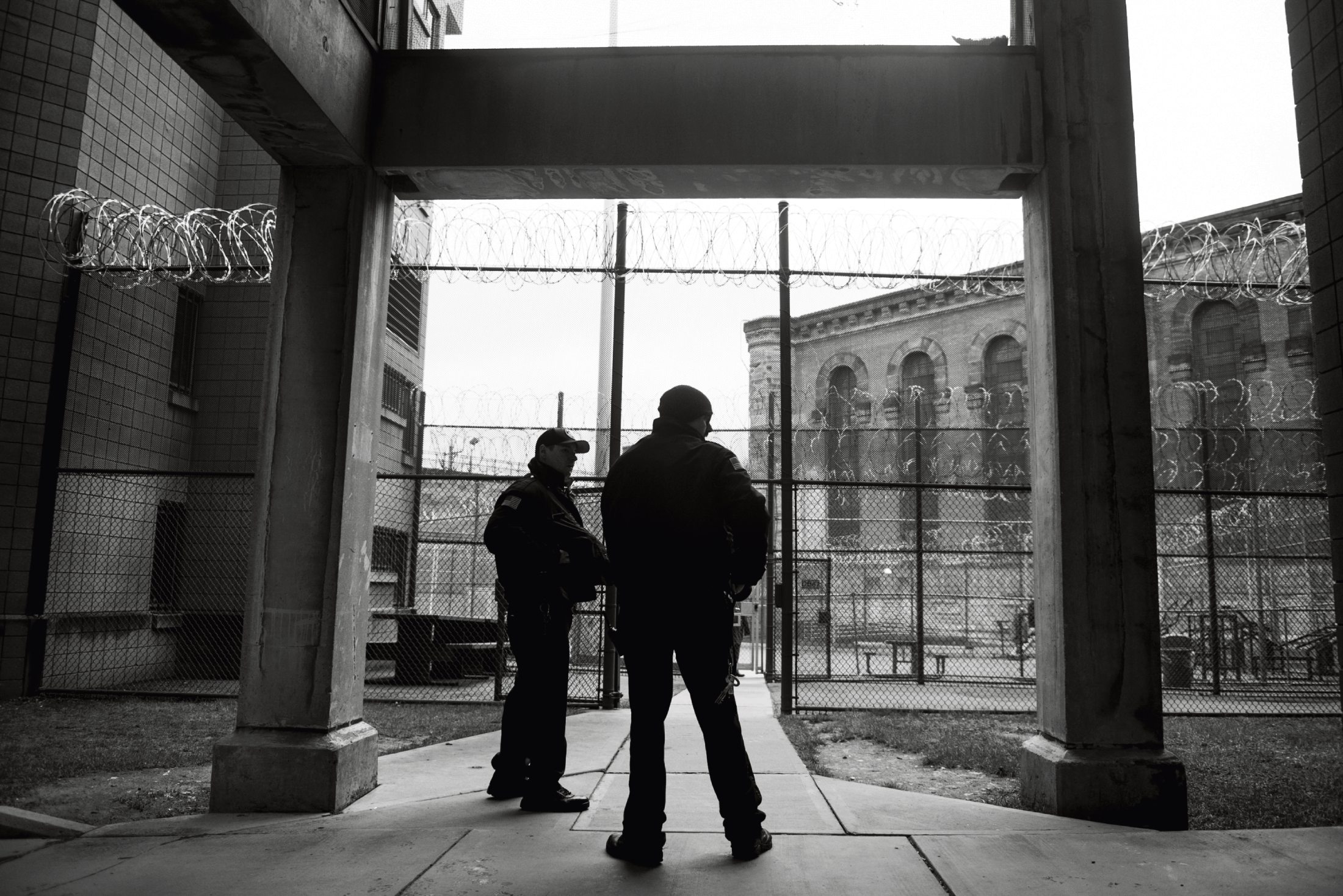
Guards stand on duty at SCI Pittsburgh, Tuesday, Jan. 24, 2017.
Despite SCI Pittsburgh's age and costs, state officials say there are aspects of the prison that make its closure more difficult than others. Its proximity to the second-largest city in the state means it's a primary "re-entry" prison for many inmates returning to society, and proximity to family and other support services immediately prior to release has been shown to reduce recidivism rates.
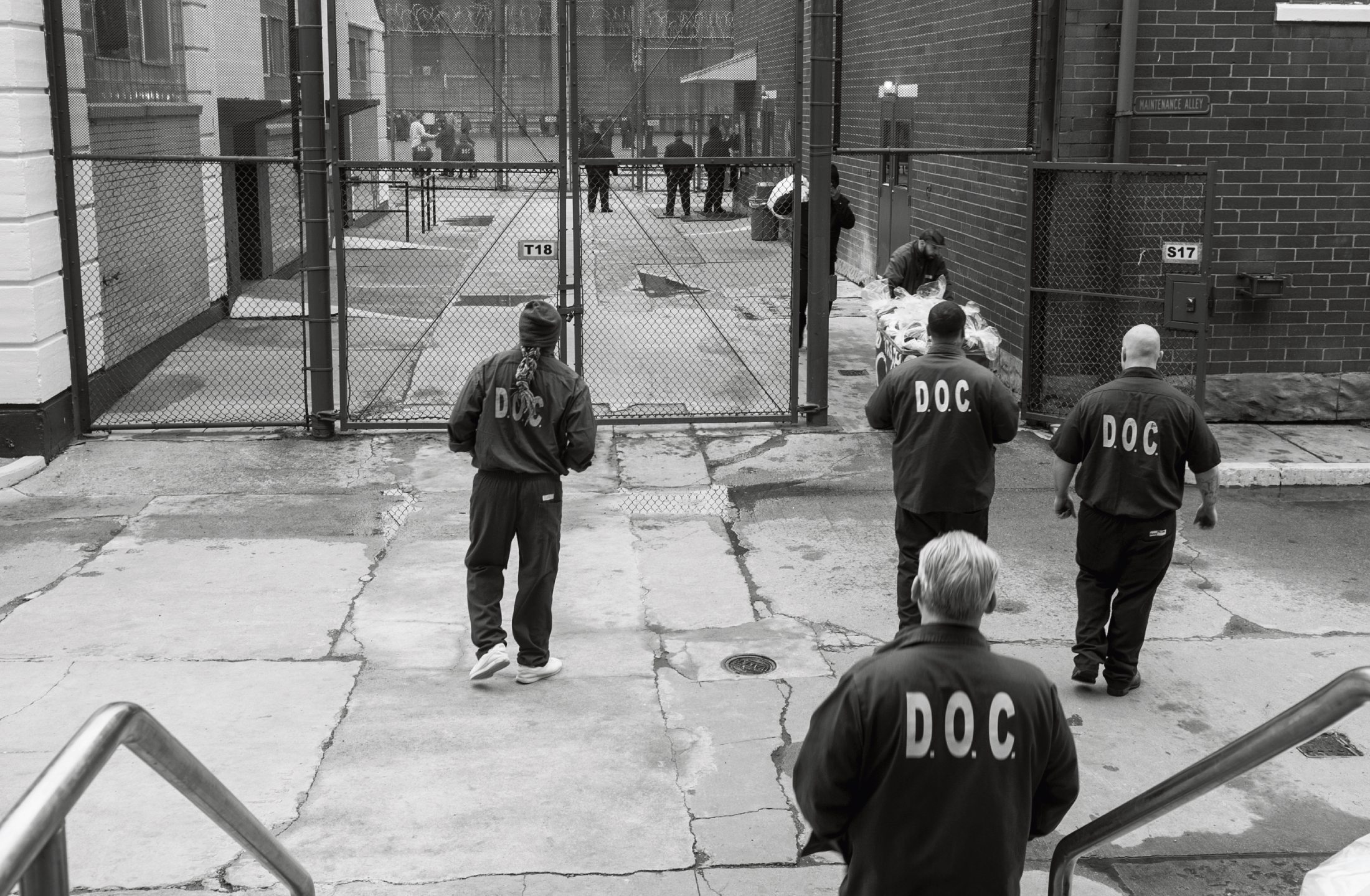
Inmates make their way to one of the recreation area's at SCI Pittsburgh, Tuesday, Jan. 24, 2017.
SCI Pittsburgh is primarily a treatment facility that specializes in treating inmates with substance abuse and mental health issues. It includes a detox ward for new arrivals - many of them parole violators - who need to come off their addiction in a secure medical setting. Elsewhere in the prison, inmates have access to residential treatment facilities and therapeutic communities to address their substance abuse issues before release.
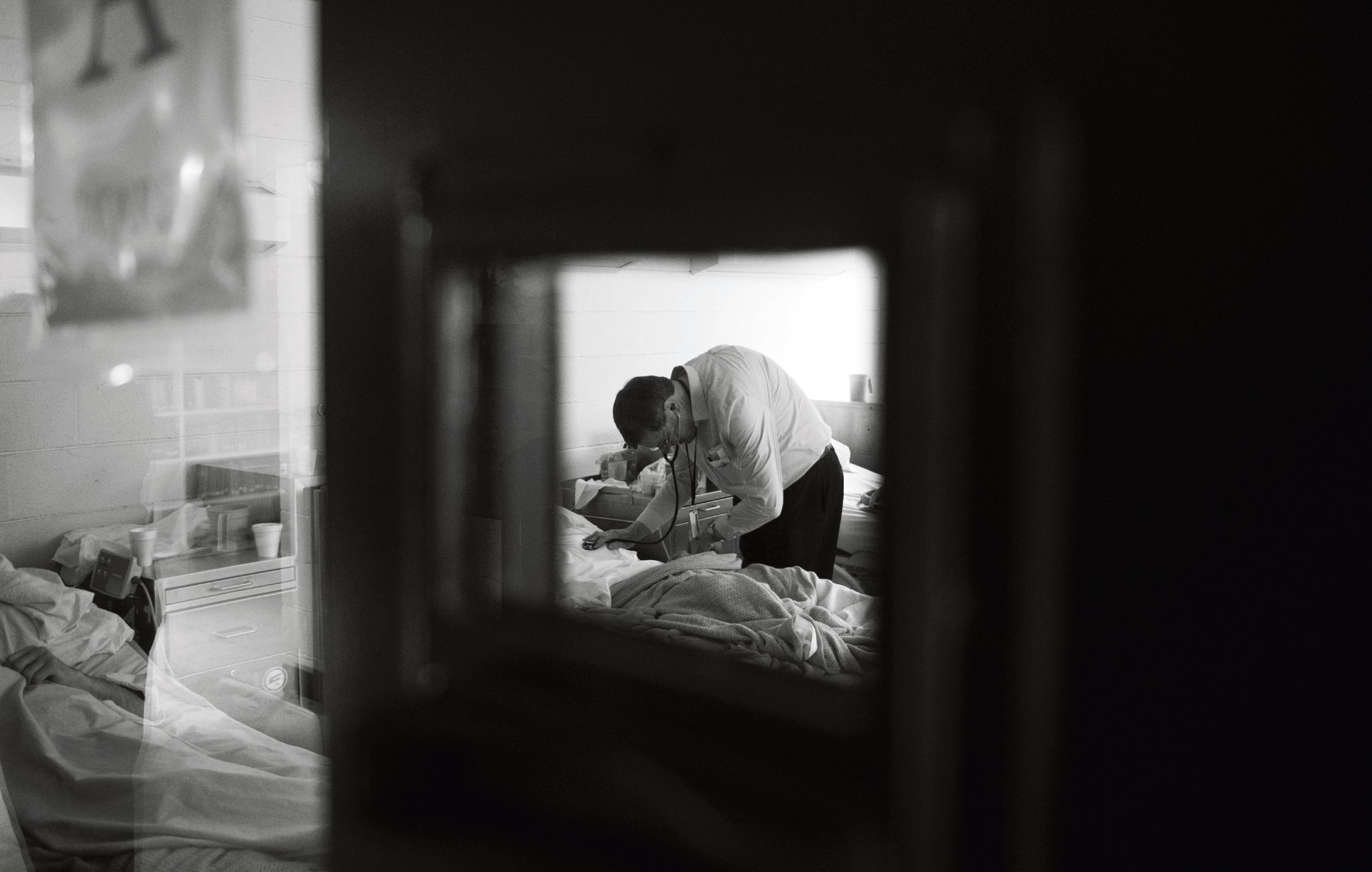
SCI Pittsburgh Physician, Dr. John Stramat uses a stethoscope on an inmate at the infirmary at SCI Pittsburgh, Tuesday, Jan. 24, 2017.
SCI Pittsburgh is the only prison in the state that offers inpatient oncology, including on-site chemotherapy treatments. The oncology treatment unit averages 60 patients a month - with about 20 chemotherapy treatments a month - and helps treat some 500 other patients elsewhere in the prison system via telemedicine. The unit depends on its proximity to high quality health systems in the Pittsburgh area. The only other place with similar healthcare infrastructure is Philadelphia, officials said, but the prison there is scheduled to be mothballed and replaced, but is experiencing construction delays.
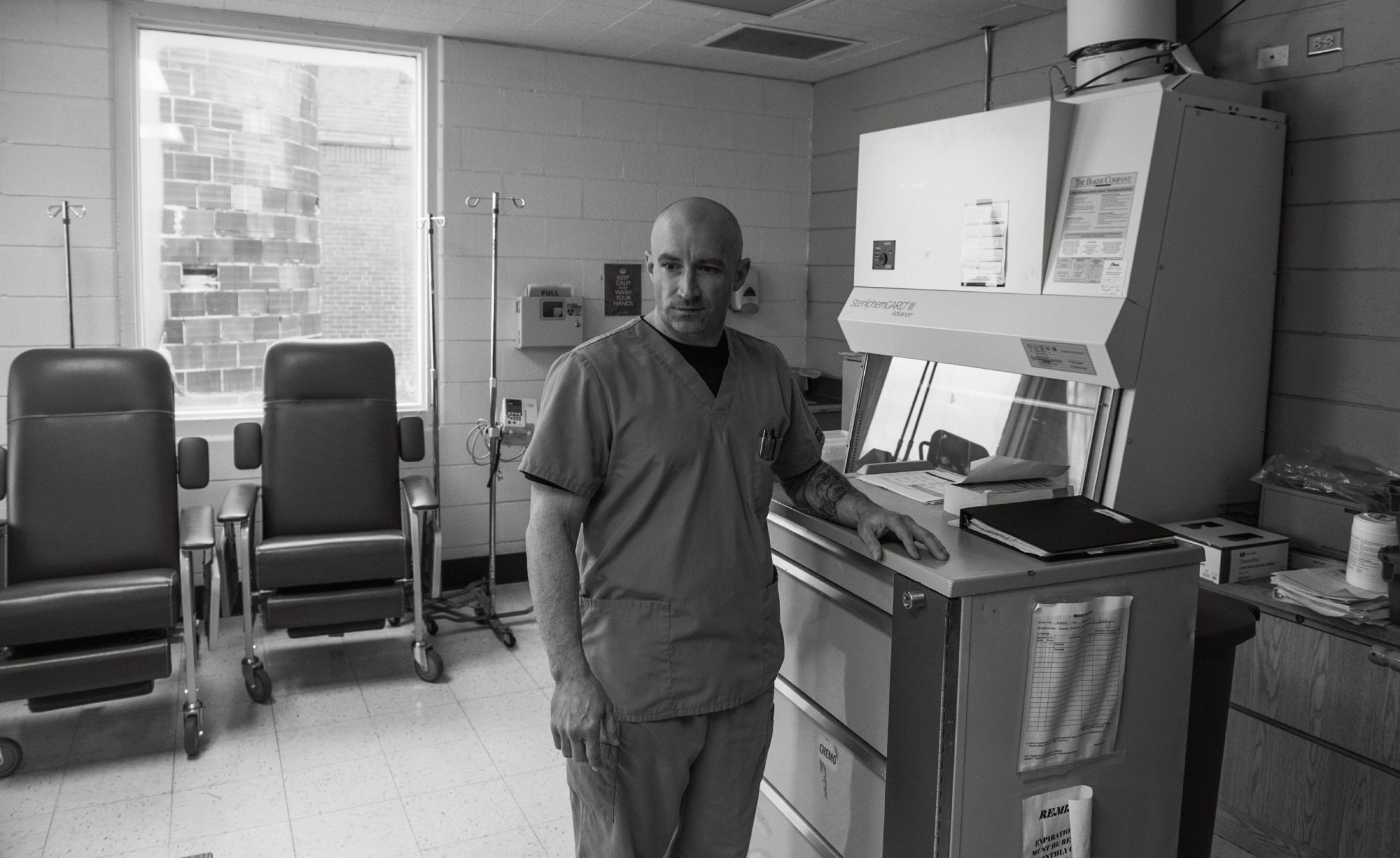
An oncology nurse explains the workings of the state's only chemotherapy suite at SCI Pittsburgh, Tuesday, Jan. 24, 2017. The nurse is a contract employee and his name is being withheld as a condition of access to the prison.
The prison houses an infirmary for oncology patients, hemophiliac patients, inmates with other illnesses and those from other prisons whose infirmaries cannot accommodate prisoners with mobility issues.
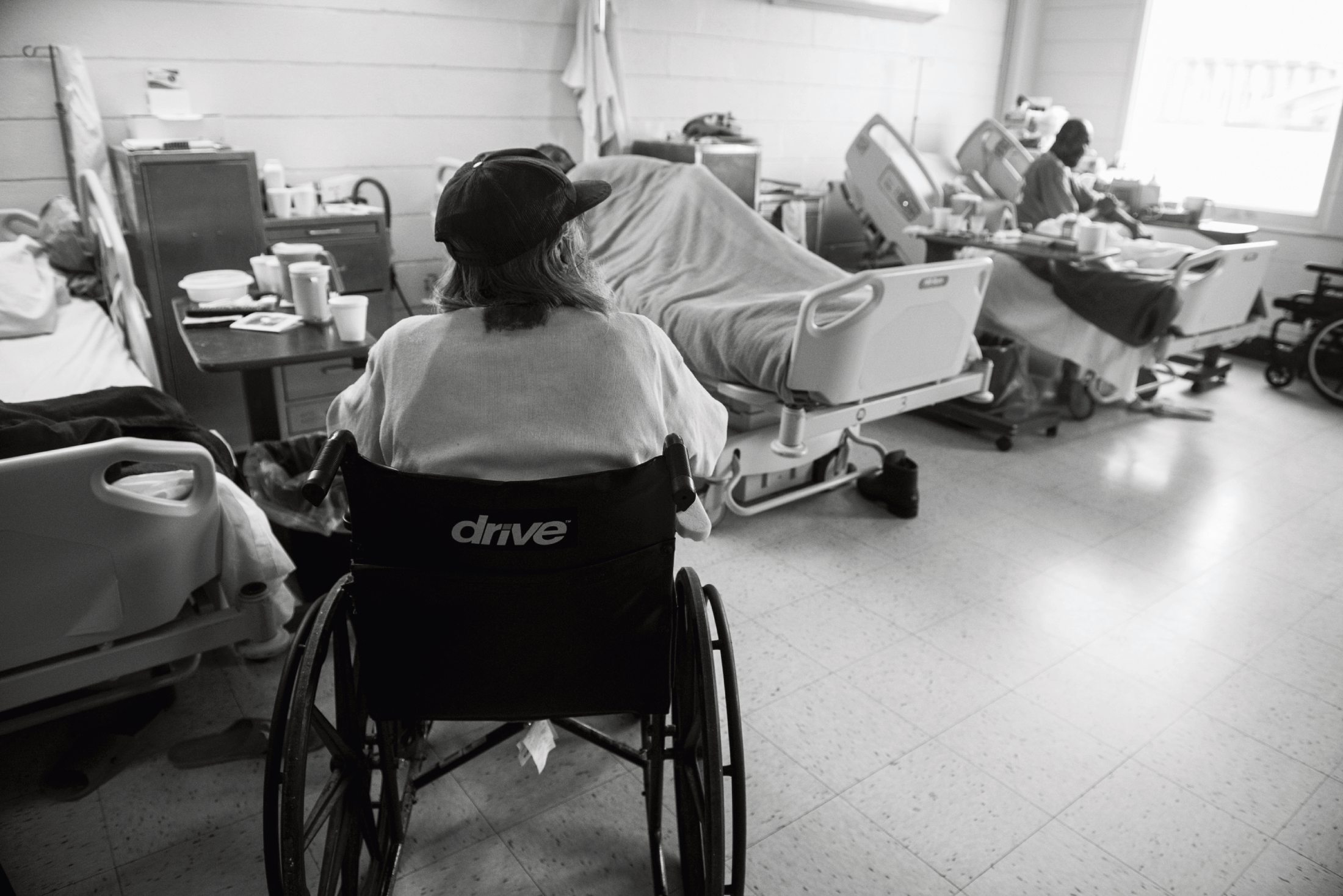
An inmate looks out the window in the infirmary at SCI Pittsburgh, Tuesday, Jan. 24, 2017.
Approximately one-third of the inmates in SCI Pittsburgh have a mental health diagnosis. In addition to professional staff, the prison has a 10-bed specialized mental health unit and four additional psychiatric observation cells that are available to inmates from prisons across Western Pennsylvania.
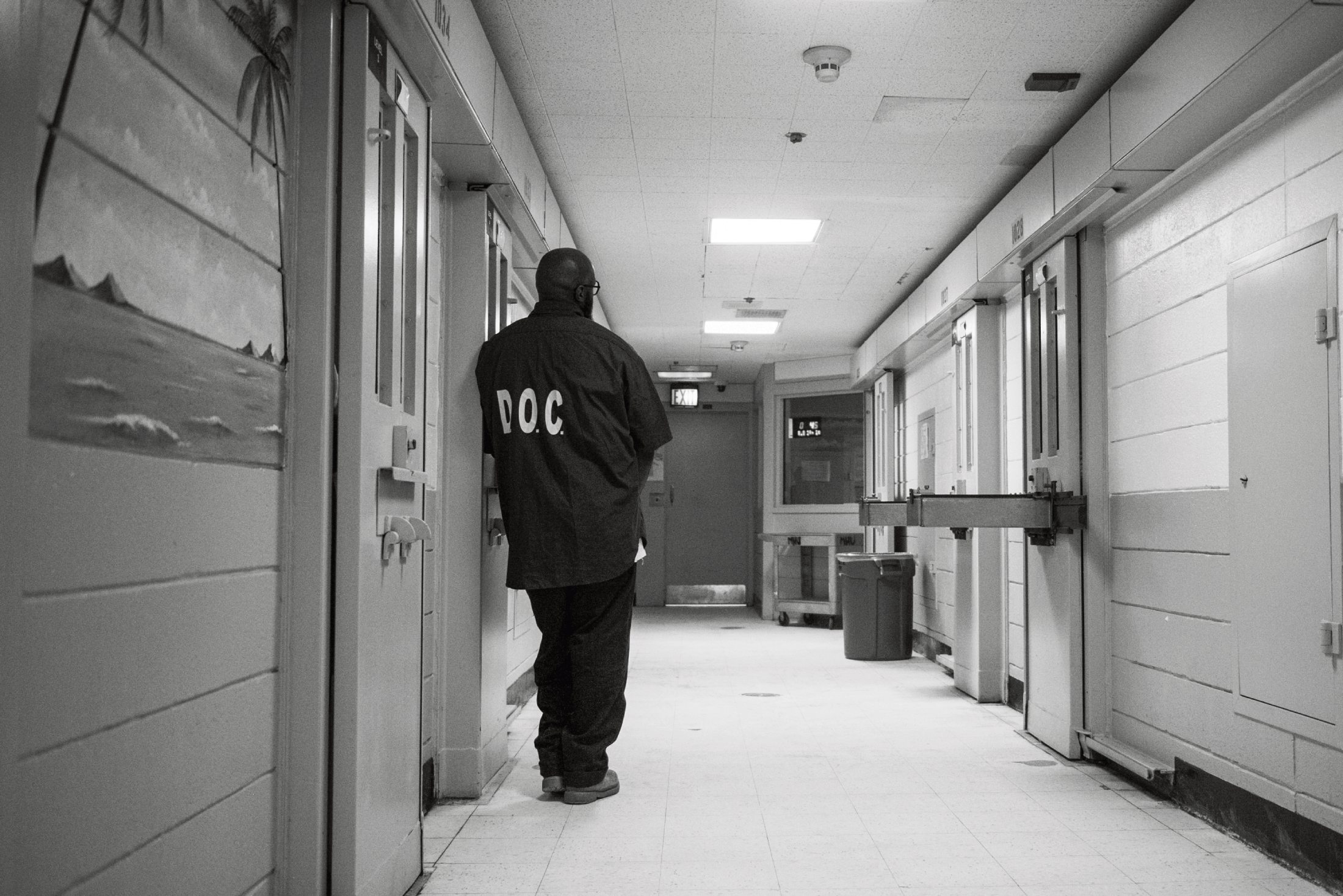
An Inmate and Certified Peer Specialist stands in the corridor to talk to another inmate incarcerated in the Mental Health Ward at SCI Pittsburgh, Tuesday, Jan. 24, 2017. The designation of Certified Peer Specialist is part of a statewide initiative that allows Inmates to receive experience counseling their peers, giving them the ability to work as a counselor after they're released.
SCI Pittsburgh also houses a bustling dentistry suite that treated nearly 3,000 inmates last year, many of them new inmates passing through as they were processed into the prison system. Pittsburgh is the main entry point in Western Pennsylvania; those who will be serving a short sentence go through diagnostic classification and serve their term on site, while the rest are sent to Camp Hill for classification.
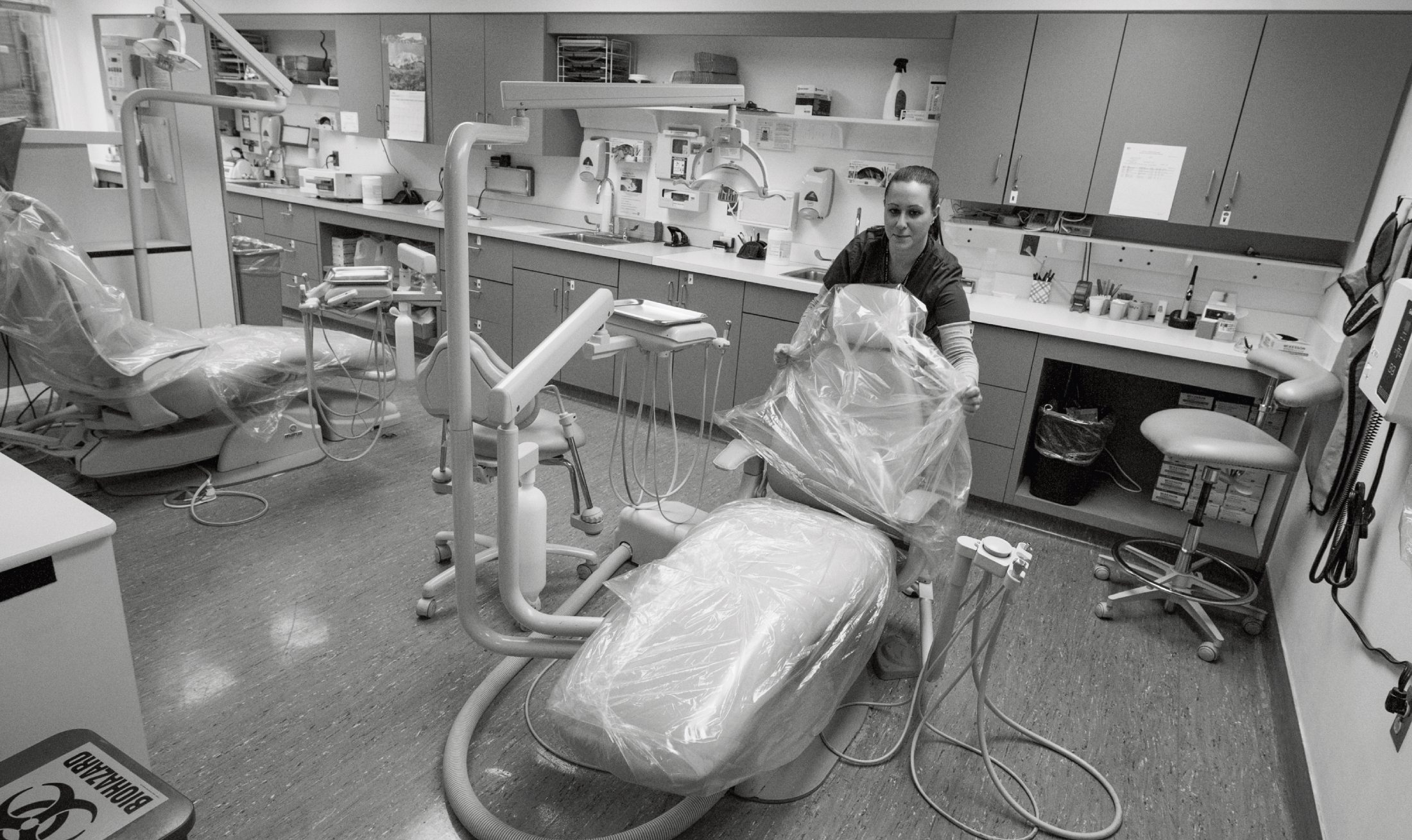
Dental Assistant at SCI Pittsburgh, Cayla Faye Borowski places plastic over a dental chair at SCI Pittsburgh, Tuesday, Jan. 24, 2017.
Pittsburgh also offers a special housing unit for veterans who are approaching release; other veterans come into the prison to counsel them and to connect them with services available for veterans upon release. The specialized program is so popular there's a waiting list.

A corrections officer works at the Veterans Services Unit at SCI Pittsburgh, Tuesday, Jan. 24, 2017.
Pennsylvania is moving away from the use of solitary confinement, particularly for mental health patients, following sharp criticism from federal authorities. Pittsburgh employs a variety of prisoner housing arrangements as well as gyms and recreation yards.
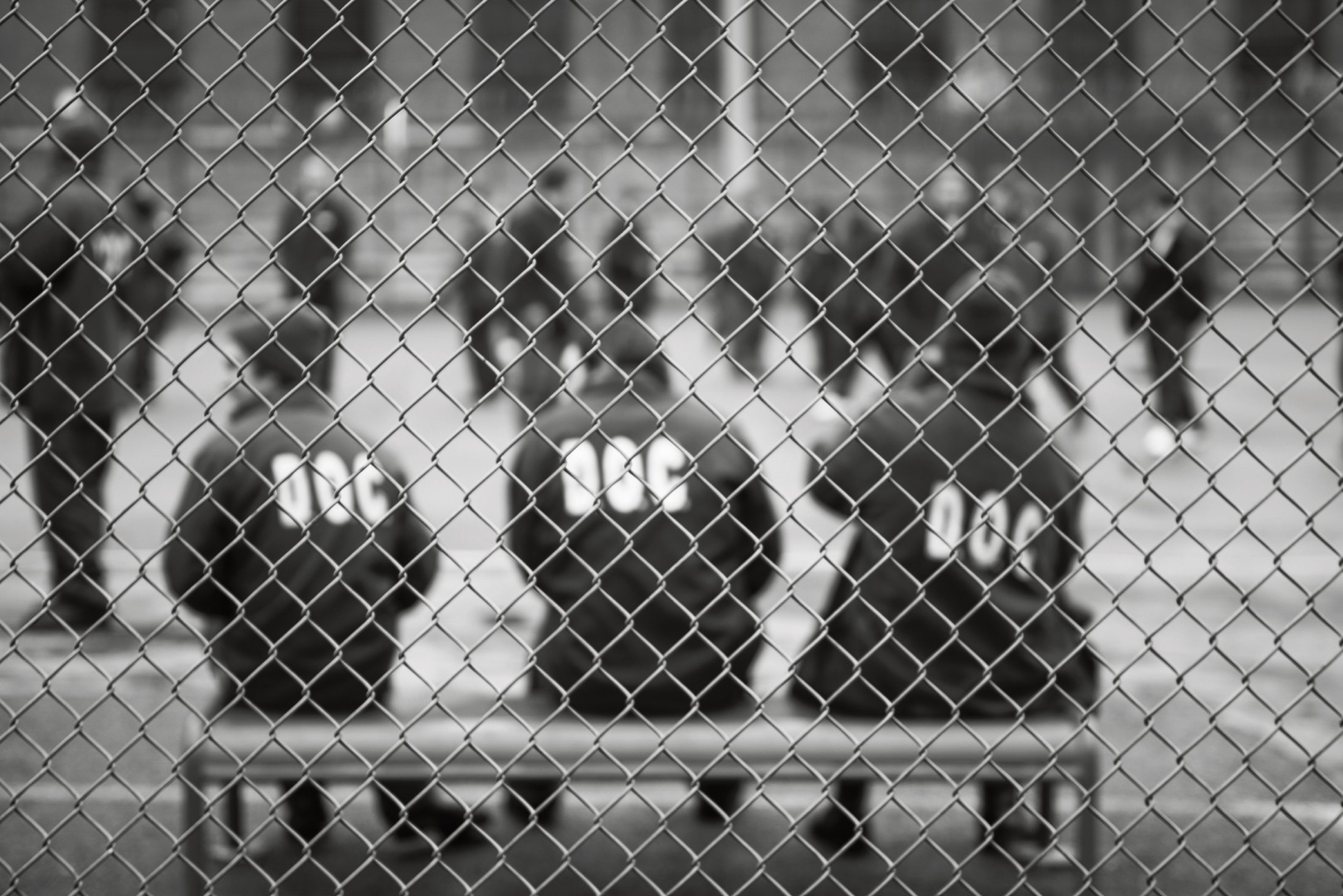
Three inmates sit on a bench in one of the recreation areas at SCI Pittsburgh, Tuesday, Jan. 24, 2017.
The prison is brighter than it was just a few years ago, with murals painted by the prisoners themselves. Art therapy is one of many options for prisoners, who also receive educational opportunities and some occupational training.
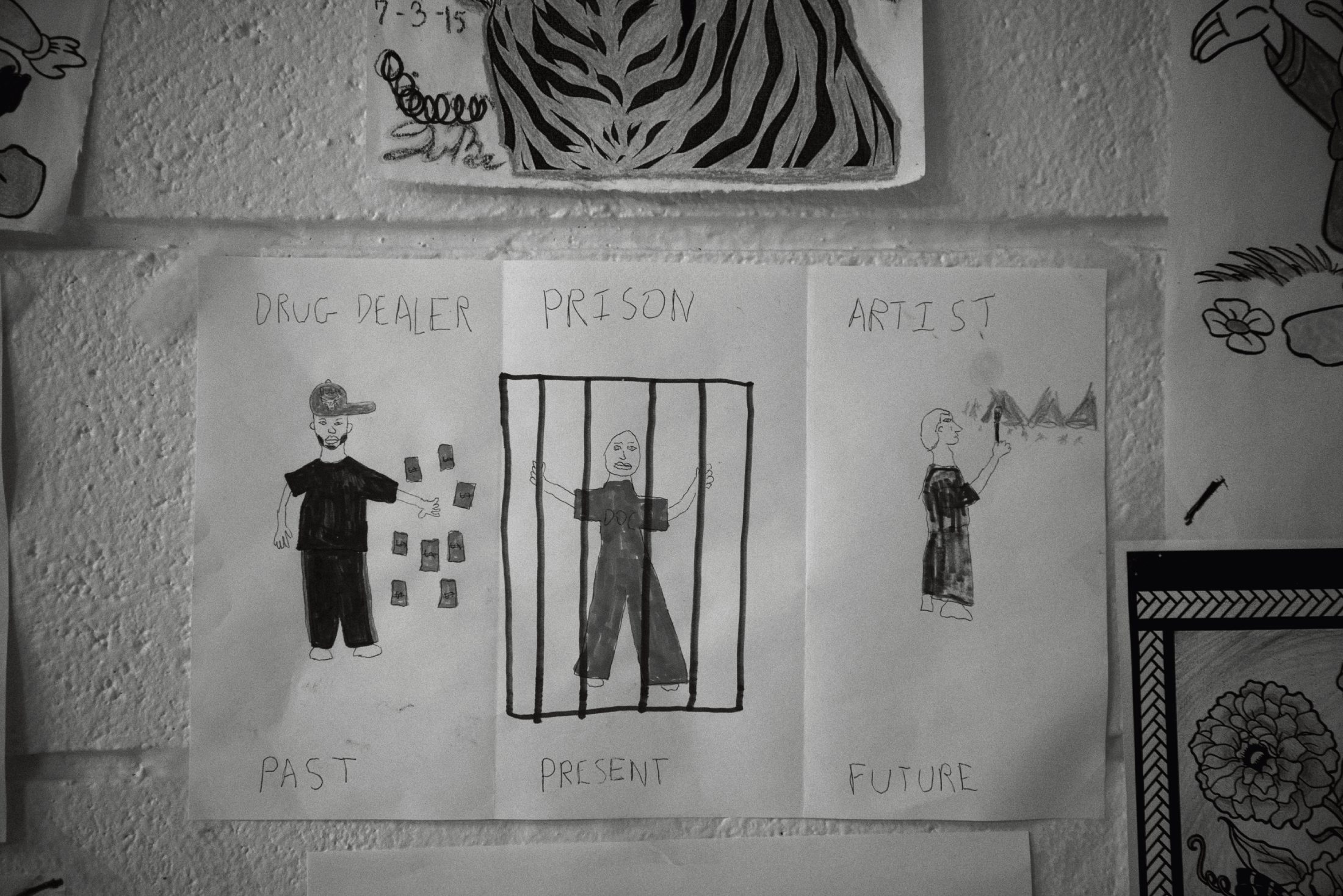
An inmate's artwork hangs on the wall at SCI Pittsburgh, Tuesday, Jan. 24, 2017.
The focus on treatment, therapy, education and skills for a life outside of prison stems from the desire to keep inmates from returning after they are released - and the fact that more than 90 percent of prisoners statewide will at some point be released.
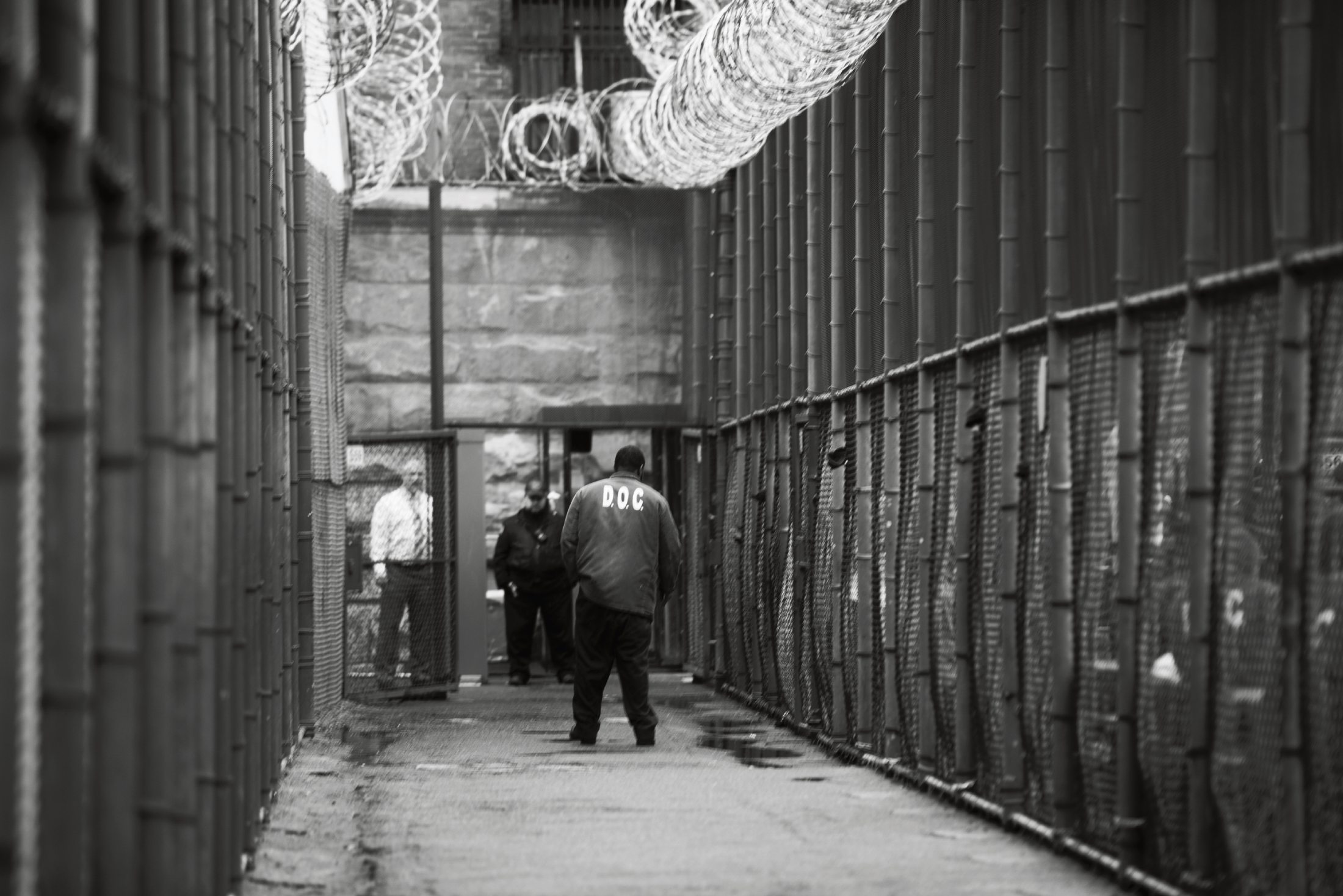
An inmate leaves one of the recreation areas at SCI Pittsburgh, Tuesday, Jan. 24, 2017.
Donald Gilliland contributed.
