
Toll road system traces roots to Pittsburgh and Pennsylvania Turnpike


For the millions of Americans who hit the nation's highways this Labor Day weekend, the road literally started in Pittsburgh.
By the 1930s, the city's business leaders were thinking about a highway without traffic lights that would connect Pittsburgh with the rest of the country, according to Chris Mead, author of “The Magicians of Main Street” about American chambers of commerce.
“The chamber in Pittsburgh jumped on that and said, ‘Let's be the first in the country to carry that out,' ” Mead told the Tribune-Review. “If the federal administration thinks it's a good idea and your community jumps on it, you just might get funding, jobs and a highway out of it. And that's what happened.”
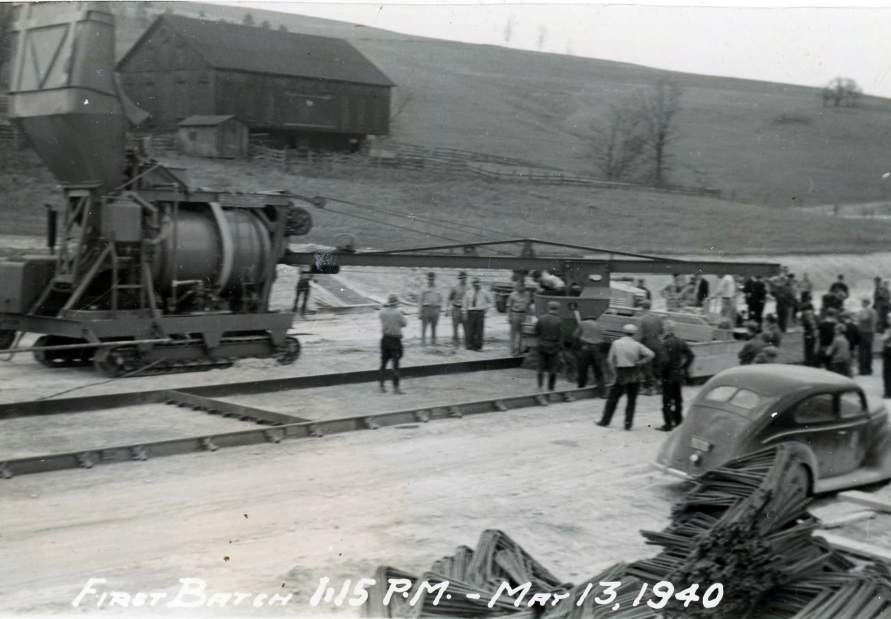
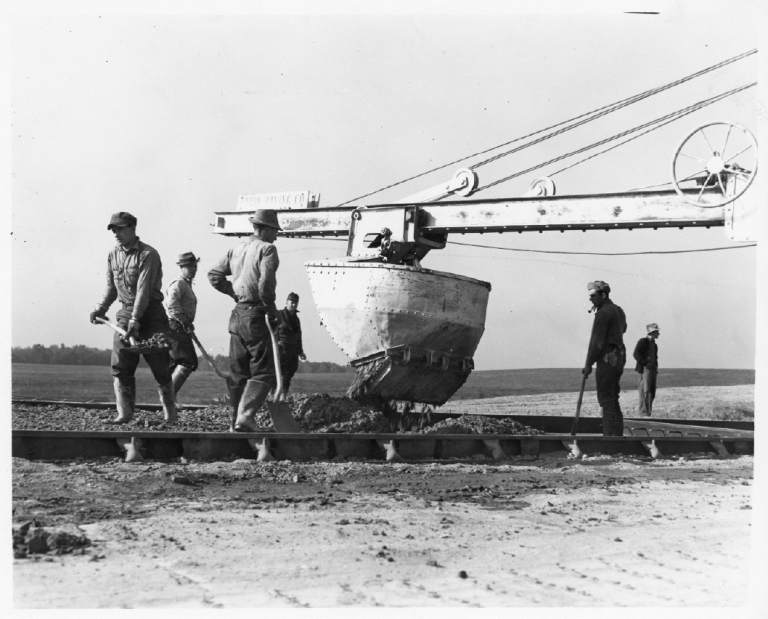
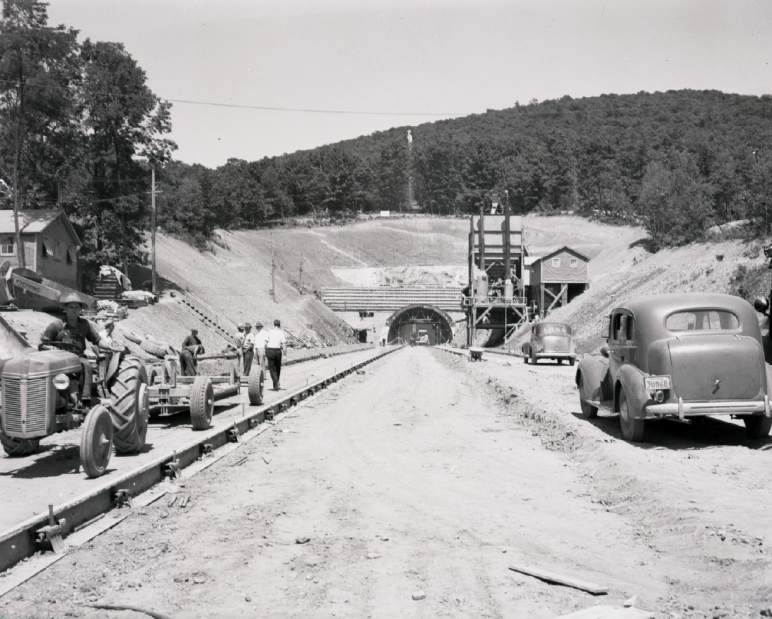
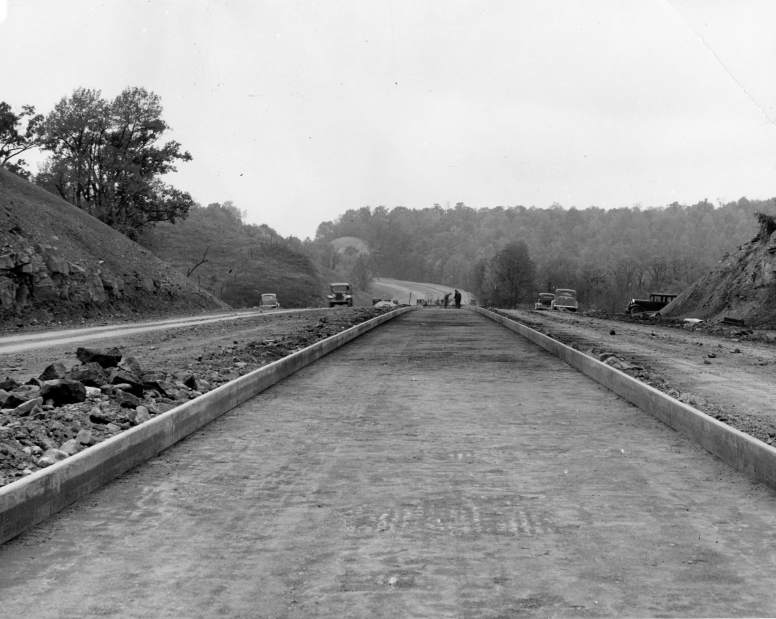
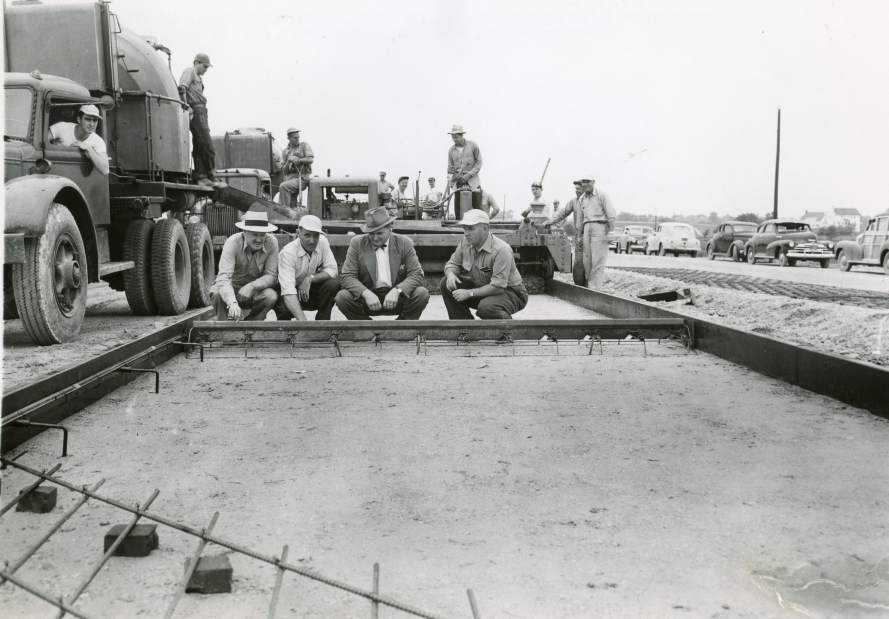
Their prodding eventually helped lead to the Pennsylvania Turnpike, the nation's first modern highway, in 1940. Stretching 162 miles and passing through seven tunnels between Irwin and Carlisle, it became the model for other state turnpikes and the national interstate highway system.
With the turnpike's cutting three hours off the trip from Pittsburgh to Harrisburg, nearly 200,000 drivers used the road in its first three weeks, paying average tolls of 86 cents each.
“People back in the 1930s could conceive of a toll bridge, but no one could conceive of a highway, like a toll bridge, that was 160 miles long,” said Dan Cupper, an amateur transportation historian in Harrisburg.
Years later, President Dwight Eisenhower pushed for a highway system like the ones he saw in Germany and Europe during World War II, and the Pennsylvania Turnpike's success demonstrated the viability of such a system.
Spurred by business demands, chambers of commerce often came up with ideas that led to lasting icons, such as the Golden Gate Bridge in San Francisco and the Hollywood sign (originally “HollywoodLand”) in Los Angeles, Mead said.
Having a vision for the turnpike required real imagination, said Carl DeFebo, the highway's spokesman and de facto historian. Until then, national roads such as Routes 40, 30 and the infamous 66 were the quickest way to get places. But they closely followed the land they passed through.
“You're talking about conquering the mountains,” DeFebo said of the turnpike. “That hadn't been done. ... Never before had there been a highway designed from the perspective of the driver.”
This holiday weekend, the turnpike commission expects 2.2 million vehicles to use the largely east-west highway over four days. The trip from Irwin to Carlisle costs $18.45 cash or $13.12 for E-ZPass users.
It makes sense that Pittsburgh's business community would be a main driver for the highway, said Bill Flanagan, spokesman for the Allegheny Conference on Community Development, which is affiliated with the Greater Pittsburgh Chamber of Commerce.
The chamber formed in the 1870s, about the same time as H.J. Heinz Co., Mellon Bank and Westinghouse Air Brake. Flanagan said he had not heard stories of the chamber's press for the highway, but its members long have been interested in infrastructure.
“These guys were very interested in highways because that's how you moved goods to market and people to work,” Flanagan said. “Infrastructure is kind of a longstanding area of interest for chambers of commerce.”
Throughout history, chambers often played a quiet role in the germination of major projects, said Mead, a senior vice president for the Association of Chamber of Commerce Executives, an Alexandria, Va., trade group that represents about 1,200 of the nation's 7,000 chambers.
“A mayor, a president or a governor comes up with a great program and cuts the ribbon,” Mead said, “but way back when, someone had an idea that got that thing started.”
Andrew Conte is a Trib Total Media staff writer.
