
Vacancies remain high among Allegheny County Jail medical staff

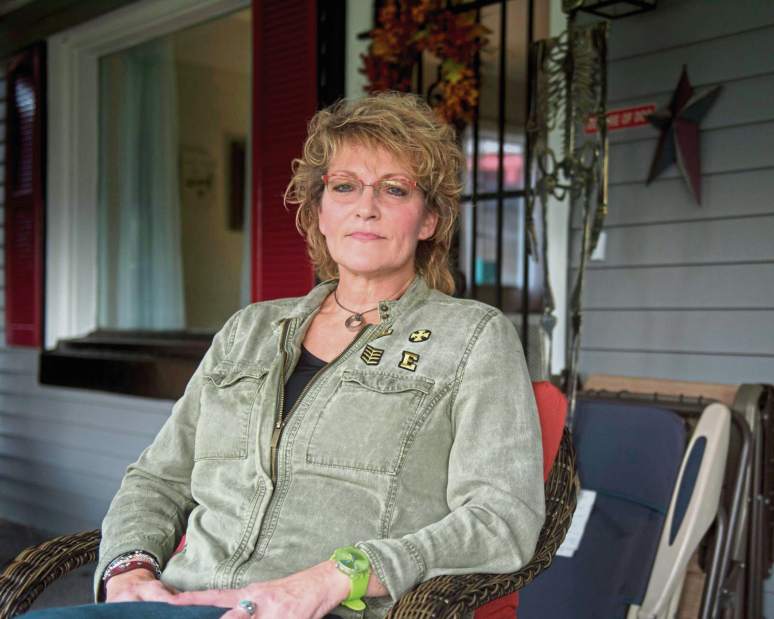
When 27-year-old Timothy Leininger died in his Allegheny County Jail cell in May 2015 after not receiving medication he needed, registered nurse Jan Lee knew she had to quit.
“That’s all it took for me was somebody not getting meds that led to his death,” said Lee, of Harrison, who had been working for the jail for less than a month at the time. “I would bet my life there were other meds not being delivered.”
Another inmate, 23-year-old Monty Crawford Jr., died at the jail the same day.
Roberta Wagner, a registered nurse, was hired for a supervisory role at the jail in spring 2016. She quit after just six weeks.
“No one was saying, ‘Yes, we want you to see these medically fragile people,’” said Wagner, who now lives in the Seattle area. “There wasn’t a medical director. … They didn’t want to listen to medical staff because we’re women.
“They would call us ‘inmate huggers.’”
Leininger was one of 10 inmates who died during the two years Tennessee-based Corizon Correctional Healthcare ran jail medical services through August 2015, according to county data.
The deaths contributed to county officials deciding to cut ties with Corizon and take over health care services at the jail in a partnership with Allegheny Health Network.
In the two years since, jail deaths went from 10 to seven. In the 13 months since then, there have been three deaths, all suicides, the most recent being 64-year-old Dana Abraham, who was found dead in his cell last month.
Lee thinks about Leininger often. The medicine he needed was supposed to aid in his recovery from brain surgery. She’s thought about reaching out to his mother.
She reads about the latest jail deaths and cuts out the newspaper clips to save in a folder. She tells nurses who ask her if they should go work at the jail not to go. She doesn’t think it’s gotten much better.
Lee and Wagner believe jail officials and Corizon are equally to blame for the deaths.
“I was angry with Corizon because they obviously had been placed in there to save money. You can’t have two nurses do the job of five,” Lee said. “But they are not the only ones at fault. It’s the jail — the administration of the jail.”
Laura Williams, the jail’s chief deputy warden of health care services, issued a statement via an email from county spokeswoman Amie Downs: “We are not going to discuss specific inmates or how their health needs were addressed other than to say that the information is not correct.”
The jail had no written policies and procedures for nurses, emergency medications were more than three months expired, and nurses were allowed to prescribe medications without approval, Wagner said. Wagner was also often forced to work 16 or 18 hours straight, she said.
Williams disputed those claims, saying emergency medications are immediately removed if they are outdated; new policies and procedures were put in place as soon as the county and AHN took over; and that nurses may not prescribe medications.
HIGH TURNOVER
Turnover for medical staff at the jail remains high, even after the jail cut ties with Corizon.
The jail has 102 employees working in health care at the jail, not including AHN or agency staff. There are 32 vacant health care positions, including the deputy health services administrator, director of nursing, assistant director of nursing and seven registered nurses.
Kate Eves, a jail and prison safety consultant, said the medical vacancies are not uncommon for jails, but still concerning.
“Most jails that I’ve been to in the U.S. and U.K. that have vacancies do struggle because people are overworked,” Eves said. “Morale is at rock bottom as well.”
Since August 2015, when the jail cut ties with Corizon, five people have served under the title of “director of nursing,” Williams said.
“If there are frequent vacancies in the overall staffing in any area of a facility, and that’s reflected by a lack of direction at the top of that structure, it’s likely to be problematic,” Eves said.
The vacancies are filled with temporary or long-term workers from contractors or staffing agencies to ensure the jail has adequate coverage, Downs said.
Wagner said when she worked at the jail, those workers did not care for the inmates like nurses do.
“They come in from another company and are contracted just to pass meds,” Wagner said. “They kept their head down and mouth shut.”
Lee said that was her experience as a Corizon nurse.
“Your job is not to go in there and talk with them and build a rapport and counsel them,” Lee said. “It was looked at as ‘Just (pass out) your meds and get out.’”
Eves said jails relying on temporary or contracted workers to fill vacant positions can be problematic.
“If you have lots of key vacancies filled with temp staff who maybe aren’t particularly familiar with the specific risks of a population, then you have things overlooked,” Eves said. “If they’re already stretched thin, it can put people at risk.”
Correctional medicine is a challenging field and environment and can be difficult for nurses who have not worked in a secure facility before, Williams said.
“There is an RN shortage nationwide, and this region is no exception and may have even larger challenges due to the opportunities in the medical field in this community,” Williams said.
The jail recently created a new position, deputy warden of health care services, and last month promoted Williams to the position with a salary of $95,745, Downs said. The position was not advertised.
Williams is not a registered nurse but is a licensed professional counselor and nationally certified counselor, Downs said. She has seven years of correctional health care experience, and significant experience in mental health and drug and alcohol services, Downs said. An AHN physician directs medical care at the jail, while Williams administratively oversees health care operations, Downs said.
SETTLEMENTS DOWN SO FAR
Since the county has cut ties with Corizon, it has paid fewer medically related jail settlements.
The county has paid at least $967,500 in settlements related to medical incidents that occurred at the jail while Corizon ran health care services. The bulk of that money was for a settlement the county paid earlier this year to the family of Frank Smart Jr., who died of a seizure at the jail in 2015 after he did not receive his medication, the lawsuit said. The figure also includes settlements the county paid to the children of Clarence Jewett, who died 10 days after arriving at the jail; and to Christopher Wallace, who said he did not receive tube feedings while at the jail.
The county so far paid at least one settlement for a medical incident that happened post-Corizon: $5,000 to Christine Leal, who says she was not given her seizure medication while an inmate in 2016.
Several cases filed related to medical incidents that happened post-Corizon remain open. The mother of Ross Frye, who died after he hanged himself at the jail last year, sued the county in August . The mother of John Orlando, who committed suicide at the jail in 2016, sued the county last year. Carl English, 47, of Whitehall sued the county last year, claiming the lack of medical care he received in the jail resulted in him needing to have a toe amputated and could cause him to have his leg amputated.
The county does not consider Frye’s death to be a jail death, even though a county news release sent Sept. 19, 2017, said Frye was found hanging in his cell that morning.
“Ross Frye was released by the courts from custody prior to his death,” Downs said.
Corizon spokeswoman Martha Harbin declined to disclose how much the company has paid in settlements connected to incidents at the jail. She said the company is proud of its work at the jail, which included providing new disease management tools, enhancing clinical services and protocols, and starting a new staff training and evaluation program.
“We were honored to serve Allegheny County, and we believe we established a medical program at the jail that was better than we found it,” Harbin said.
County Controller Chelsa Wagner in December 2014 released a scathing audit of Corizon that found the contractor was putting the health of inmates and employees at risk by allowing unsafe staffing levels, poor clinical and mental health care, and unfair labor practices. The controller’s office has not yet done an audit of the jail’s new health care system, but is considering one, said Louis Takacs, an office spokesman.
“The quality of health care in the jail remains a serious concern, as do other issues such as staffing and monitoring that can impact inmate safety,” Takacs said in an email. “The controller’s office monitors developments and listens to the concerns of stakeholders carefully. Further audits of health care and other conditions at the jail remain under consideration.”
Theresa Clift is a Tribune-Review staff writer. You can contact Theresa at 412-380-5669, tclift@tribweb.com or via Twitter @tclift.
