
Wheel separation incidents can prove deadly; NTSB doesn't track them

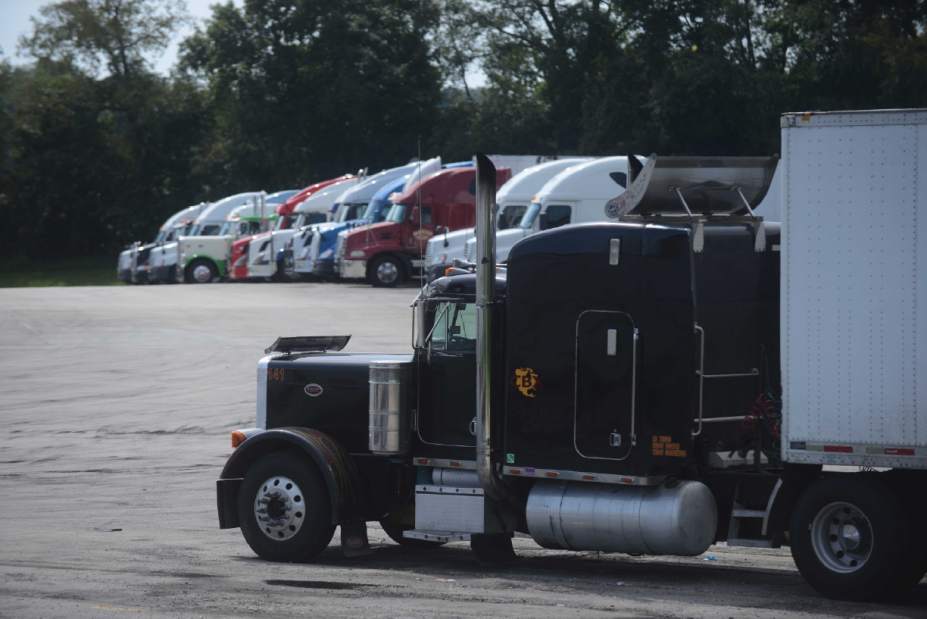
At least two Pennsylvania men died in the past month when wheels came loose from trailers and smashed into vehicles going the opposite direction.
The latest incident happened on Sept. 8 on Interstate 79 in the North Hills, killing Scott Rice, 53, of Richland.
“These types of accidents are incredibly rare,” said Jim Runk, president and CEO of the Pennsylvania Motor Truck Association.
State police remain tight-lipped about Rice's death. Two rear tandem wheels weighing an estimated 400 pounds came off the back end of a tractor-trailer near the Mt. Nebo exit, went across a grassy median and struck Rice's car. Police haven't identified the driver or who owns the tractor or the trailer that they suspect were involved. It remains unknown what caused the wheels to come loose.
In an Aug. 14 mishap, a loose wheel from a utility trailer being pulled by a pickup killed motorcyclist Andrew Engle, 39, of Pittsburgh on Interstate 80 in Iowa.
Trucking experts say several problems could cause wheels to break loose, but federal law requires drivers to perform basic inspections before and after trips that can help prevent disasters from happening.
“It takes five to 10 minutes to do a quick look-see, and 98 percent of the guys out here are doing things the right way,” said truck driver Paul Mountain, 54, of Monongahela.
“No one wants to be responsible (for) hurting someone else, and many of the drivers out here have families of their own that they want to return home to. Others are just trying to make a living,” Mountain said.
Mountain and Runk said drivers circle their tractor-trailer during the pre- and post-trip inspections, checking to see that tires are properly inflated, lugnuts are properly tightened, belts and hoses are in place, and signals and wipers work, among other things. They are not required to get underneath the tractor-trailer to scout for problems.
In addition to the pre- and post-trip inspections, state police are on the lookout for problems.
They conduct three types of roadside inspections, ranging from a check to ensure that a driver's license, insurance and other paperwork is in order to a thorough, more time-consuming inspection that checks the driver and the entire tractor-trailer, including its undercarriage.
State police Lt. Ray Cook, commander of the agency's Commercial Safety Division, said the most common reasons for wheels to come loose include missing or loose lugnuts; cracked or broken wheels and rims; and worn stud or bolt holes.
Roadside inspections conducted last year found 214 violations for missing or loose lugnuts, 71 violations for cracked or broken wheels and rims and 12 violations for worn stud or bolt holes, Cook said.
Accidents involving wheels coming loose are not tracked by the National Transportation Safety Board, a spokesman said. In the early 1990s, the NTSB performed a six-month investigation into such accidents after a rash of them, including an incident in Miami where a 365-pound wheel went through a school bus windshield, killing two fourth-graders and a chaperone. At the time, NTSB found, between 750 and 1,050 “wheel separation” accidents occurred annually — a small fraction of the 349,000 accidents involving trucks each year.
Tom Fontaine is a staff writer for Trib Total Media. He can be reached at 412-320-7847 or tfontaine@tribweb.com.
