
Kiski Valley sewage treatment customers to pay flat rate

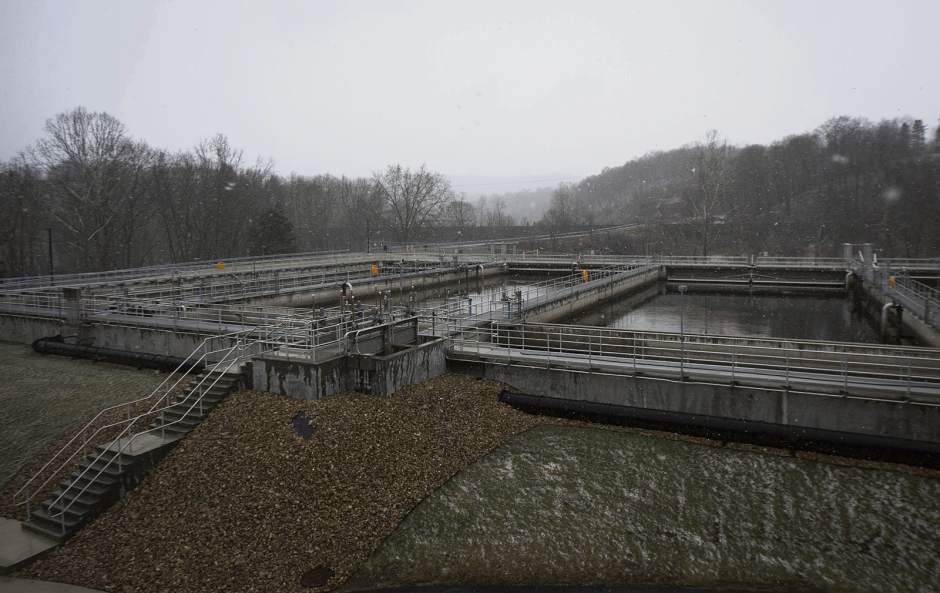
There will no longer be different sewage rates paid by customers of the Kiski Valley Water Pollution Control Authority.
Customers will soon pay a flat rate of $13.24 per month, following a vote this week by the 13-member authority board.
Solicitor Larry Loperfito said the new rates will go into effect 90 days after the communities have been given official notice, most likely starting in November. The board voted 8-4 to make the change, with one member absent.
With the previous revision effective in August 2015, monthly rates have ranged from a low of $7.68 for customers in Washington Township to a high of $25.60 per month for those in Leechburg.
In seven of the member communities, customers have been paying between $10 and $13 per month.
“The variable rates caused a lot of animosity,” authority Chairman A.J. Bione of Kiski Township said.
Customers in only four communities will see rate decreases with the flat rate: Leechburg, Vandergrift, Apollo, and Gilpin.
The largest rate increase, $5.56 per month, will be for the authority’s Washington Township customers.
Most of the remaining members will increases of from $1 to $3 per month.
Sewage rates are based on water consumption in most communities using the logic that how much water goes into a household comes back out in the form of sewage.
But when heavy rain occurred, the Kiski Valley treatment plant, like many others in Western Pennsylvania, was often overwhelmed by large spikes in flow, with much of it bypassing the treatment process and discharging sewage into the Kiski River.
That was usually due to an influx of stormwater into the sanitary sewer system because the two were not separated in residences or the communities’ sanitary line.
Federal and state environmental agencies cracked down on that situation, forcing sewage authorities to expand the capacity of their plants and communities to separate their storm and sanitary sewer pipelines to cut down on the flow.
In 2013, the authority undertook a $36 million plant expansion. Meanwhile, some communities were undertaking projects to separate their sewer systems through residential testing and new sewer line construction. Customers in member communities were hit with rate increases to pay for the sewer plant improvements.
Leechburg and Vandergrift, two of the authority’s oldest communities whose sewage systems had been outdated for decades, filed suit against the authority when they were assessed 56 percent and 49 percent rate hikes, respectively, because of their sewage flows.
A Westmoreland County judge ruled in favor of the authority, and the two boroughs were were the last two to upgrade their systems.
When it came time to vote on going with a flat rate versus a revised variable rate, some authority representatives were wary of that situation repeating itself.
“If you go with the uniform rate, we are really going to depend on each community to monitor their inflow and
infiltration rates and trust that they’ll take care of things,” said Frank Luisi, Washington Township’s representative.
“The communities who have caused this are now looking to pay less than those who took care of it and financed it locally,” said board vice chairman Pete Pinto of Gilpin. “I think choosing to go with a flat rate is putting your head in the sand and ignoring the mathematical facts before us.”
Bob Polyczynski of Allegheny Township said, “ I personally don’t think anyone would have done anything if we didn’t go the route that we did.”
He said increasing the rates based on sewage flow was not meant to hurt any community but to get everyone into compliance.
Chuck Pascal, Leechburg’s representative, and Christine Wilson of Vandegrift took exception to that.
“When the two poorest communities, the communities with the highest poverty rates had to pay more, it did hurt,” Pascal said.
He said with Leechburg and Vandergrift having updated their systems, he did not see any reason to “continually spend 600,000 to $650,000 to do flow studies and set rates.”
Pascal said it was time to end the divisions and become one authority again.
Bione agreed.
“Ten years ago, there were communities who spent quite a lot of money and tightened up their systems while others did nothing,” he said. “But now, as I look at it, every community has put money into their systems, and it wasn’t easy. And we’re now on equal footing.”
The flat rate was approved despite “no” votes by Polyczynski, Pinto, Karen Virostek of East Vandergrift and Todd Sherbondy of Oklahoma Borough. Matthew Riedel of Parks Township was absent.
Tom Yerace is a freelance writer.
