
Peregrine falcons are doing a whole lot of lovin' under the Tarentum Bridge

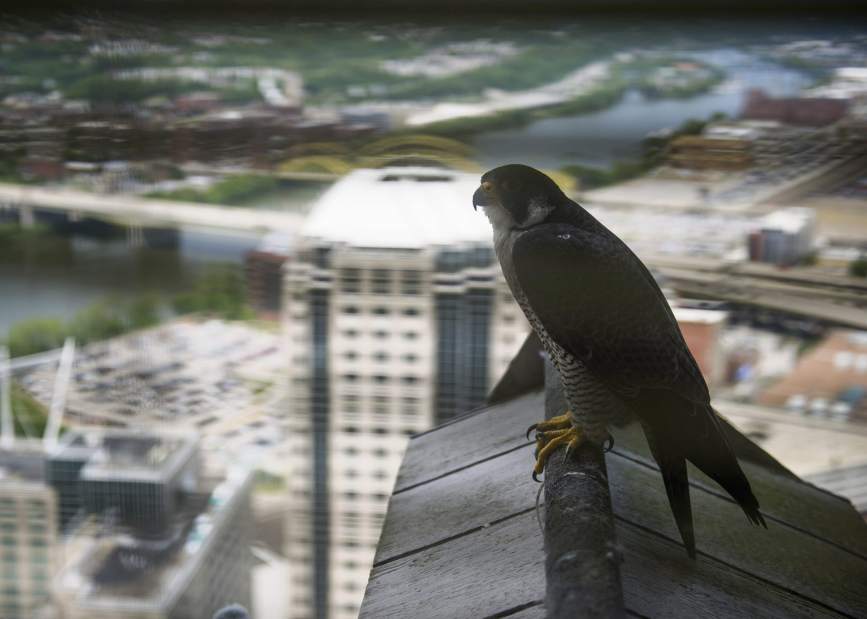

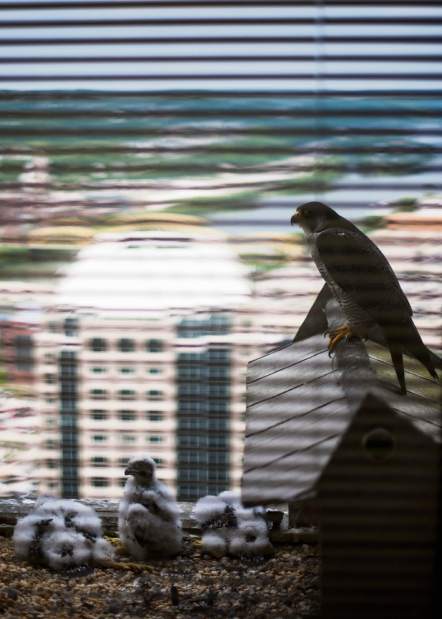
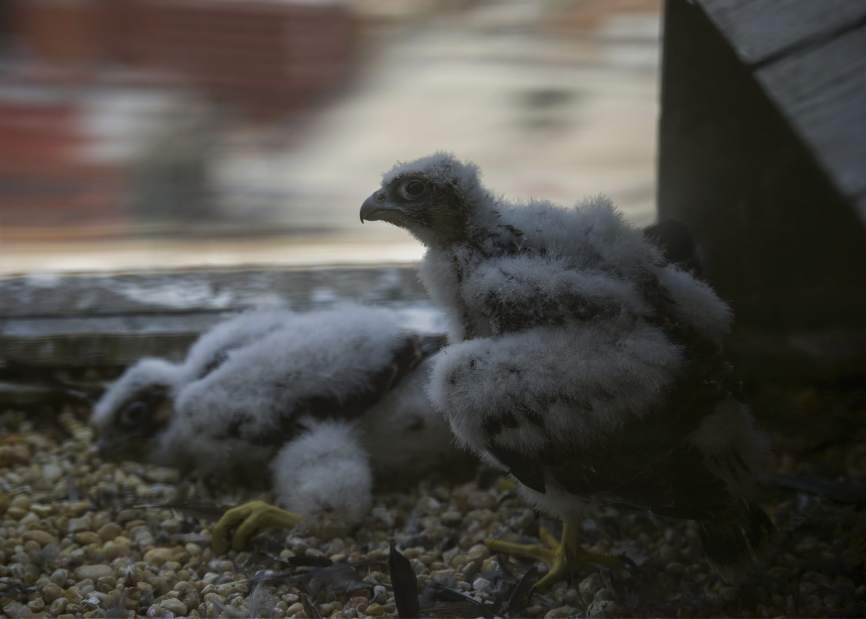
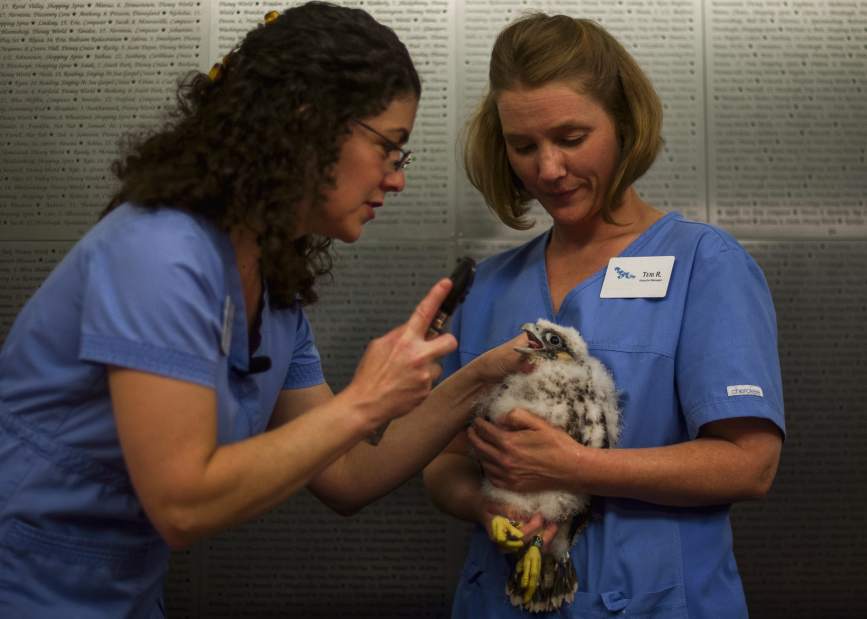
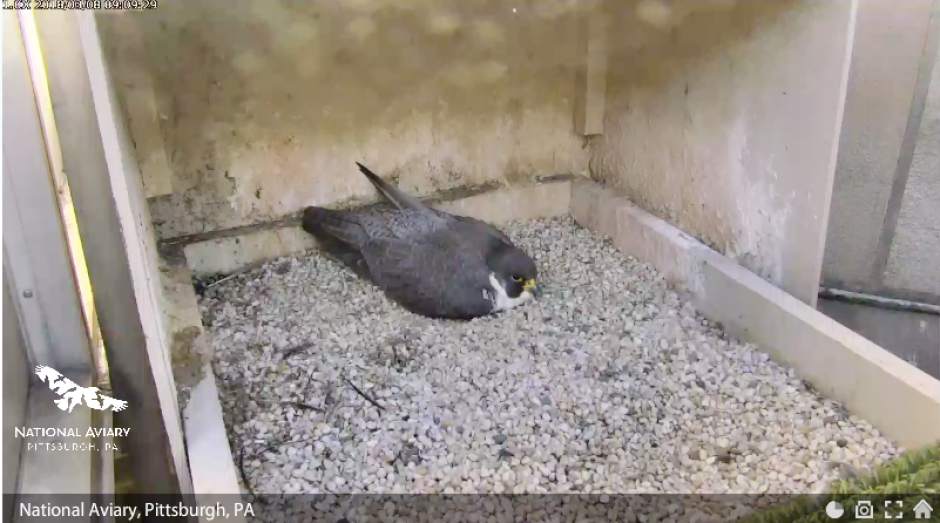
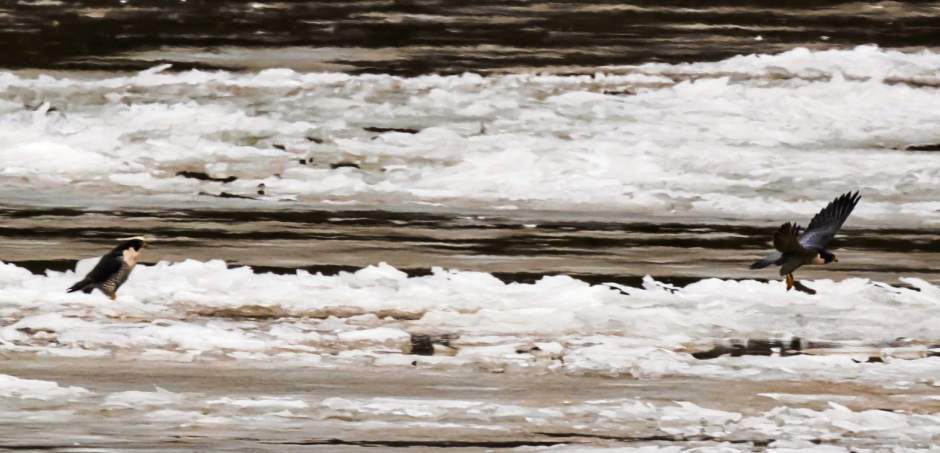

Not since Hope the peregrine falcon jilted her younger suitor and left for the prime territory of the Cathedral of Learning in Pittsburgh three years ago has the Tarentum Bridge seen so much action.
Two of the birds took up residence recently and have been seen mating multiple times in the bridge's superstructure.
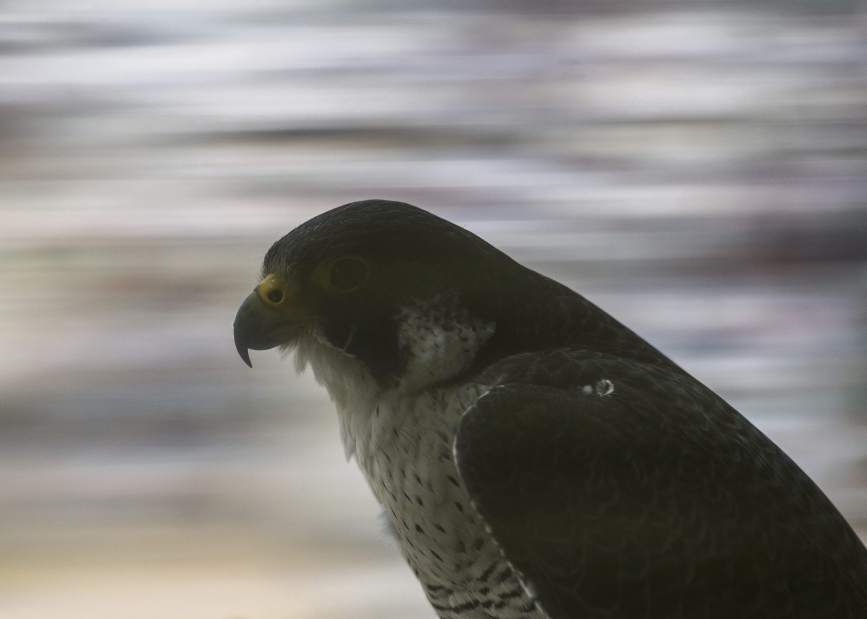
The male is a falcon hatched in 2014 at the Westinghouse Bridge. He is joined by a relatively new, unbanded female with an unusual dotted breast that Kate St. John, an area birdwatcher with a blog, thinks she had seen previously on camera at the Cathedral of Learning peregrine nest.
The revelation was only possible because a Harrison man decided to stop in January at the Tarentum Bridge with his camera hoping he might see a peregrine, although there was a spotty history of sightings, especially of a pair, in recent years.
Dave Brooke, who lives only five minutes from the bridge, admittedly got lucky: “I looked on the ice and I thought it was a log out there not moving, then I heard that distinctive peregrine crying sound and a second one flew in.”
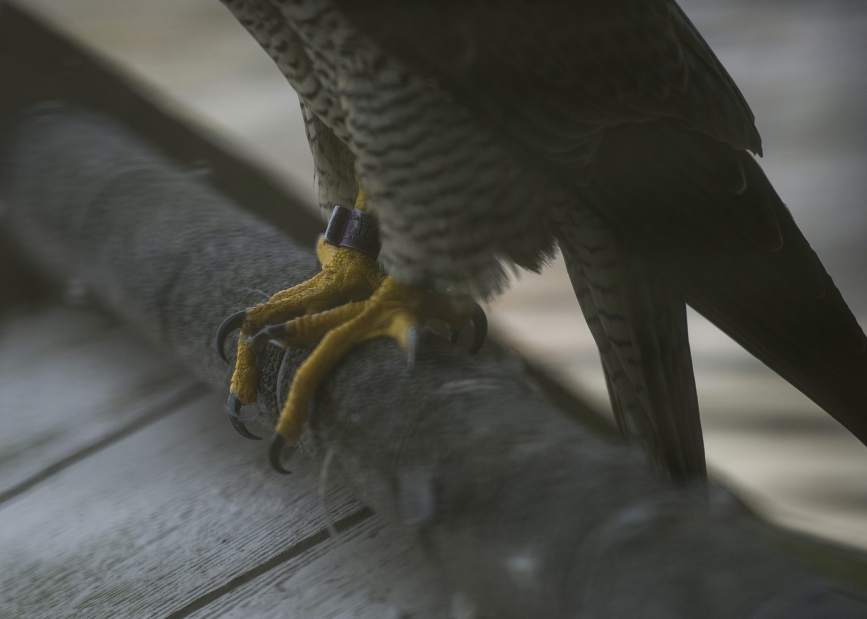
The photograph was clear enough for Art McMorris, the peregrine falcon coordinator for the Pennsylvania Game Commission, to identify where the bird was hatched.
McMorris added the band information to the history of bridge sightings submitted by Rob Protz of Brackenridge, a game commission monitor.
He concluded that Protz first saw the young Westinghouse male at the Tarentum Bridge in spring 2015.
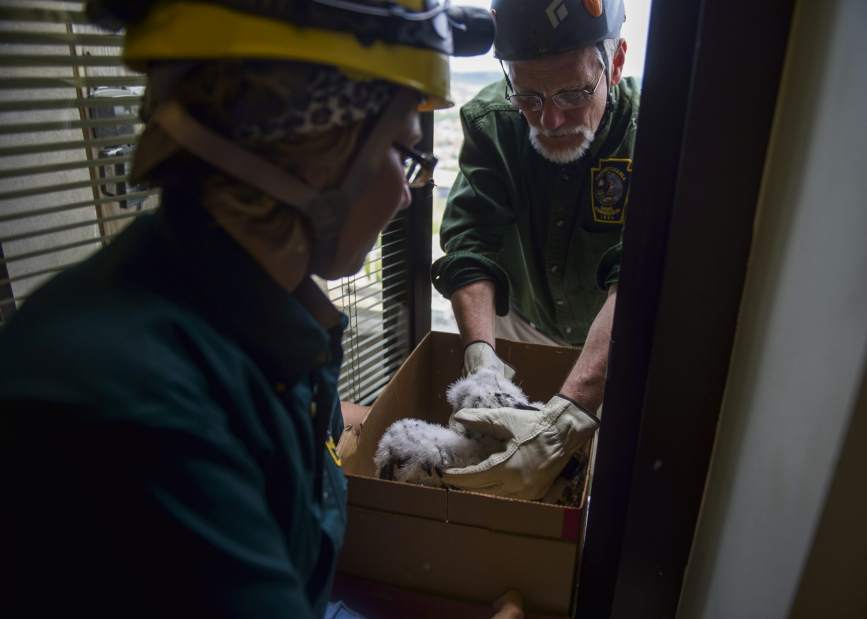
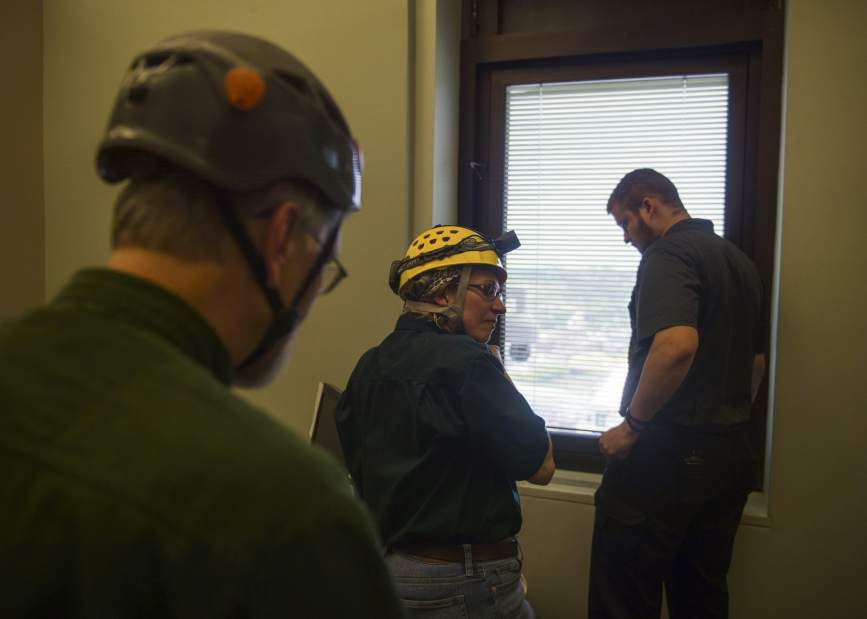
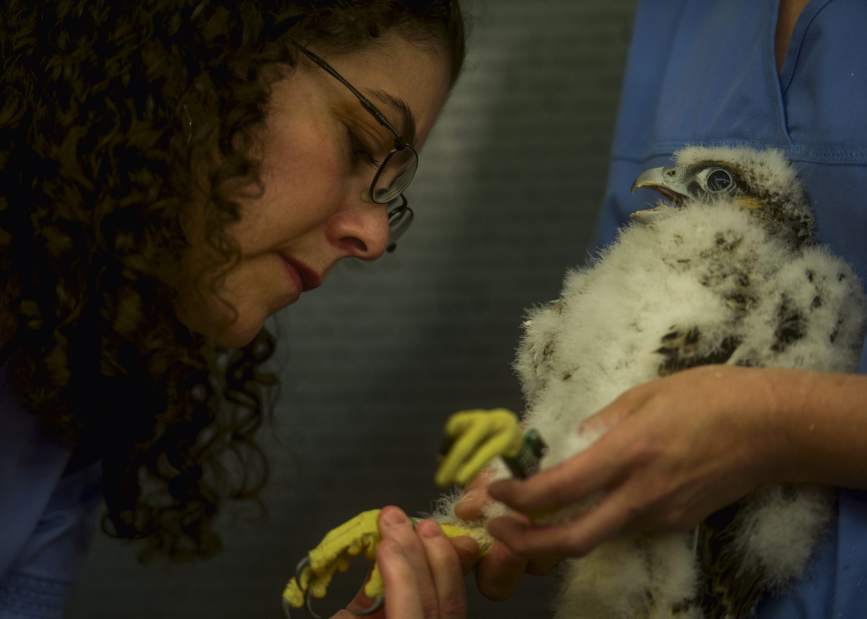
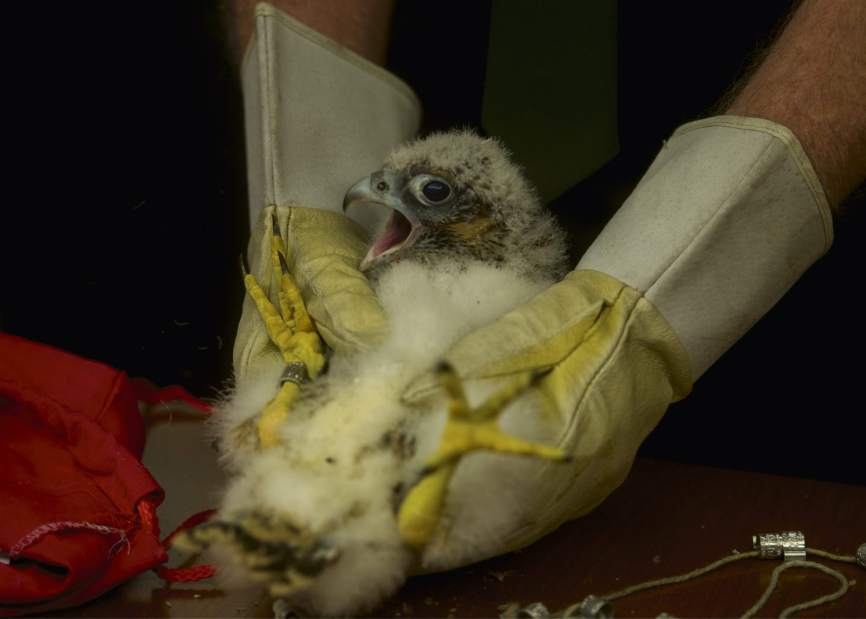
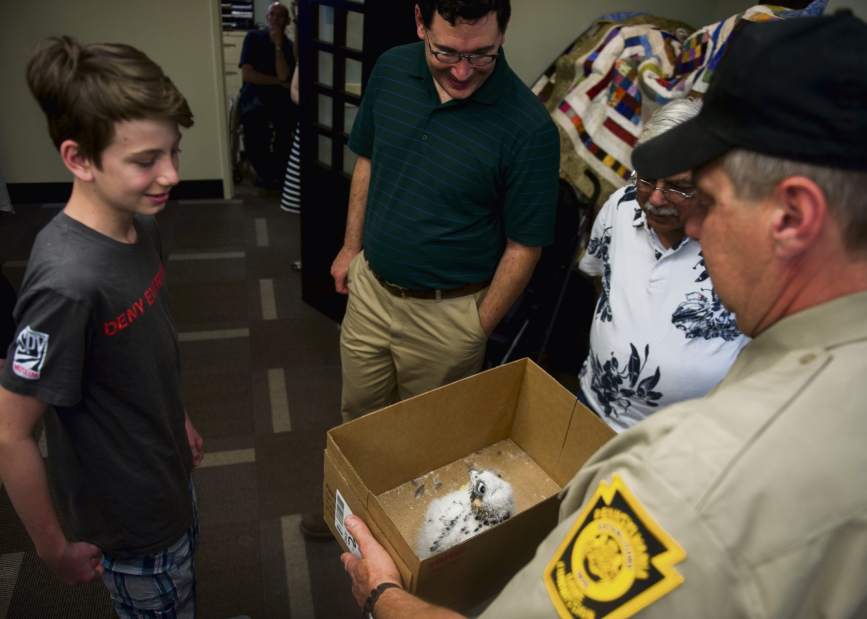
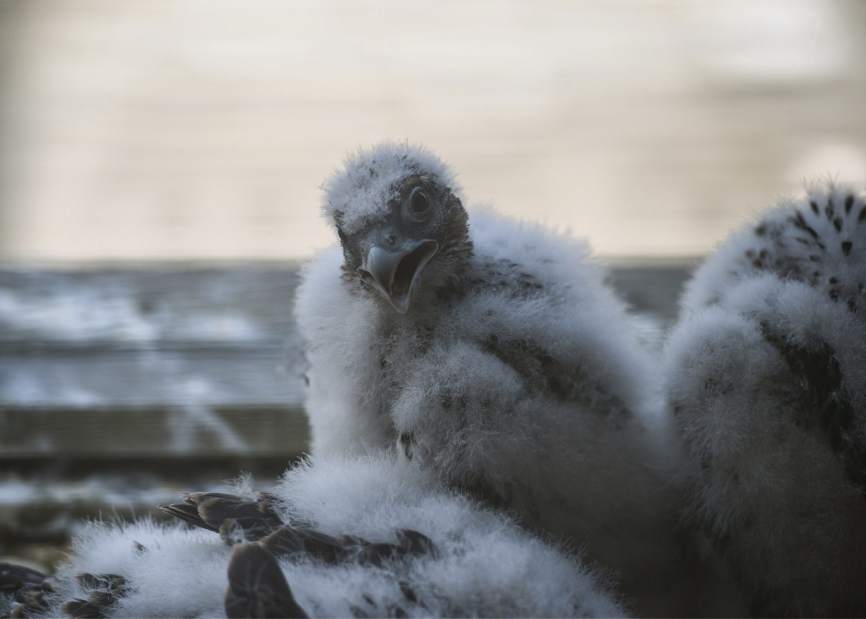
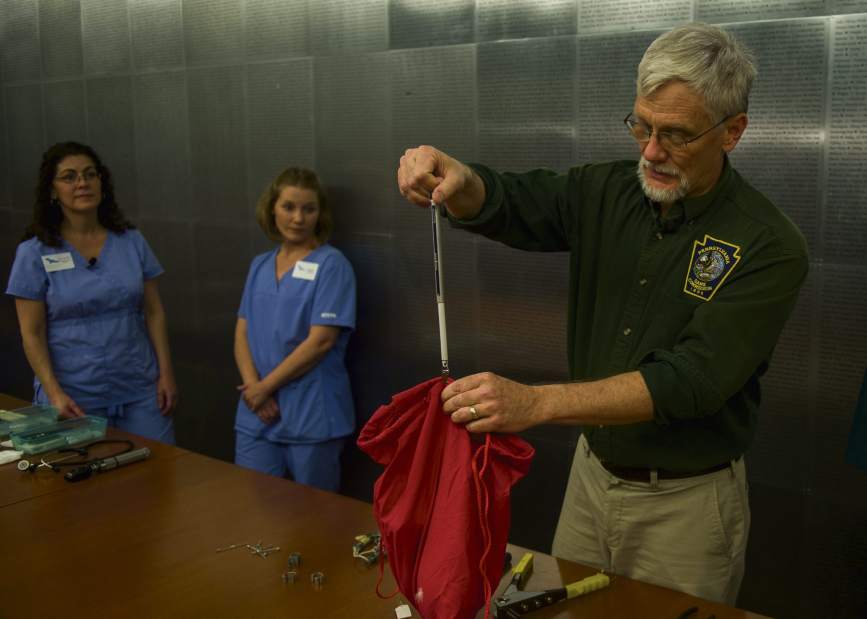
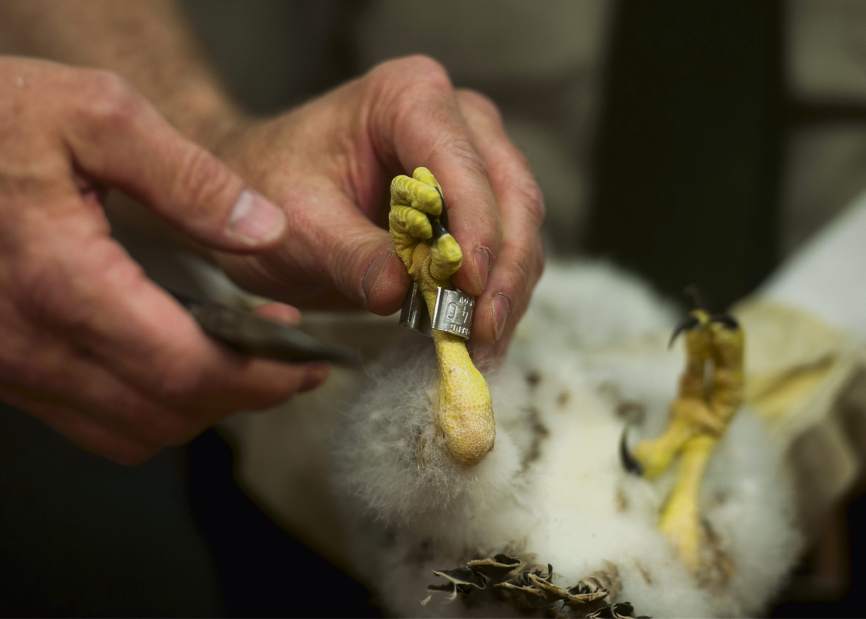
Because peregrine falcons still are endangered in the state, the game commission tries to band as many young as possible while when they are flightless in their parents' aerie.
Apparently, peregrine falcons find the Tarentum Bridge attractive as the birds have been frequenting the bridge for years.
Protz acknowledged, “There are a lot of pigeons there. They eat them, and the pigeons keep making more pigeons.”
Even Hope, who left the bridge to fill the open slot of reigning female at the Cathedral of Learning nest, has returned to the Tarentum Bridge for visits, according to Protz.
“She will never stop exploring around,” Protz said. “She's just that kind of a girl.”
If the new Tarentum pair nests successfully, their young would be the first produced at the site in almost four years.
The Tarentum pair would add to the growing numbers of the aerodynamic raptors that can top 200 mph in a dive, making them the fastest animal on earth.
Statewide, there were only about 50 pairs of peregrines in the state at nest sites in 2017, according to McMorris.
Unless young are visible or there is a live webcam, it can be difficult to know the breeding outcomes for peregrine couples, as they nest in some out-of-the-way spots, such as buildings, bridges, cliffs and other tall structures.
“Pittsburgh is holding very steady, no question about that,” said McMorris, who is “cautiously optimistic” for nesting success in Tarentum.
About one-fifth of the state's peregrine pairs are in the Pittsburgh area: Downtown Pittsburgh; Cathedral of Learning; Westinghouse Bridge, Turtle Creek; McKees Rocks Bridge; Neville Island I-79 Bridge; Monaca-East Rochester Bridge, and the Graff Bridge, Kittanning, according to St. John.
Although the peregrines' numbers have been increasing steadily, the outcomes at bridges are particularly bad, according to McMorris.
When young birds take their first flights, they aren't strong flyers. If they learn to fly in the falcons' traditional nesting habitats — cliffs — they land on a ledge, he said.
“If they are on a bridge in the middle of the river, they can end up in the river,” McMorris said.
Volunteers throughout the state monitor the young peregrines' first flights, often rescuing them, to ensure future continued success of the species.
Although there can be heavy losses of young at bridges and in urban areas, enough have survived to increase the population.
The pesticide DDT wiped out the nation's eastern peregrines by the early 1960s, followed by a worldwide catastrophic decline of the species.
The Pennsylvania Game Commission, along with a host of other agencies and nonprofits, have brought the birds back, and protect and monitor their nest sites.
Mary Ann Thomas is a Tribune-Review staff writer. Reach her at 724-226-4691, mthomas@tribweb.com or via Twitter @MaThomas_Trib.
