Fort Ligonier restoration team crafts 18th century carriages

Investigating the Past-Restorations at Fort Ligonier
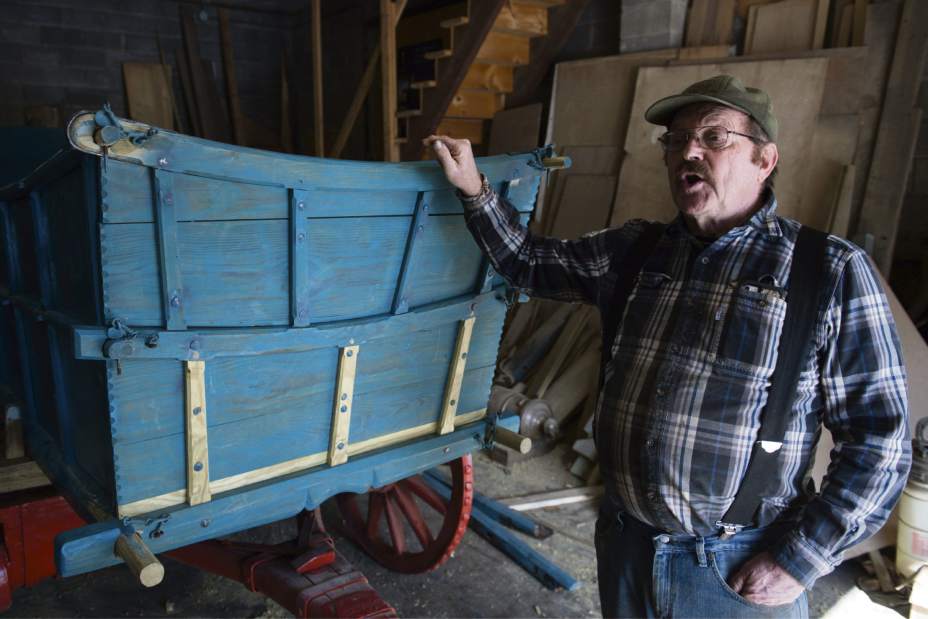
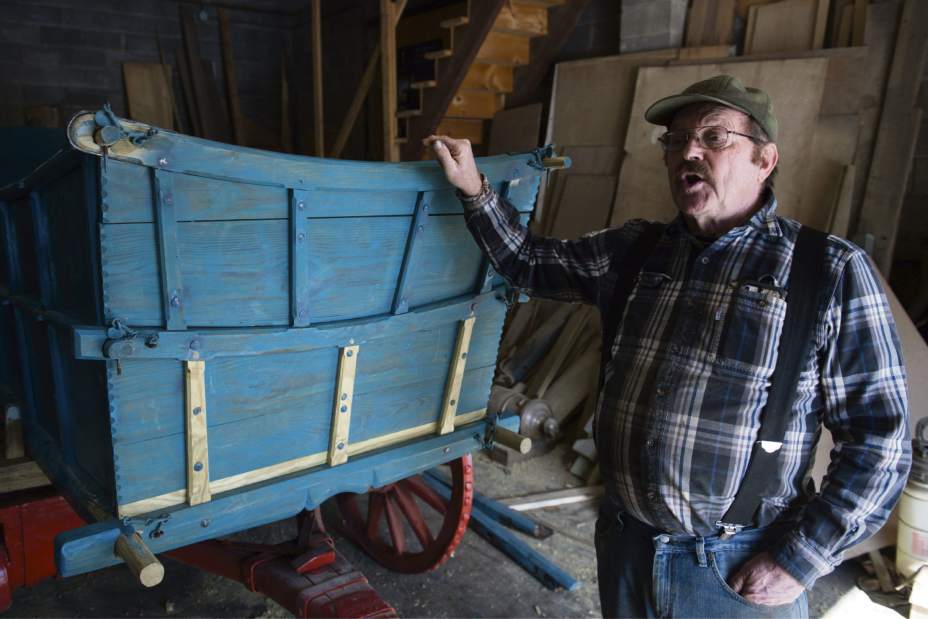
Brad Mooney, of Heritage Restorations, talks about the research that it takes, and the investigation that goes into building a period correct, wagon for Fort Ligonier.
Restoring an 18th-century fort is more art than science.
When it came time to replace Fort Ligonier's rolling stock, historic preservationist Brad Mooney had to rely on old paintings, unearthed ironwork and his own research.
“There were no existing examples of the carriages that (Gen. John) Forbes brought with him. What did they look like?” Mooney said.
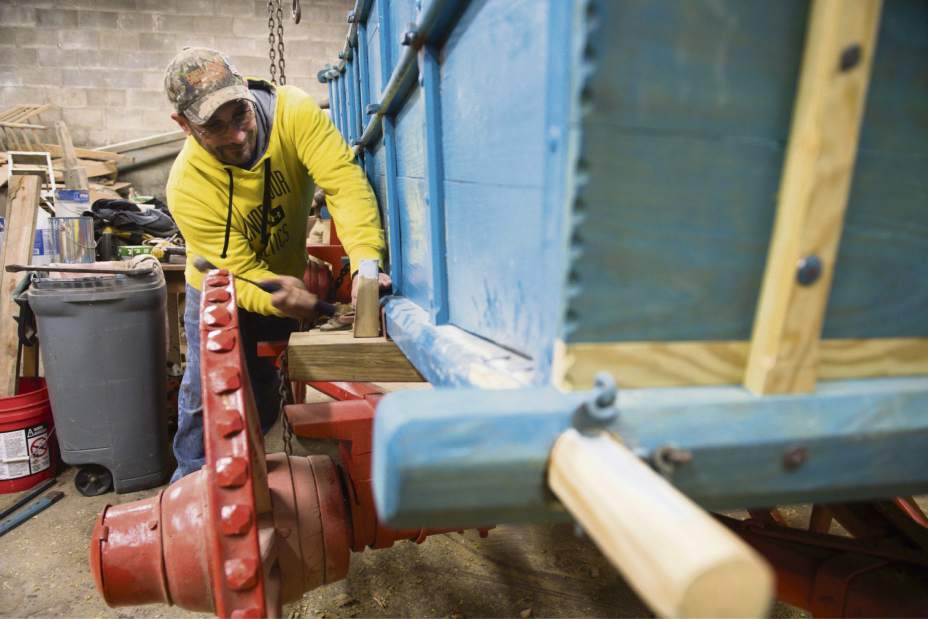
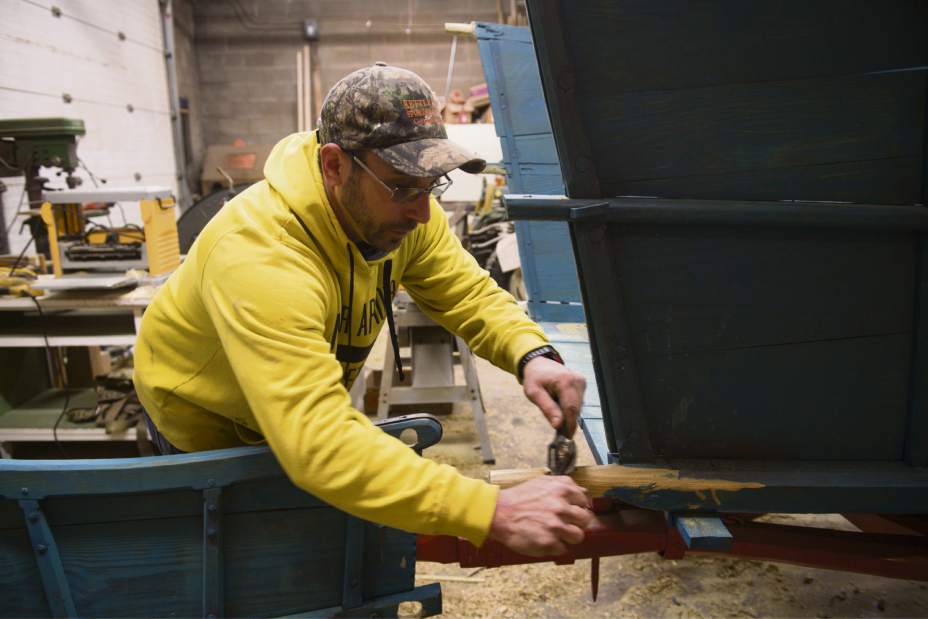
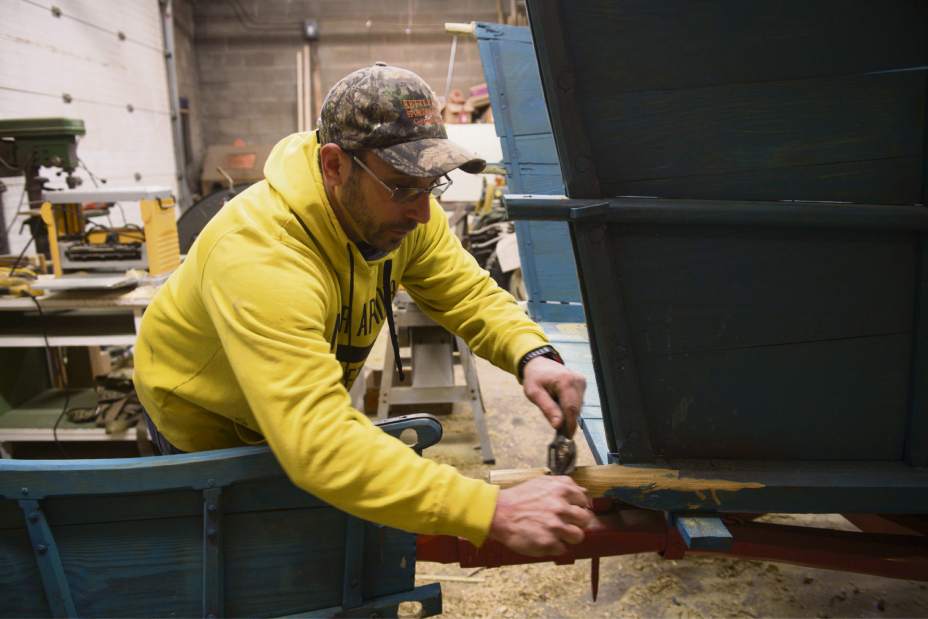
Mooney researched the matter for two years and came up with a close facsimile that he and a team of preservationists are now assembling in their Ligonier workshop.
The blue-and-red carriages will become part of the permanent exhibit at Fort Ligonier, an 18th-century fort that Forbes established as part of his campaign to take Fort Duquesne from the French in the 1750s.
The restoration of Fort Ligonier is the third and final phase of the work that is being funded by the “Fortifying our Future” capital campaign, said spokeswoman Julie Donovan.
“This restoration phase is a critical part of preserving this significant historic site,” she said.
The other two phases involved the construction of the Center for History Education, which opened in April 2017, and the renovation of the museum, which was completed in October.
The work on the fort itself, which includes the restoration of the inner fort's two east bastions and the installation of new rolling stock, is expected to be completed in time for Fort Ligonier's reopening on April 2, Mooney said.
“We think the effort's worth it,” he said. “The funny thing about restoring a fort is, the more you do it, the more you learn.”
Past restoration efforts fell short because they relied on historically accurate materials that did not always last, he said.
“We're replacing everything that was built out of oak, ash or elm,” Mooney said. “This'll last for 45 years.”
The carriages are being rebuilt with high-density, treated yellow pine from Virginia. The carriage parts were milled locally and sent away to be treated.
Forbes, founder of Pittsburgh, needed about 50 of the carriages to haul supplies and munitions from eastern Pennsylvania to the western part of the state, Mooney said.
The restoration project also involves replacing the smaller field carriages with larger traveling carriages. The small carriages would not have been sufficient to carry the 6-pound cannons that Forbes brought with him, Mooney said.
The traveling carriages had a load capacity of 1,500 pounds and were pulled by teams of two to six horses, he said.
Work on the east bastions is expected to continue next week, when temperatures are expected to get into the 40s.
Stephen Huba is a Tribune-Review staff writer. Reach him at 724-850-1280, shuba@tribweb.com or via Twitter @shuba_trib.