Manufacturing remains vital in Westmoreland County, Pennsylvania, experts say

Leese
Manufacturing remains vital part of region’s economy.
Inside a nondescript building along Business Route 66 north of Greensburg, the region’s rich manufacturing tradition continues in a small, family-owned machine shop filled with high-tech machinery.
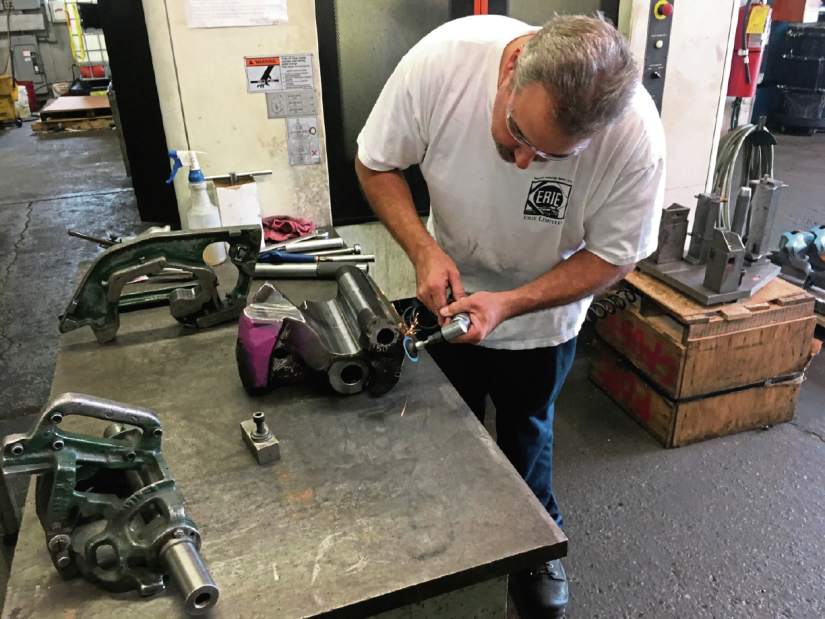
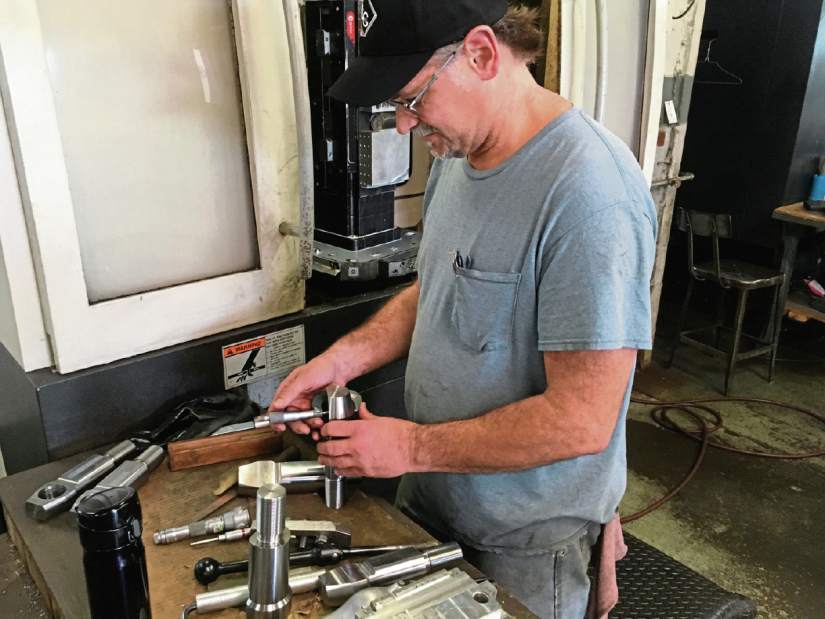
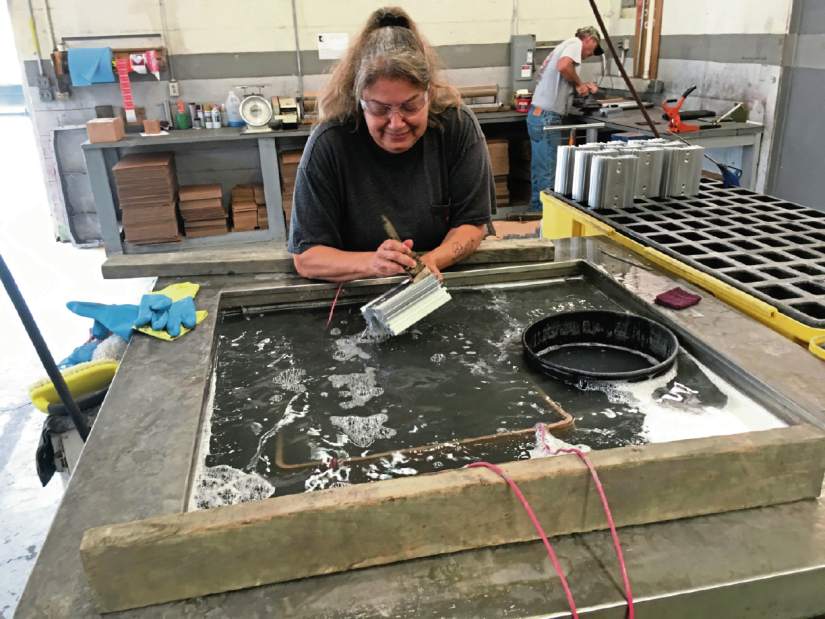
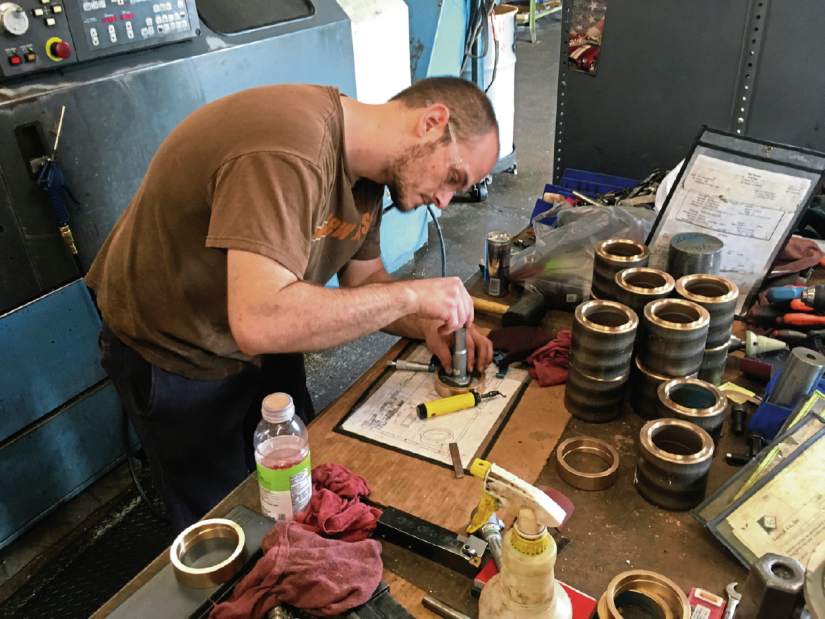
Machinists at Leese & Co. Inc. take pieces of stainless steel and aluminum, cut and polish them into connecting rods, steel hubs, rings and gears for a variety of applications for industries such as railroads, medical, mining and defense. Most often the work is done by skilled machinists operating computerized cutting machines, said Christian “Chris” Klanica, company president and owner the Hempfield business his stepfather founded in 1953.
Manufacturers like Leese are being celebrated Friday — National Manufacturing Day. More than 1,600 American manufacturers are expected to open their doors and try to inspire youth to pursue careers in manufacturing and engineering.
Leese machinists are among about 87,500 manufacturing workers employed in August in the seven-county Pittsburgh labor market, which includes Allegheny, Armstrong, Fayette and Westmoreland counties, according to state figures. Manufacturing jobs have increased by 1,500 from a year ago, according to the Pennsylvania Center for Workforce Information and Analysis.
“Manufacturing has been on the low end (in recent years), but it is coming back,” Klanica said. Part of the reason for that resurgence following the recession a decade ago is that “we’ve learned to be more efficient,” he said.
Leese has invested in hundreds of thousands of dollars in equipment that reduces the time needed to make parts, which cuts production costs so the company can remain competitive, Klanica said.
Acquiring the right talent is still a critical element of succeeding in the business, he said.
“Getting qualified machinists is important,” Klanica said, noting there is a need to attract more
talent, particularly young adults.
Machinists of tomorrow should be able to find work in Pennsylvania’s metal or plastics industries because there should be 10,000 openings from 2016-26, even while total employment remains at about 100,000, the worforce information center said. That includes an increase from 19,220 machinists jobs in 2016 to 20,080 by 2026, but more than 2,000 machinist jobs should open up in that same period because of people leaving the field, state statistics indicate.
Those jobs at shops like Leese pay a living wage, said Klanica, who started sweeping the shop floor while attending Greater Latrobe High School. The annual mean wage for machinists in Pennsylvania is $39,000, with a mean hourly wage of $18.70, according to state data.
Manufacturing remains an important component of the region’s economy, said James Kunkel, executive director of the Saint Vincent College Small Business Development Center, which works with manufacturers in the region.
“We still have a small manufacturing base,” Kunkel said, noting tool-and-die machine shops like Leese and others.
As Klanica sees it, “we’re sitting at the epicenter of manufacturing in the area,” which has “a deep-rooted history of manufacturing” with the steel and coal mining industries playing such an important role.
Westmoreland has more manufacturers by percentage than the rest of the region, which has more than the rest of the state, said James Smith, executive director of the Economic Growth Connection of Westmoreland, a Greensburg-based economic development organization. Companies that produce goods and products, and not simply sell services, add more to an area’s economy, Smith said.
“Westmoreland County is blessed with a very healthy manufacturing sector” that contributes the most to the area’s gross domestic product, Smith said.
“We are still a place that makes things,” he said.
Over the next eight years, some 44,000 manufacturing job are expected to open in Pennsylvania due to workers leaving the field, the state’s Center for Workforce Information and Analysis projects. There will be manufacturing jobs available even though total production employment is seen as dropping from 400,500 two years ago to 393,000 in 2026, the state projects.
“Manufacturing has been one of the most vibrant sectors of the economy for a half century,” said Antony Davies, associate professor of economics at Duquesne University in Pittsburgh.
Despite conventional wisdom that says manufacturing jobs have dropped by 50 percent since 1950, manufacturing output has tripled over that period as U.S. manufacturers now produce three times as much with half the workers, Davies said.
“We’re really good at it,” Davies said.
Joe Napsha is a Tribune-Review staff writer. You can contact Joe at 724-836-5252 or jnapsha@tribweb.com.