

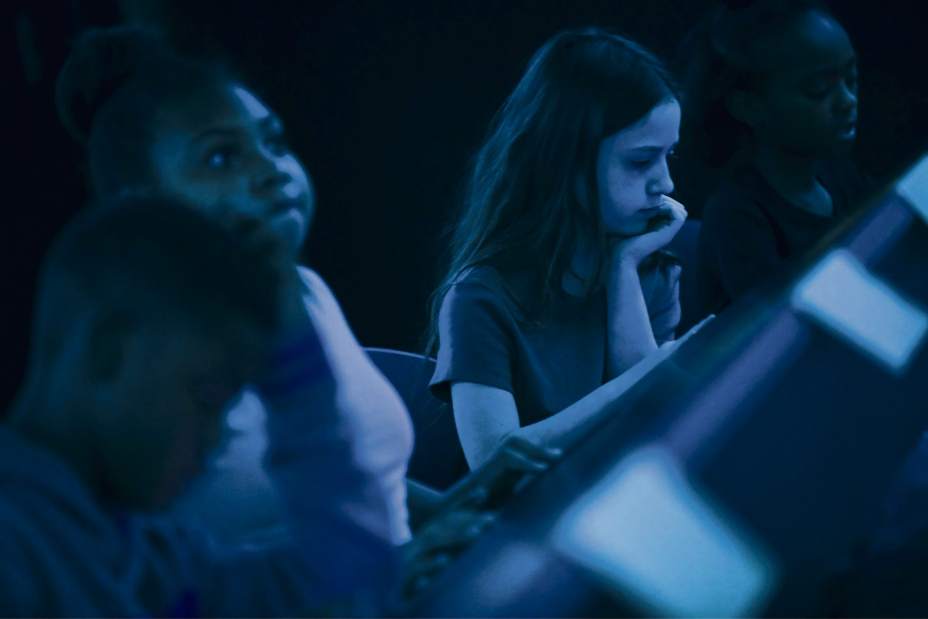
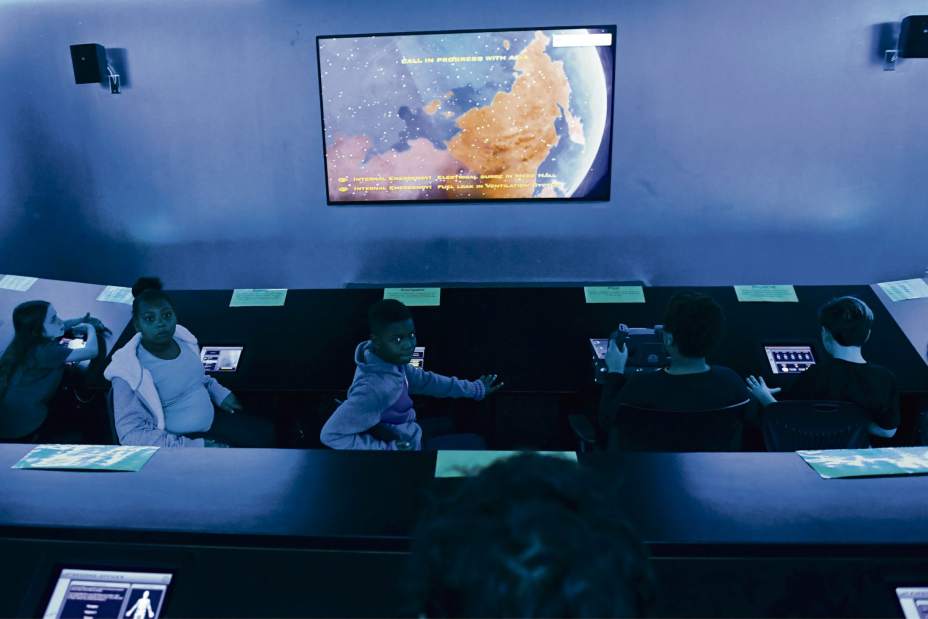








Fifteen crew members were at their stations aboard the IKS Dreamcatcher.
Their mission: Locate and disarm the sunlight inhibitor device, a weapon designed by enemy forces to destroy the sun and ultimately, Earth.
“Captain, do I have your permission to light the turbo boosters?” asked Mission Control.
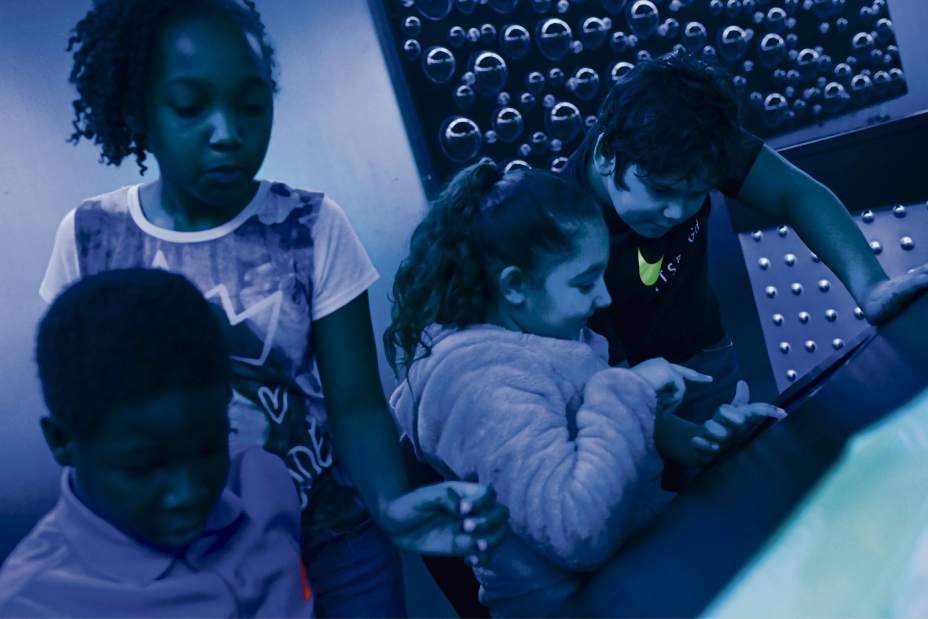
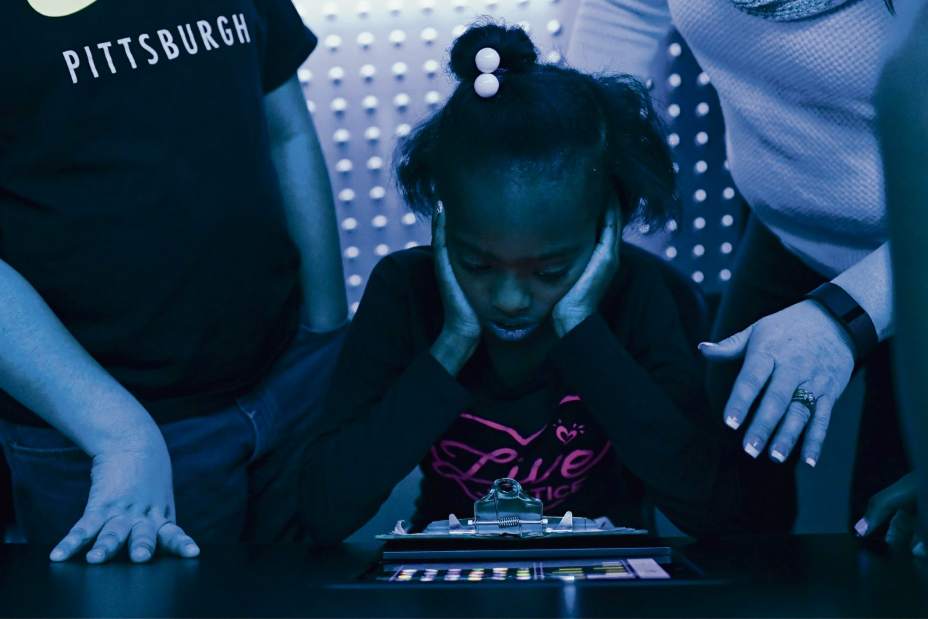
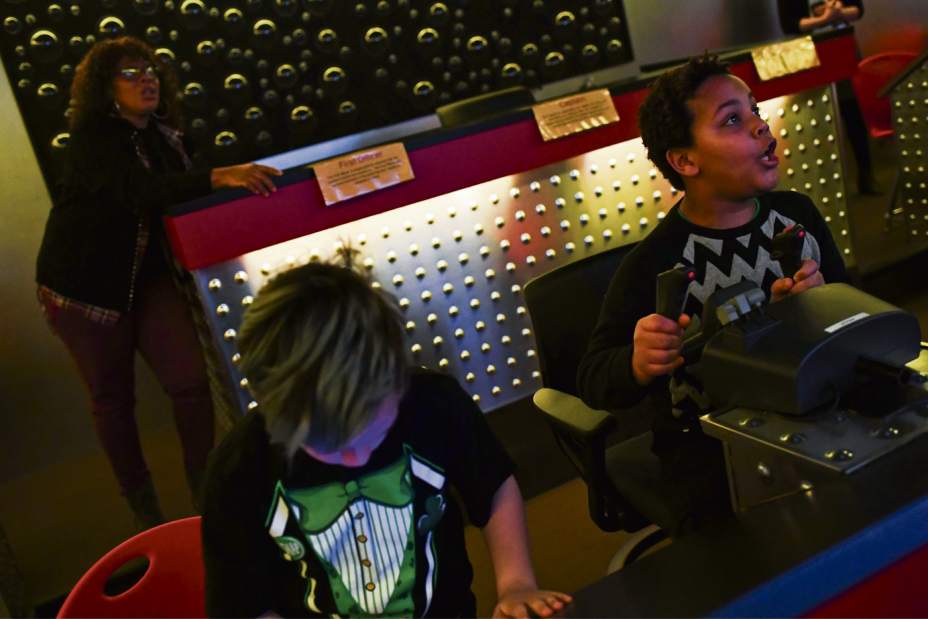
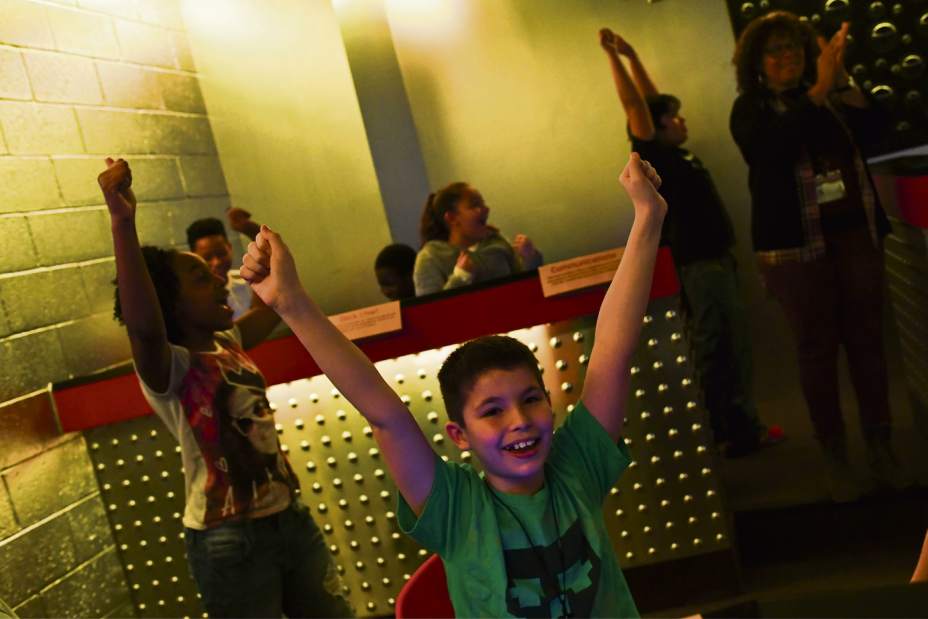
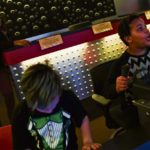
Capt. Rohan Amin stood on the bridge in his glow-in-the-dark Nike Pittsburgh shirt, gazing into space. He ordered takeoff, and his crew jumped into action. First and second officers buzzed around, working with engineers to maintain the craft. The doctor distributed medicine. Hackers and cybersecurity officers kept the ship safe from virtual intruders.
Within an hour, the crew visited all seven continents, met with astronomers and historians and discussed global history.
They also saved the world. All in a day's work for Amin and his fourth-grade classmates at Penn Hills Elementary School.
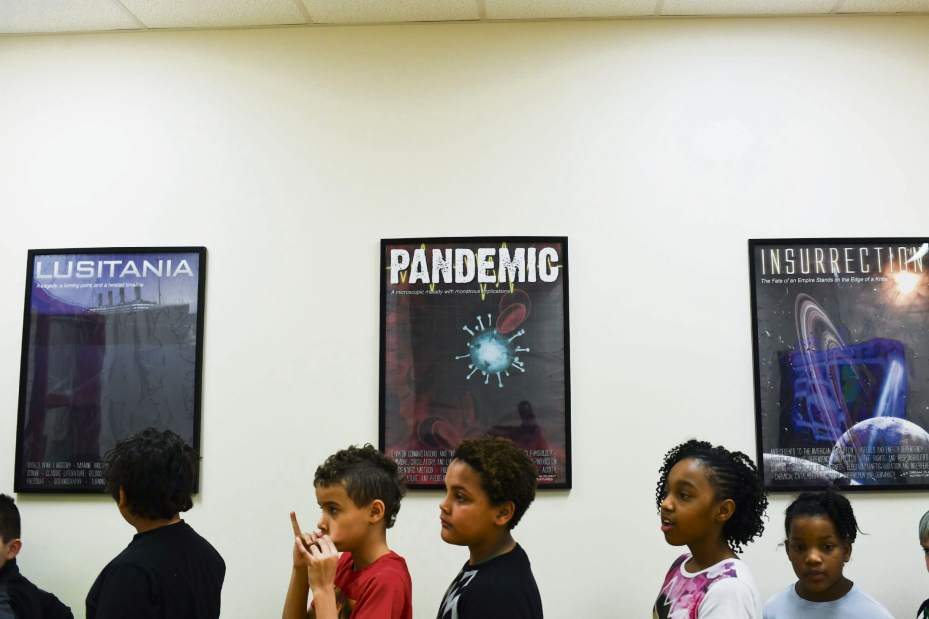
The students were participating in the school's flight simulator program. It's an interactive learning experience designed to give students a chance to apply what they're learning in the classroom to the real world, and this particular mission matches the content they've been studying in their social studies class.
The program also is intended to help the students develop teamwork, communication and problem-solving skills.
Penn Hills is one of four schools in Westmoreland and Allegheny counties to house simulators designed by the Pittsburgh-based company Dream Flight Adventures. Shaler Area Elementary School partnered with Dream Flight Adventures in 2013 to install the first such simulator; since then, Stewart Elementary School in Burrell School District and J.E. Harrison Middle School in Baldwin-Whitehall School District have installed them.
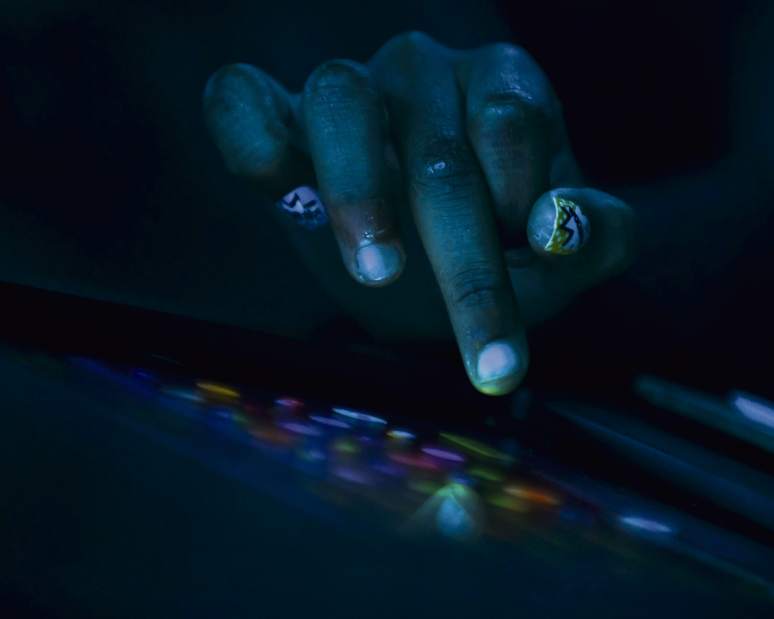
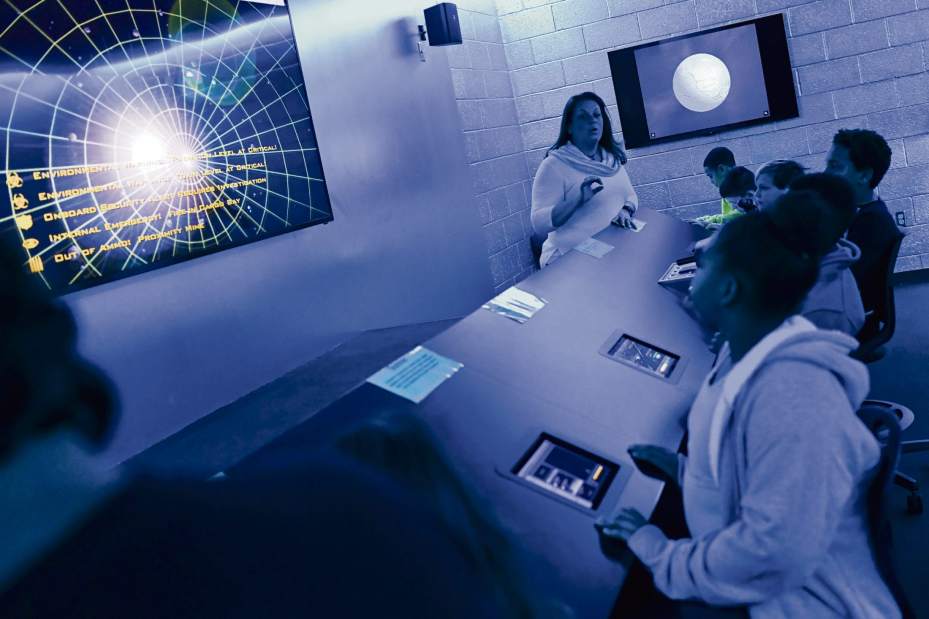
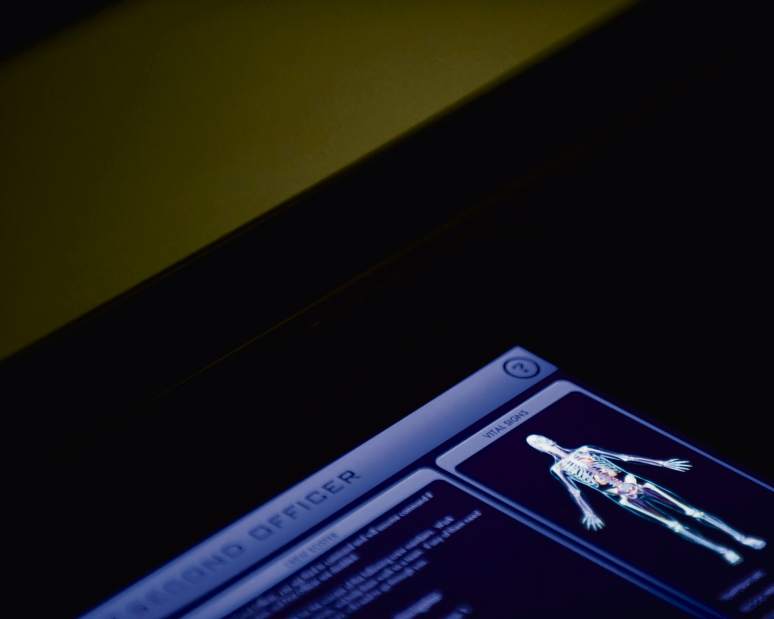
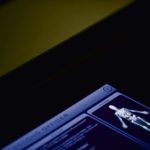
The “spaceship” is a small classroom equipped with an iPad for each student, an intercom system for communicating with people outside the ship and a large screen that projects a virtual world. The teacher controls the mission from outside the spaceship, communicating with students via intercom while assuming identities such as mission control or an earthling in need of assistance. When the students get stuck, they can ask the ship's computer, Charlie, for help. At that point, the teacher can intervene and give the students clues.
Young students learn best when they're immersed in real-life situations, said David Carbonara, assistant professor of instructional technology at the School of Education at Duquesne University. This type of experience makes learning more meaningful and helps keep students engaged. And with the teacher physically behind a wall, observing the students using a video camera, students learn to work with each other instead of relying on the teacher as the source of all the information. Having a title such as “Captain” or “Doctor” gives a student even more ownership over the learning experience.
“It helps to engage them more as a team,” said Jamie Harris, teacher at Penn Hills. In her role as flight director, she runs all of the school's simulator missions. “They're looking at this as the role you are assuming, and this is a role you need to do.”
Harris is always looking for opportunities to squeeze in extra review during a mission. Sometimes, students will have to answer a series of geography questions or recall historical facts before they can move on. As flight director, she also has the ability to change the difficulty of the mission to match the students' learning needs.
That flexibility makes the program accessible for every student in the school, not just the high achievers. It also allows her to challenge students who could use an extra push, or give others a chance to shine. But that doesn't mean the missions are a break from work.
Brian Colgan, teacher and flight director at Stewart Elementary School, takes a similar approach to guiding his students through a mission.
“No matter how good your team is, no matter how well you work together as a team, success is not guaranteed,” Colgan tells them. “But I'll guarantee you this: If your team works poorly together, if you do not have good teamwork, you're probably guaranteed failure.”
Stewart Elementary School installed a simulator, the IKS Buccaneer, in 2015. It's part of the school's broader effort to introduce students to fields such as science and technology at an early age. The school offers a variety of programs, ranging from high-tech experiences like the flight simulator, to low-tech spaces to build with Lego blocks.
According to Colgan, teaching students to become “tech-minded” or to develop critical-thinking and problem-solving skills isn't about the technology. It starts with giving students a chance to be active and create.
“When you give them an opportunity to work with their hands, they're engaged right away,” he said.
Jamie Martines is a Tribune-Review staff writer. Reach her at 724-850-2867 or jmartines@tribweb.com.
