
PennDOT plow truck drivers prepare for snow


Western Pennsylvanians may be dreading any mention of impending winter snow, but PennDOT preparations are under way.
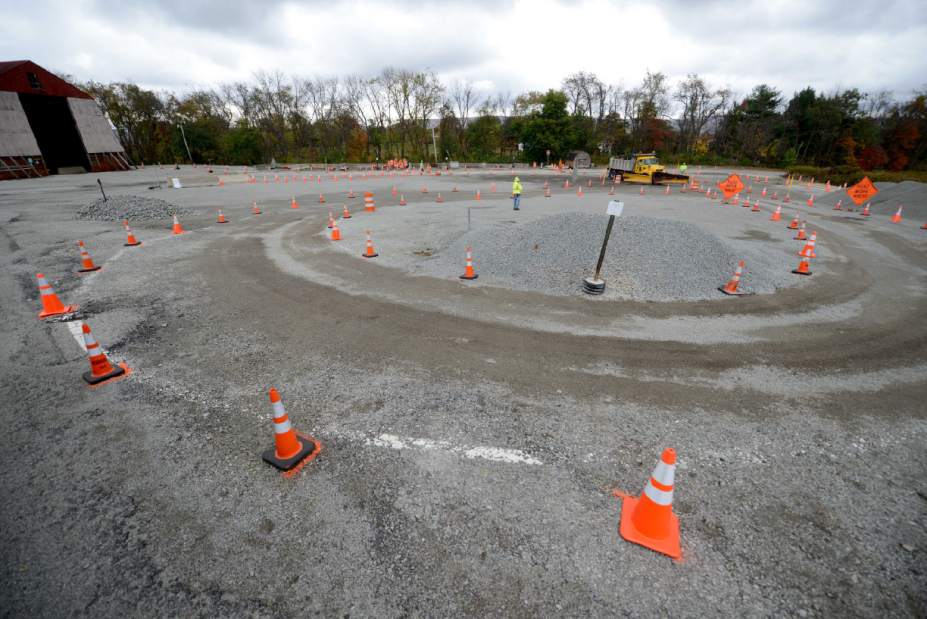
Seventeen operators maneuvered six hulking plow trucks through cones, barriers and signs in an annual training session Thursday at the stockpile site in Unity to begin preparations for the season.
“Everybody sees the trucks when the snow starts to fly, but I don't think people think about the time that's spent preparing for winter,” said PennDOT spokesman Jay Ofsanik.
The drivers brushed up on use of a wing plow, a secondary plow near the passenger side of a plow truck that is guided by hydraulics and stretches plowing span up to 22 feet.
“Now they can do the road and they can do the berm and they can get that all in one sweep,” Ofsanik said, adding that one mile of a four-lane highway is actually four miles.
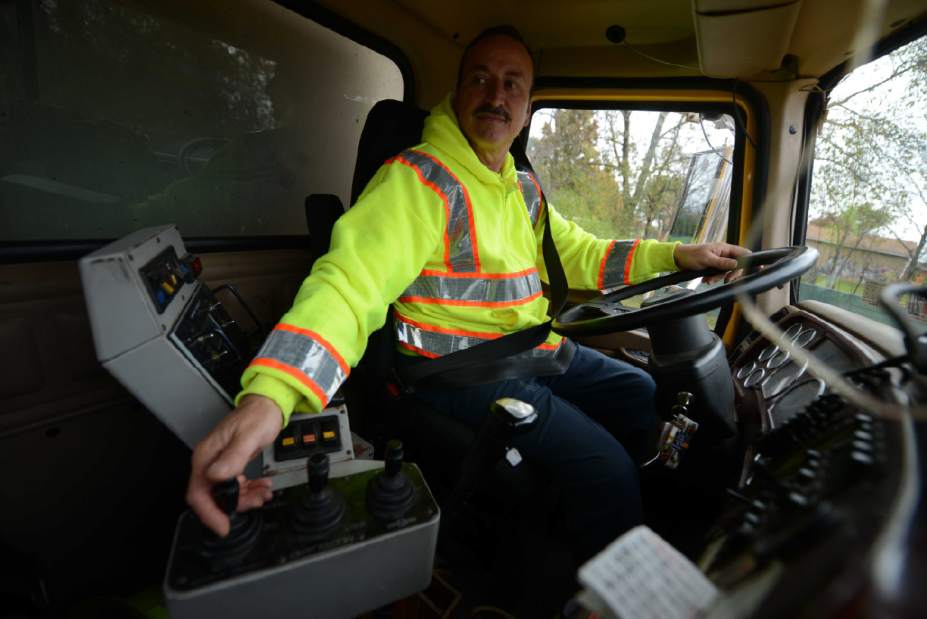
Dennis Converso of Turkeytown, who has seen 24 winters as a truck operator, was on the training course Thursday, deftly working levers with his right hand to pass through the course meant to simulate a narrow bridge, an “S” curve and mailboxes.
A section where the drivers had to back in was meant to mimic an intersection, while a buzzer near a stop sign was meant to help drivers judge distance without stopping short.
“We're trying to teach people where that (plow is) at without looking at it, which is a real hard thing to do. That comes with experience,” said Converso, whose regular route includes Route 119 between New Stanton and Scottdale.
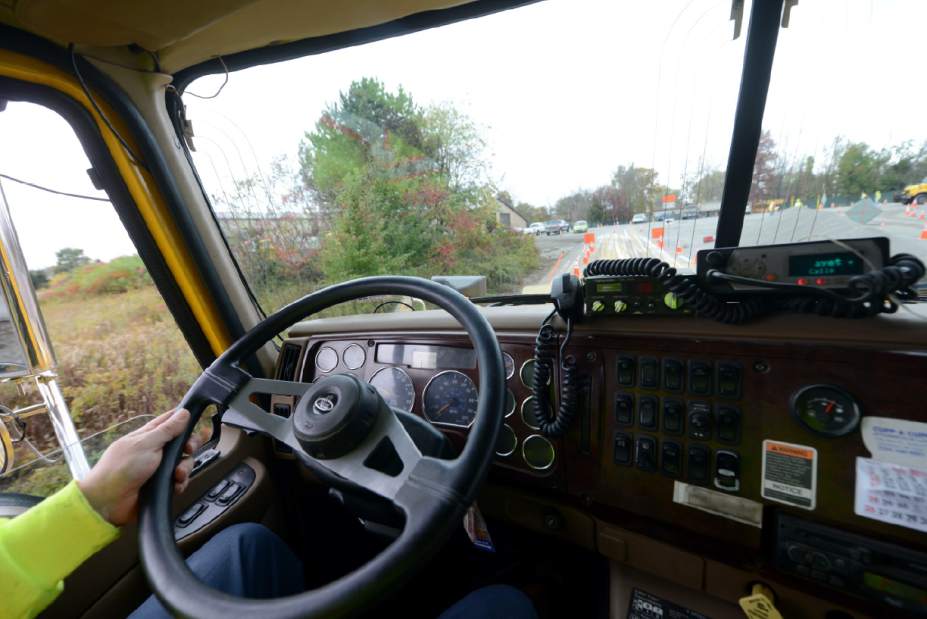
Ofsanik said motorists often don't realize how much snow plow drivers have to handle while in the cab of those machines.
“They've got to look for hazards, they've got to assess road conditions and they've got to worry about a motorist who might be coming down the roadway,” he said. “It gives you an appreciation for what these guys have to think about. There's a lot that they're doing up in that vehicle — they're busy.”
About 70 drivers, or 25 percent, of the 315 operators in PennDOT District 12— which encompasses Westmoreland, Fayette, Greene and Washington counties — will train on the wing plow course before winter, including a few from District 11, which covers Allegheny, Beaver and Lawrence counties.
Different training sessions cover the truck itself and the computer-operated salt-spreading equipment.
Each operator takes two trips with the wing plow during the training day, said Jason Spangler, district equipment manager.
“We find a marked improvement from the first trip to the second trip,” Spangler said. “That's evident in real life. The more time you get in a seat, the more time you get to operate things, the better you get at it.”
Converso said operators have to remain alert to avoid accidents.
“When you're out there you have a machine that can cause a lot of damage, so you have to be on your game the whole time,” he said.
Based on an efficiency formula, including road mileage, the district is allotted 200 plow trucks, Spangler said. Each truck, which can weigh up to 10 times that of a car and be four to five times a car's size, costs $180,000 outfitted with front and wing plows.
Winter conditions this year are expected to mimic those of last year, which was not “terrible” but continuous, Ofsanik said.
Operators are driving the plows for as long as it takes, sometimes seven to eight consecutive days of 12-hour shifts, he said.
“They're out there until the event's over and the roads are clear,” Ofsanik said. “We're prepared for whatever comes.”
Stacey Federoff is a staff writer for Trib Total Media. She can be reached at 724-836-6660 or sfederoff@tribweb.com.
