

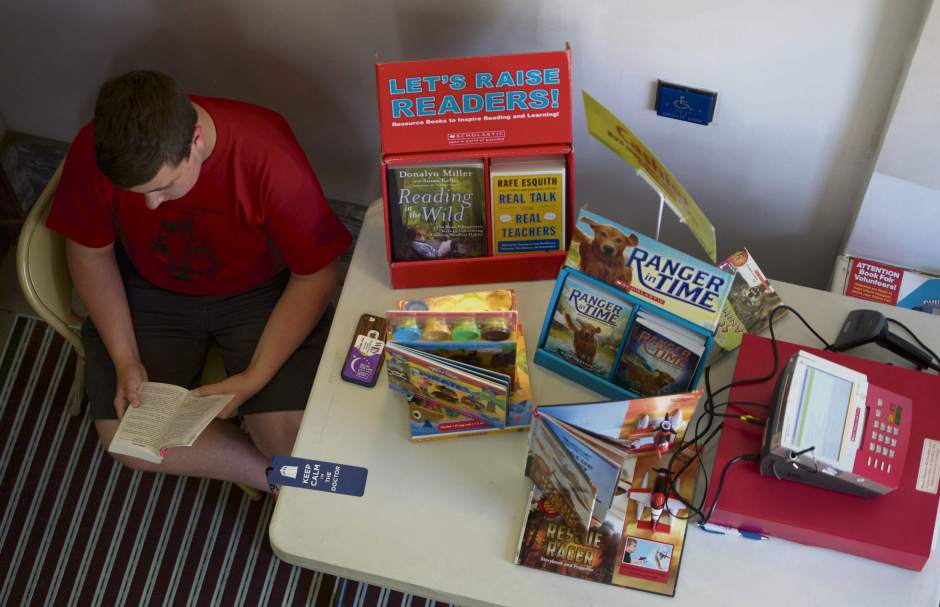
Summertime ... and the reading is easy.
Or maybe not, depending on the grade, class, teacher or school a student attends in Westmoreland County. Either way, summer reading assignments are as common in the county as umbrellas on a beach in July. And many students take the extra work in stride.
Summer reading assignments are typically encouraged in elementary and middle schools and required for some high school students.
Senior Hannah Kimmick has to read Mary Shelly's “Frankenstein” and Franz Kafka's “The Metamorphosis” for her Advanced Placement English class at Hempfield Area High School. She'll also have to create analytic journals for each book before she returns to school in the fall.
“I'm not too stressed. ... I'd have to read them anyway, so why not in summer?” she said. “I'm taking an AP class, so I'm expecting the extra work.”
Diane Fine, a reading methods professor at California University of Pennsylvania, said summer assignments are a good idea, as long as they aren't so taxing that they zap the fun of opening a book for students.
“We have to be careful we don't spoil reading for kids,” she said. “We can take any fabulous novel and make it painstaking. ... It can become too much.”
Hempfield requires that honors and AP English students do summer reading assignments. Other students complete writing and grammar practice exercises for their English assignments. There is also an assignment for AP biology students, who have to read the first chapter of their textbooks.
Fine said all levels of students could benefit from summer reading assignments.
“It's worthwhile to have a suggested reading list,” she said. “If you can keep (students) reading over the summer, you can help them maintain what they've learned instead of losing ground.”
Some teachers add to the attraction of out-of-school reading by assigning one book and letting students choose the other they will read.
Mark Curcio, an English teacher at Derry Area High School, said assigning students to choose their books keeps reading on the radar as the Internet and other electronic options compete for their attention.
“What's bringing reading back is choice — school-appropriate choices, of course,” Curcio said.
This summer, he's assigning a student-chosen book and Harper Lee's “To Kill a Mockingbird.”
Another way teachers are encouraging summer reading is by assigning a mix of classic and modern literature.
“The Glass Castle,” written in 2005 by Jeannette Walls, and “I Am Malala” by Malala Yousafzai from 2013 are choices appearing on reading lists at Jeannette and Greater Latrobe schools.
“Classics are very important, but if we want to bring reading and the importance of reading back, we have to let (students) choose,” Curcio said.
Fine notes that getting kids to read during break often requires reward systems, which teachers may not always have the time to put in place.
“There's pressure from all these high-stakes state standardized tests,” Fine said.
“It might take too much effort (for teachers) to write and plan all the rewards. Curriculum, mandates and testing take priority, sadly. They've created extreme stress and duress on teachers,” Fine said.
Natalie Wickman is a Tribune-Review staff writer.
