

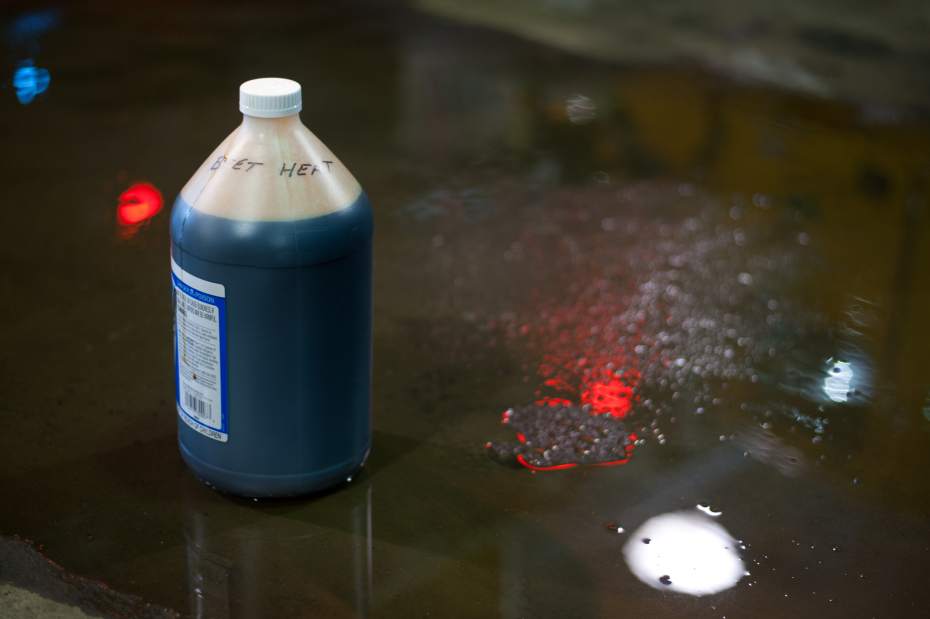
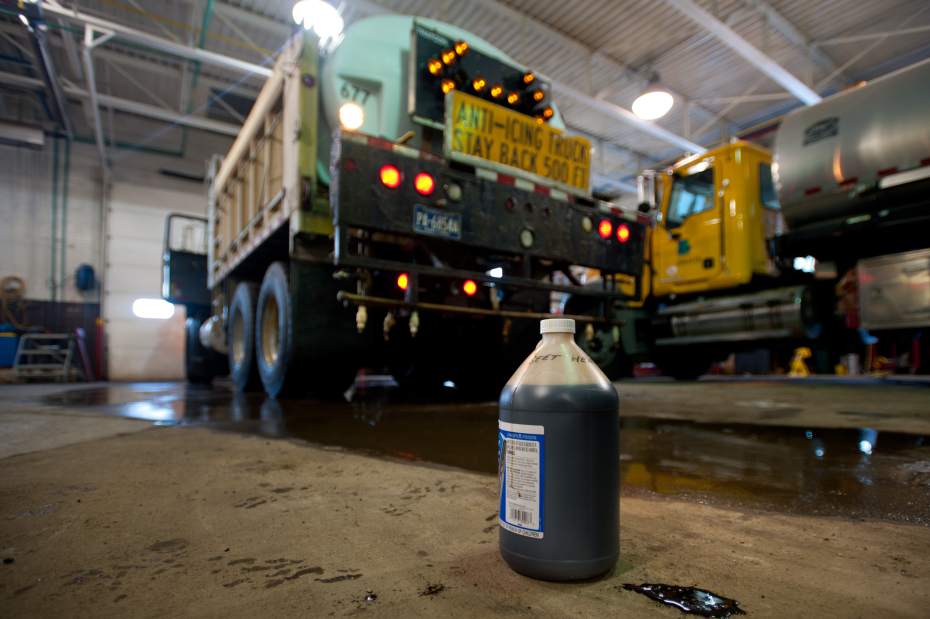
The reddish-brown liquid dripping from Butler County overpasses on Friday wasn't the typical winter sludge, PennDOT officials said.
Beet juice blended with salt brine poured out of tankers in preparation for sub-zero temperatures, coating bridge decks and a sizeable stretch of Rt. 422.
“We've had our guys out there round-the-clock,” said County Manager Bob Skrak, who's helming the pilot beet juice project.
Road salt loses effectiveness below 20 degrees, often bouncing off major roadways before it has time to interact with the ice. State officials hope mixing the brine with beet juice will break down ice slicks more effectively without dramatically increasing the cost.
For now, Butler County road crews are trying the concoction, which consumes 15 to 44 gallons of beet juice per lane mile depending on snow storm severity, on a few easy-to-monitor areas about 20 miles north of Pittsburgh.
Skrak said ice sheets as much as to 2.5 inches thick turned to slush in a few minutes and to “running water” within the hour using the mix.
If the test program, scheduled to continue through the snowy season, goes well, Beet Heet could join the state's master list of approved road treatment products. It costs about $1.50 per gallon.
“We've got a lot of people evaluating this,” Skrak said. “It has to deliver what the vendors claim. It has to be cost effective. It can't leave any negative effects once the ice is gone.”
Reviewers contend the juice neither stains the roads nor attracts animals.
PennDOT experimented with beet juice in Armstrong County in 2009 but opted against using the juice long-term.
“The old stuff worked well for us, too,” Skrak said, “but a lot of the other testing groups said the organic material from the juice clogged up their spray nozzles. Obviously that won't work out.”
Other novel, environmentally friendly salt substitutes are being tested nationwide.
Blizzards across the Great Plains and Midwest last year prompted Minnesotans to try sugar cane molasses. Wisconsinites tried cheese brine. Towns in Illinois and Ohio joined Pennsylvania in opting for beet juice.
The alternatives don't eliminate the need for road salt, but reduce the amount required.
Megan Harris is a staff writer for Trib Total Media. She can be reached at 412-388-5815 or mharris@tribweb.com.
